Why Vancouver's Filipino Food Scene Is Exploding in 2026
Vancouver's Filipino food scene is surging in 2026 — from adobo and sisig to kamayan feasts and ube bakeries. A complete guide to the dishes, restaurants, and trends driving the boom.
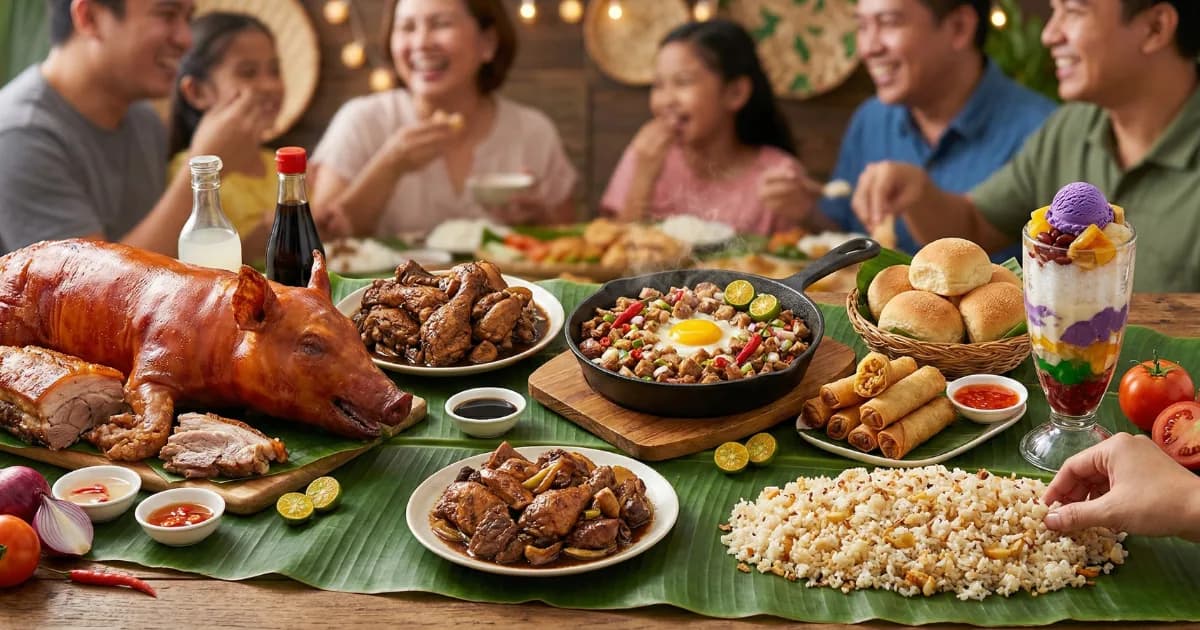
Vancouver's Filipino food scene has undergone a remarkable transformation, evolving from a well-kept neighborhood secret into one of Canada's most dynamic and celebrated culinary movements. The city's explosive growth in Filipino restaurants, bakeries, and dining concepts throughout 2026 reflects both a demographic shift and a broader appetite—literally and figuratively—for authentic Southeast Asian cuisine beyond the usual suspects. From kamayan feasts where diners eat with their hands to neighborhood bakeries perfecting the art of ube and pandesal, Vancouver is experiencing a food revolution that deserves serious attention from anyone who appreciates bold flavors and vibrant culinary culture.
Last reviewed: March 2026. Data current as of this date.
Why Vancouver's Filipino Food Scene Is
Exploding in 2026
For years, Filipino food in Vancouver occupied a paradox. The metro area is home to one of the largest Filipino communities in Canada — over 150,000 people of Filipino heritage live in Metro Vancouver, making Filipinos the second-largest visible minority group in several municipalities including Surrey and Burnaby[1]. Filipino grocery stores, bakeries, and turo-turo (point-and-pick) cafeterias have served these communities for decades. Yet for most of that time, Filipino cuisine remained largely invisible to the broader Vancouver dining public. It was family food. It was "ethnic" food in the most limiting sense of the word — eaten by Filipinos, understood by Filipinos, and largely unknown to everyone else.
That has changed, and the shift has been dramatic enough to notice. Walk down Commercial Drive or Kingsway in 2026 and you will encounter Filipino restaurants that did not exist three years ago — not the fluorescent-lit, steam-table operations that served the community quietly for years (those still exist, and they remain excellent), but a new generation of restaurants that present Filipino food with the same confidence and culinary ambition that Korean, Japanese, and Thai restaurants have wielded in Vancouver for over a decade. Kamayan feasts draw weekend crowds of mixed backgrounds. Ube lattes have colonized Instagram feeds. Sisig — the sizzling, vinegar-spiked pork dish from Pampanga — appears on bar menus alongside craft cocktails. And Jollibee, the Filipino fast food chain that inspires a devotion bordering on religious, has expanded its Metro Vancouver footprint to the point where its fried chicken competes seriously with the established chains.
The explosion is real, and it is not an accident. It is the convergence of demographic weight, a generational shift among Filipino-Canadian chefs and restaurateurs, the amplifying power of social media, and a broader dining public that has finally caught up to what Filipinos have known all along: this is one of the most flavourful, complex, and underrated cuisines in the world.
Summary: Vancouver's Filipino food scene is experiencing its breakout moment in 2026, driven by a 150,000-strong Metro Vancouver Filipino community, a new generation of chefs presenting the cuisine with modern confidence, the kamayan communal dining trend, social media amplification, and the expansion of Filipino bakeries, food trucks, and fusion concepts. This guide covers the key dishes, the restaurants and bakeries leading the movement, the cultural events fuelling visibility, and what comes next.
The Demographic Foundation: Why Vancouver Was Always
Going to Have This Moment
Filipino food's emergence in Vancouver is not a trend manufactured by food media or imported from a culinary capital. It is a demographic inevitability that simply took longer than it should have.
The Philippines has been one of Canada's top source countries for immigration for over two decades. Metro Vancouver's Filipino population has grown steadily through family sponsorship, the Live-in Caregiver Program (now the Home Child Care Provider and Home Support Worker pilots), economic immigration streams, and international student pathways. The 2021 Census recorded Filipino as the most common mother tongue in Surrey after English and Punjabi[1]. In Burnaby, New Westminster, and parts of East Vancouver, Filipino grocery stores, remittance centres, and community organizations form a visible commercial infrastructure.
What delayed the food scene's breakout was not a lack of cooks, recipes, or demand within the community. It was a combination of factors that Filipino food scholars and chefs have discussed extensively: the cuisine's lack of a single iconic "hook" dish the way sushi anchored Japanese food or pho anchored Vietnamese food in North America; the tendency of first-generation Filipino immigrants to view their food as home food rather than restaurant food; and the economic reality that many Filipino immigrants arrived in Canada through caregiver and service-worker pathways that left little capital for restaurant ventures[2].
The generational shift changed everything. Second-generation Filipino-Canadians who grew up eating their lola's adobo and their tita's lumpia went to culinary school, worked in non-Filipino fine dining kitchens, and returned to their own cuisine with both technical training and the cultural confidence to present it to a broader audience. This pattern — the children of immigrants reclaiming and elevating their parents' food — mirrors what happened with Korean food in Los Angeles, Vietnamese food in Houston, and Thai food in Portland. Vancouver's version is happening now, in real time, and Filipino food is the primary beneficiary.
The Dishes: A Primer for the Uninitiated
Filipino cuisine is often described as the intersection of Malay, Chinese, Spanish, and American influences — which is accurate but undersells what makes it distinctive. The cuisine's signature is a flavour profile built around acidity (vinegar, calamansi, tamarind), savouriness (soy sauce, fish sauce, fermented shrimp paste), and richness (coconut milk, pork fat, slow-braised meats). It is a cuisine that tends toward boldness rather than subtlety, that values texture as much as taste, and that treats rice not as a side dish but as the structural foundation of every meal[3].
Here are the dishes driving the conversation in Vancouver right now.
Adobo: The National Dish That Has No Single Recipe
Adobo is the dish that every Filipino family makes and no two Filipino families make the same way. At its core, it is protein — chicken, pork, or both — braised in vinegar, soy sauce, garlic, bay leaves, and black peppercorns until the meat is fall-apart tender and the sauce has reduced to a glossy, deeply savoury concentrate. The ratio of vinegar to soy, the type of vinegar used (cane vinegar, coconut vinegar, palm vinegar), whether sugar is added, whether coconut milk enters the picture, whether the meat is finished with a sear — all of these variables create a dish with thousands of legitimate variations[3].
In Vancouver, adobo has moved from the steam table to the plated entree. You will find it on menus at sit-down Filipino restaurants across the city, often presented as the signature dish, and increasingly at non-Filipino restaurants that have incorporated it as a special or a permanent menu item. It is the dish most likely to convert a Filipino food sceptic, because the combination of tangy, salty, garlicky, and rich is immediately accessible to anyone who enjoys braised meat.
Sisig: The Sizzling Plate That Started a Movement
If adobo is the dish that opens the door, sisig is the dish that kicks it wide open. Originating in Pampanga province — the culinary capital of the Philippines — sisig is made from chopped pig face and ears (and sometimes chicken liver), seasoned with calamansi, chili peppers, and onions, and served on a sizzling iron plate with a raw egg cracked on top that cooks in the residual heat[4]. The result is crispy, tangy, spicy, and profoundly savoury — a dish that was designed to accompany cold beer and that fulfils that purpose flawlessly.
Sisig has become the breakout star of Filipino food's mainstream moment, both in Vancouver and globally. Its presentation is dramatic — the sizzle and steam of the hot plate demand attention. Its flavour profile maps perfectly onto the craft beer and cocktail bar aesthetic that dominates Vancouver's nightlife dining. And its nose-to-tail ethos (this is a dish built on pig face, after all) resonates with the sustainable dining conversation that Vancouver's food scene has been having for years.
Sinigang: The Sour Soup Vancouver Needs in November
Sinigang is a sour soup that uses tamarind (or sometimes guava, calamansi, or green mango) as its souring agent, built on a broth of pork ribs, shrimp, or fish with an abundance of vegetables — kangkong (water spinach), radish, tomatoes, eggplant, string beans, and taro. The flavour is bright, tart, and deeply comforting — the Filipino answer to tom yum, but with a different kind of sourness that is more rounded and less chili-forward[3].
In Vancouver's rainy season, sinigang is the soup that deserves a larger audience. It is restorative the way pho is restorative, warming the way ramen is warming, but with a tartness that cuts through winter heaviness in a way that few other soups achieve. The dish is starting to appear on menus at Filipino restaurants targeting a broader audience, and it reliably converts anyone who tries it.
Lechon: The Whole Roast Pig
Lechon — a whole pig slow-roasted over charcoal until the skin is shatteringly crispy and the meat is tender and juicy — is the centrepiece of Filipino celebrations. Weddings, baptisms, fiestas, and holidays all revolve around the lechon, and the person who produces the best lechon in a community holds a specific kind of social capital[5].
In Vancouver, whole lechon is available by special order from several Filipino caterers and restaurants, particularly in Surrey and Burnaby. The logistics are significant — a whole pig requires advance ordering (typically 3-7 days), costs $400-$800 depending on size, and feeds 30-50 people. For smaller gatherings, lechon belly (a rolled and roasted pork belly preparation) has become the practical alternative, available at many Filipino restaurants for $20-$35 per portion.
Lumpia: The Filipino Spring Roll
Lumpia are thin-skinned spring rolls that come in two primary forms: lumpiang shanghai (small, tightly rolled, deep-fried, filled with ground pork and vegetables) and lumpiang sariwa (fresh, unfried, with a crepe-like wrapper and a peanut-garlic sauce). Lumpiang shanghai is the version you will encounter most often in Vancouver — served as an appetizer, a snack, or a party food. It is the Filipino dish that non-Filipinos are most likely to have already tried, because it appears at every Filipino gathering and travels well as a potluck contribution[3].
Halo-Halo: The Dessert That Defies Description
Halo-halo (literally "mix-mix") is a layered dessert of shaved ice, evaporated milk, and an improbable assortment of toppings: sweetened beans (red mung beans, white beans, chickpeas), nata de coco (coconut gel), macapuno (coconut sport), leche flan (caramel custard), ube (purple yam) ice cream or halaya, jackfruit, sweet plantains, and pinipig (toasted rice crisps). You mix it all together — hence the name — and eat it with a long spoon as the ice melts and the flavours blend into a cold, sweet, texturally chaotic experience that should not work but absolutely does[3].
Halo-halo has become one of the most photogenic Filipino food items, and its Instagram appeal has done genuine promotional work for the cuisine. The purple swirl of ube ice cream against the shaved ice, the visible layers of beans and jellies, the generous drizzle of evaporated milk — it photographs beautifully and invites curiosity.
The Kamayan Trend: Eating with Your Hands in Vancouver
The most visible expression of Filipino food's cultural moment in Vancouver is the kamayan — a communal feast where food is spread directly on banana leaves covering a long table, and diners eat with their bare hands. No plates. No utensils. Just mounds of garlic rice, grilled meats, seafood, lumpia, fried fish, adobo, pickled vegetables, and dipping sauces arranged in a colourful, abundant display that you tear into communally[6].
Kamayan dining has exploded in Vancouver since 2023. Multiple Filipino restaurants and catering companies now offer kamayan experiences, ranging from casual weekend pop-ups to elaborately staged private dining events. The format works perfectly for celebrations — birthdays, team dinners, bachelorette parties — because it is inherently social, visually spectacular, and unlike anything most non-Filipino diners have experienced before.
The appeal is partly about the food itself, which is consistently excellent in the kamayan format. But it is equally about the experience of eating with your hands alongside other people — the levelling effect of everyone abandoning utensils, the tactile pleasure of pulling meat from bone and mixing rice with sauce using your fingers, and the communal energy that builds when a table of twelve people is physically reaching across each other to share food. It recalls the boodle fight tradition of the Philippine military, where officers and enlisted personnel eat together from a shared spread to demonstrate unity[6].
Kamayan pricing in Vancouver typically runs $45-$75 per person for a full feast, which positions it as a special-occasion dining experience rather than a weeknight dinner. Most kamayan offerings require advance booking and a minimum group size (usually 6-10 people). Several Filipino caterers will also set up kamayan spreads for private events, corporate team-building meals, and wedding receptions.
Filipino Bakeries: Ube, Ensaymada, and the Pandesal Revolution
If kamayan feasts are the headline act of Vancouver's Filipino food moment, the bakeries are the foundation. Filipino bakery culture is vast and deeply rooted, and the Metro Vancouver Filipino community supports a network of panaderia (bakeries) that produce breads, pastries, and cakes that are entirely distinct from the Western and Asian bakery traditions that dominate the rest of the city.
Pandesal is the cornerstone — a soft, slightly sweet bread roll coated in breadcrumbs that Filipinos eat for breakfast, as a snack, and as an accompaniment to any meal. Traditional pandesal is modest and unassuming. But in the past few years, Filipino bakeries in Vancouver have turned pandesal into a vehicle for innovation. Ube cheese pandesal — filled with a vibrant purple yam paste and a slice of cheese — has become the breakout star, generating lineups at Filipino bakeries across Surrey, Burnaby, and East Vancouver. The combination of the soft, warm bread with the sweet, earthy ube and salty cheese is addictive, and the purple colour makes it immediately recognizable[7].
Ensaymada is a brioche-like sweet bread topped with butter, sugar, and cheese — a legacy of Spanish colonial influence on Filipino baking. The texture is fluffier and richer than pandesal, and the combination of sweet dough with salty cheese topping is the kind of contrast that takes one bite to understand and a lifetime to stop craving. Special-occasion ensaymada can be filled with ube, macapuno, or topped with a generous cap of aged cheese.
Ube deserves its own mention as a flavour that has crossed over from Filipino-specific to mainstream Vancouver awareness. Purple yam (ube) has become the ingredient of the moment — appearing not only in Filipino bakeries but in non-Filipino coffee shops (ube lattes), ice cream parlours (ube soft serve), and even Western-style bakeries (ube cheesecake, ube crinkle cookies). The flavour is mildly sweet, earthy, and vanilla-adjacent. The colour — a natural, vivid purple — is spectacularly photogenic. Ube's crossover success has done more to raise mainstream awareness of Filipino food in Vancouver than arguably any single dish.
Leche flan, buko pandan (coconut pandan salad), turon (fried banana spring rolls), and bibingka (coconut rice cake traditionally cooked in clay pots) round out the Filipino bakery and dessert repertoire that you can find across Metro Vancouver. The bakeries carrying these items are concentrated in Surrey (particularly along King George Boulevard and 72nd Avenue), Burnaby (along Kingsway), and East Vancouver.
Jollibee and the Fast Food Connection
No discussion of Filipino food's Vancouver presence is complete without Jollibee, the Filipino fast food chain that commands a devotion among Filipinos that outsiders find genuinely bewildering until they try the food. Jollibee operates multiple locations in Metro Vancouver — including outlets in Surrey, Burnaby, Vancouver, and Coquitlam — and its continued expansion reflects both the size of the Filipino community and the chain's growing crossover appeal.
Jollibee's menu is an artefact of Filipino-American cultural exchange: fried chicken (Chickenjoy) that is crispier and juicier than most North American fast food chicken, spaghetti with a sweet banana-ketchup-based sauce topped with hot dog slices and cheese (a distinctly Filipino interpretation of Italian-American food), a peach-mango pie that outperforms McDonald's apple pie by a wide margin, and Jolly Spaghetti. The fried chicken is the entry point for most non-Filipino first-timers, and it genuinely holds its own against any fast food fried chicken on the market.
The lineups at Jollibee — particularly when a new location opens — are legendary. The Surrey location on King George Boulevard regularly has drive-through lines that spill into the parking lot during peak hours. This is not manufactured hype. It is a community expressing its food loyalty in the most concrete way possible, and it signals to the broader Vancouver market that Filipino food has a massive, dedicated customer base that supports businesses enthusiastically.
Filipino Fusion: Where Tradition Meets Vancouver's Culinary Landscape
One of the most exciting developments in Vancouver's Filipino food scene is the emergence of fusion concepts that blend Filipino flavours with other culinary traditions. This is not the clumsy fusion of the 1990s, where disparate cuisines were mashed together for novelty. It is a more thoughtful integration, driven by Filipino-Canadian chefs who are fluent in multiple culinary languages and see natural connections between traditions.
Filipino-Japanese fusion has particular potential in Vancouver, where both communities are well-represented and both cuisines share an affinity for vinegar, soy, and rice. Adobo rice bowls presented with the precision of a Japanese donburi. Sisig served in an izakaya-style sizzling plate format with Japanese beer pairings. Lumpia reinterpreted as a tempura-battered appetizer. These crossover concepts are appearing at pop-ups and food trucks, testing the waters for potential brick-and-mortar expansion.
Filipino-Mexican connections are another natural pairing — both cuisines are rooted in Spanish colonial history, both centre on rice-and-meat combinations, and both use aggressive vinegar-chili-garlic flavour profiles. Filipino taco concepts, where adobo or sisig serves as the protein in a tortilla with pickled vegetables, have appeared at Vancouver food markets and night market events.
Filipino brunch has carved out a niche in Vancouver's weekend dining scene. Longsilog (longanisa sausage, garlic rice, and fried egg), tapsilog (cured beef, garlic rice, fried egg), and tocilog (sweet cured pork, garlic rice, fried egg) — the "-silog" format that forms the backbone of Filipino breakfast — translates perfectly to brunch culture. These dishes are hearty, flavourful, and built on the egg-protein-starch template that brunch diners already love. Several Filipino restaurants and cafes in the Metro Vancouver area now serve Filipino brunch on weekends, and the format is finding traction with non-Filipino diners who discover it.
Social Media: The Amplifier
It is impossible to discuss the Filipino food boom without acknowledging the role of social media, particularly Instagram, TikTok, and YouTube. Filipino food is extraordinarily photogenic — the purple of ube, the sizzle of sisig, the abundance of a kamayan spread, the golden crispiness of lumpiang shanghai — and Filipino-Canadian food content creators have leveraged that visual appeal with skill and consistency.
Vancouver-based Filipino food bloggers and TikTok creators routinely generate viewership that punches far above the cuisine's traditional market share. A well-shot video of an ube cheese pandesal being pulled apart, the purple filling stretching between the halves, can generate hundreds of thousands of views. A kamayan feast video — the camera panning across the banana-leaf table, hands reaching in from all sides — performs reliably on every platform. Halo-halo assembly videos, with their layered construction and final mix, are practically designed for short-form video.
This social media amplification has done two critical things. First, it has introduced Filipino food to an audience that would never have encountered it through traditional restaurant discovery. People who have never visited a Filipino restaurant have seen sisig sizzling on their feed and thought, "I need to try that." Second, it has given Filipino food entrepreneurs a marketing channel that does not require the capital investment of traditional advertising. A Filipino food truck operator with a strong TikTok presence can build a following — and a weekend lineup — faster than a traditional restaurant marketing campaign could achieve.
Filipino Food Trucks and Pop-ups: The Testing Ground
The food truck and pop-up model has been particularly important for Vancouver's Filipino food scene because it dramatically lowers the barrier to entry for aspiring Filipino food entrepreneurs. A food truck requires a fraction of the capital needed for a brick-and-mortar restaurant, and the pop-up model requires even less — just a commercial kitchen rental, a spot at a market or event, and a social media following.
Metro Vancouver's weekend markets, night markets, and food truck gatherings have become the testing ground where Filipino food concepts prove their viability before committing to permanent locations. Dishes that perform well at food trucks — sisig rice bowls, lumpia, ube desserts, adobo bowls — signal market demand that justifies the leap to a physical restaurant. Several of Vancouver's current Filipino restaurants started as food trucks or market pop-ups before scaling up.
The food truck format also suits Filipino food's strengths. The cuisine's most popular dishes — adobo, sisig, lumpia, longganisa — are all well-suited to the bowl-and-go format that food trucks demand. They hold well, travel well, and can be customized with toppings and sauces at a service window. Filipino food trucks in Vancouver typically price their bowls and plates between $14-$20, competitive with other cuisine-specific food trucks in the market.
Cultural Events: Filipino Food
Festivals and Heritage Celebrations
Filipino cultural events in Metro Vancouver provide both visibility and community infrastructure for the food scene. The Philippines Independence Day celebrations in June, typically held in venues across Surrey and Vancouver, feature extensive food components — commercial vendors selling Filipino street food, community organizations running home-cooked food stalls, and an overall atmosphere that turns the festival into an open-air Filipino food market.
The annual Filipino food festival events — which have grown in both scale and frequency since 2022 — explicitly centre the cuisine. These events feature multiple Filipino food vendors, cooking demonstrations, eating competitions, and opportunities to try dishes that rarely appear on restaurant menus. They serve as an introduction for non-Filipino Vancouverites and as a reunion-style gathering for the Filipino community.
Barrio Fiesta-style celebrations, parish festivals organized by Filipino-Canadian Catholic parishes in Surrey, Burnaby, and Vancouver, are another major food venue. These parish festivals are among the most authentic Filipino food experiences available in Metro Vancouver — the food is home-cooked by community volunteers using family recipes, and the variety is staggering. Pansit, kare-kare (oxtail stew in peanut sauce), mechado (beef stew), pinakbet (vegetable stew with shrimp paste), and dozens of other dishes that rarely appear on restaurant menus are available for a few dollars a plate[8].
What's Next:
Predictions for Vancouver's Filipino Food Scene
The trajectory is clear and accelerating. Here is what the Filipino food scene in Metro Vancouver is likely to look like over the next two to three years.
More brick-and-mortar restaurants. The food truck and pop-up pipeline is full, and several operators are actively seeking permanent locations. Expect new Filipino restaurants to open in neighbourhoods beyond the traditional Filipino commercial corridors — downtown Vancouver, Gastown, Mount Pleasant, and the Lougheed corridor are all likely locations for upscale or fusion-oriented Filipino concepts.
Filipino fine dining. Vancouver does not yet have a Filipino fine dining restaurant in the way that cities like Los Angeles (Lasa), New York (Ugly Kitchen), and Toronto (Lamesa) have established upscale Filipino concepts. The talent pipeline — Filipino-Canadian chefs with fine dining training who are returning to their culinary heritage — suggests that this gap will close within the next few years.
Ube everywhere. The ube crossover is not slowing down. Expect to see ube appear in more non-Filipino contexts — ice cream shops, coffee chains, Western bakeries, and cocktail bars. As a flavour, it has the same trajectory as matcha had five years ago: a culturally specific ingredient that becomes a mainstream flavour profile.
Kamayan as corporate dining. The kamayan format is a natural fit for team-building meals, corporate retreats, and large-group celebrations. As awareness grows, expect Filipino caterers to build significant corporate event business around the kamayan experience.
Regional Filipino cuisine. The current wave focuses on the most well-known Filipino dishes — adobo, sisig, lumpia, lechon. As the scene matures, expect more regional specificity: Bicolano cuisine (heavy on coconut milk and chili), Ilonggo dishes from the Visayas, Ilocano specialties (bagnet, pinakbet, empanada), and Mindanaoan flavours that reflect Muslim and indigenous Filipino cooking traditions. The regional depth of Filipino cuisine is vast and barely scratched in Vancouver's current restaurant landscape.
Looking for Vancouver's Asian-fusion meal partner?
The Storm Cafe delivers fresh bento boxes, rice bowls, and catering platters across Metro Vancouver — from Richmond to North Van. Retail orders, family meals, and corporate lunches all in one place.
References
[1]: Statistics Canada. "Census Profile 2021 — Vancouver CMA." Filipino is among the most common ethnic origins in Metro Vancouver, with significant populations in Surrey, Burnaby, and New Westminster. The Filipino community is one of the largest visible minority groups in multiple Metro Vancouver municipalities. https://www12.statcan.gc.ca/census-recensement/2021/dp-pd/prof/index.cfm
[2]: Besa, Amy, and Romy Dorotan. "Memories of Philippine Kitchens." Stewart, Tabori & Chang, 2012. Foundational text on Filipino food culture, diaspora food identity, and the social dynamics of Filipino cuisine's global emergence.
[3]: Gapultos, Marvin. "The Adobo Road Cookbook." Tuttle Publishing, 2013. Comprehensive guide to Filipino dishes including adobo variations, sinigang, lumpia, halo-halo, and the vinegar-forward flavour foundations of Filipino cooking.
[4]: Sisig was popularized in Angeles City, Pampanga, by Lucia Cunanan in the 1970s. The dish's origin as a resourceful preparation of discarded pig parts from nearby Clark Air Base has become a well-documented culinary origin story. Philippine Culinary Heritage Movement documentation.
[5]: Fernandez, Doreen G. "Tikim: Essays on Philippine Food and Culture." Anvil Publishing, 1994. The definitive academic treatment of Filipino food culture, including the social significance of lechon in Filipino celebrations and regional cooking traditions.
[6]: The kamayan tradition has roots in pre-colonial Filipino dining practices. The boodle fight format — eating communally from banana leaves — was formalized in the Philippine military as a demonstration of camaraderie and equality across ranks. Philippine cultural documentation via the National Historical Commission of the Philippines.
[7]: Filipino bakery culture in Metro Vancouver draws on the panaderia tradition established during Spanish colonization of the Philippines. Pandesal, ensaymada, and other bakery staples reflect Spanish bread-making techniques adapted with Filipino ingredients and flavour preferences. Various Filipino-Canadian community food histories.
[8]: Filipino-Canadian community organizations in Metro Vancouver, including the Philippine Cultural Arts Society of BC and various parish communities, organize cultural festivals that feature traditional Filipino food prepared by community volunteers. Event documentation via Filipino-Canadian community media outlets.
Frequently Asked Questions
What are the must-try Filipino dishes for someone who has never eaten Filipino food?
Start with adobo (chicken or pork braised in vinegar and soy sauce), lumpia shanghai (crispy pork spring rolls), and sinigang (sour tamarind soup). For something more adventurous, try sisig — a sizzling plate of chopped seasoned pork served with a raw egg on top. For dessert, halo-halo is the quintessential Filipino treat, a layered mix of shaved ice, sweet beans, coconut, ube ice cream, and leche flan. These five dishes give you a representative introduction to the cuisine's range of flavours.
Where can I find Filipino restaurants in Metro Vancouver?
Filipino restaurants and bakeries are concentrated in three main areas: Surrey (particularly along King George Boulevard and 72nd Avenue), Burnaby (along Kingsway from Edmonds to Metrotown), and East Vancouver (Commercial Drive and Victoria Drive corridors). Downtown Vancouver has a growing number of Filipino food options including food trucks and pop-ups. Filipino grocery stores and turo-turo cafeterias serving steam-table meals can be found throughout these corridors and serve as affordable entry points to the cuisine.
What is a kamayan feast and where can I experience one in Vancouver?
A kamayan feast is a communal Filipino dining experience where food — garlic rice, grilled meats, seafood, lumpia, and various dishes — is spread on banana leaves covering a long table, and everyone eats with their bare hands. Several Filipino restaurants and caterers in Metro Vancouver offer kamayan experiences, typically requiring advance booking for groups of 6 or more. Pricing generally runs $45-$75 per person. Kamayan feasts are popular for celebrations, team dinners, and special occasions. Check Filipino food Instagram accounts and community event listings for upcoming kamayan pop-ups and restaurant offerings.
What is ube, and why is it suddenly everywhere in Vancouver?
Ube is purple yam (Dioscorea alata), a staple ingredient in Filipino desserts and baked goods. It has a mildly sweet, earthy flavour similar to taro but with a distinctive vanilla-like note and a vivid natural purple colour. Ube has crossed over from Filipino-specific use into mainstream Vancouver food culture, appearing in lattes, ice cream, cheesecakes, and pastries at both Filipino and non-Filipino establishments. Its popularity is driven by both its appealing flavour and its photogenic purple colour, which performs exceptionally well on social media. Filipino bakeries in Surrey, Burnaby, and East Vancouver sell traditional ube products including ube cheese pandesal, ube halaya (jam), and ube ensaymada.
Is Jollibee worth the hype, and what should I order on my first visit?
Jollibee is the largest fast food chain from the Philippines, and its Metro Vancouver locations draw devoted crowds. The essential first order is Chickenjoy — the chain's signature fried chicken, which is marinated, hand-breaded, and notably crispier and juicier than most North American fast food chicken. Pair it with Jolly Spaghetti (a sweet-style Filipino spaghetti with hot dog slices and cheese) for the full cultural experience, even if the flavour profile surprises you. The peach-mango pie is a must-try dessert. Expect lineups at peak hours, particularly at the Surrey and Burnaby locations. Jollibee is not trying to be gourmet — it is comfort food with deep cultural roots, and approaching it with that understanding makes the experience more rewarding.
Vancouver's Filipino food scene is not having a moment. It is having a movement — one built on demographic reality, generational ambition, cultural pride, and food that has always deserved a wider audience. The explosion of 2026 is less a sudden discovery than a long-overdue recognition that a cuisine shaped by centuries of Malay, Chinese, Spanish, and American influences, practised daily by 150,000 Metro Vancouver residents, and served with a warmth and generosity that defines Filipino hospitality, belongs at the centre of Vancouver's culinary conversation. For more food guides exploring Vancouver's diverse culinary landscape, visit Our Food Fix — available in 12 languages.
Related Articles

Costco vs No Frills vs T&T: Which to Pick?
Compare Costco, No Frills, and T&T for Vancouver newcomers. Prices, selection, and which store is be

Best Bank Branches in Coquitlam for Newcomers
Newcomer-friendly bank branches in Coquitlam and Port Coquitlam. Multilingual service, new-to-Canada

Best Bank Branches in Surrey for Newcomers
Top bank branches in Surrey BC for newcomers. South Asian language support, new-to-Canada packages,
Part of our guide
Asian Cuisine in Vancouver
Explore the complete guide to Asian dining in Vancouver
Read the full guide →