What Vancouver Catering Companies Handle Large Office Orders?
Discover Vancouver catering companies handling large office orders in 2026. Compare Pacific Coast Catering, Lazy Gourmet, Crave Catering, and corporate meal programs with pricing, capacity, and delivery reliability.
What Vancouver Catering Companies Handle Large Office Orders?
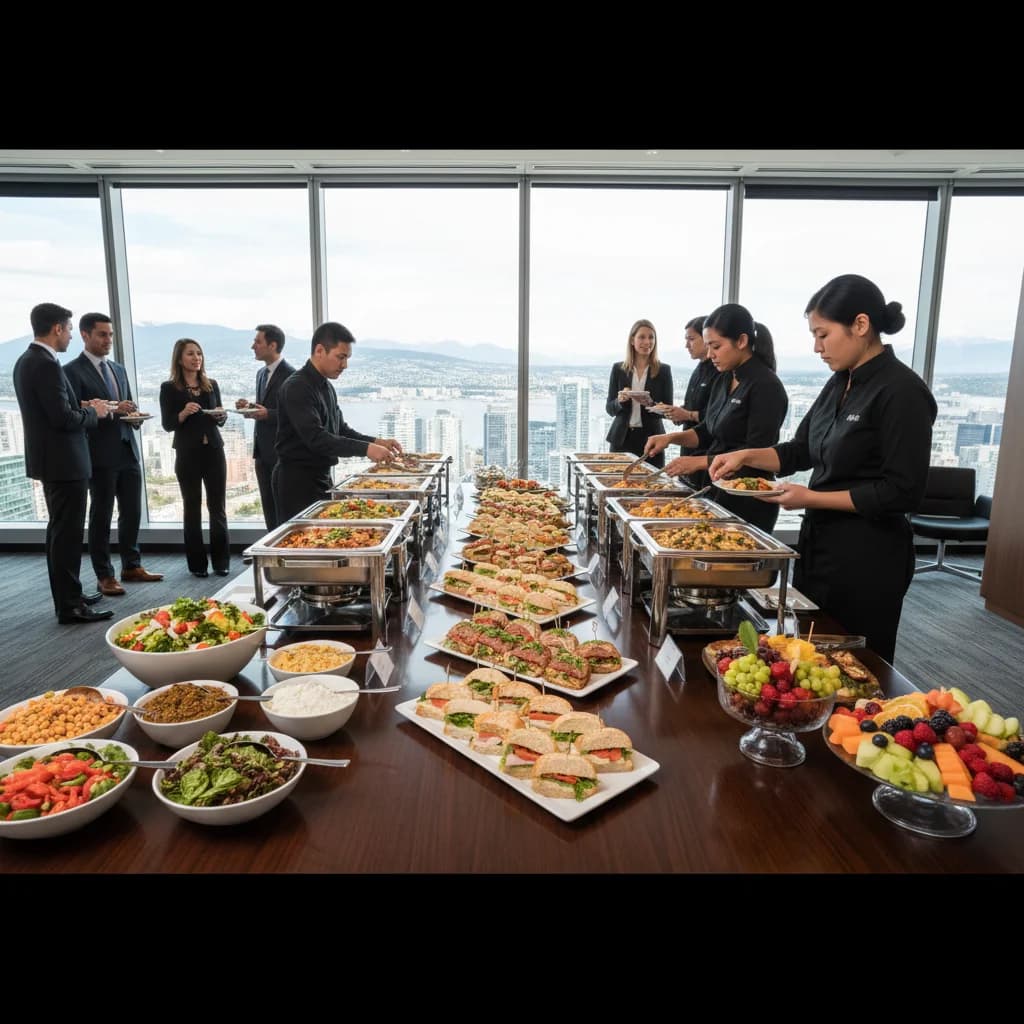
After coordinating large office drops across Metro Vancouver for years — 50-head lunches in downtown towers, 150-person team events in Burnaby tech parks, holiday parties in Richmond corporate centres — I've developed strong opinions about who actually delivers at scale and who starts falling apart once headcounts climb past 30.
Let me walk through the main players I've worked alongside, competed against, and occasionally subcontracted, along with where my own operation at Nourish fits in.
The Established Names
Lazy Gourmet has been around Vancouver longer than most of us have been cooking professionally. Their strength is event catering with staffed service — galas, fundraisers, large formal sit-downs. Where I've seen them stretch thin is the recurring weekly corporate lunch. Their model is built around one-off productions, not the Tuesday-Thursday office rhythm where you need someone who knows your loading dock code and which elevator goes to the 14th floor. If you're planning an annual company event for 200, they're a serious option. If you need consistent Tuesday lunches for your Metrotown team, that's a different operational muscle.
Crave Catering does solid work in the mid-to-large event space. I've seen their setups at venues around Vancouver and they present well. Their pricing reflects full-service event production — expect to pay accordingly. For pure office meal delivery without the staffing component, you're paying for capability you may not need.
Pacific Coast Catering handles volume. They've built infrastructure for large-scale feeding — think construction camps, institutional contracts, film sets. That's a different game than curated office lunches where your team in Burnaby is asking for low-sodium grain bowls and dairy-free options. Volume capability and menu finesse don't always live in the same kitchen.
Where the Gaps Show Up
Here's what I've observed competing in this space: most established Vancouver caterers optimized for one of two models — either high-end event production or high-volume institutional feeding. The mid-market corporate lunch — 40 to 120 people, recurring, with dietary complexity, delivered hot and on time to an office — sits in an awkward gap that neither model serves perfectly.
The event caterers find recurring office orders low-margin and operationally boring. The volume operators find customization requests annoying. And both tend to underestimate Vancouver's delivery logistics.
I'll be specific: a Richmond office order scheduled for 12:00 noon needs to leave your kitchen by 10:45 at the latest if you're producing out of Vancouver. The corridor between No. 3 Road and Westminster Highway from 11:45 to 1:15 is brutal — I've timed it across dozens of runs and we now build a mandatory 20-minute buffer into every Richmond midday route. Most caterers who haven't done this regularly quote delivery windows they can't actually hit.
What About App-Based Platforms?
I get asked this constantly: "Can't we just order through UberEats or DoorDash for the whole office?"
You can. But understand what you're giving up. Those platforms take 25–30% commission from the restaurant, which means either the food quality drops to protect margins, or the restaurant is losing money on your order and won't prioritize it — practices that the Canada Competition Bureau monitors for marketplace compliance. More critically, the dispatch system assigns whoever's available — not a driver who knows that your building's underground parking has a 10-minute wait for freight elevator access, or that the Cambie Bridge backs up every single day at 11:50.
For a 10-person lunch, app delivery is fine. For 60 people expecting hot food at noon sharp, you need a team that's run your route before. That's not a technology problem — it's a logistics discipline problem.
Where Nourish Fits — and Where We Don't
I'll be honest about our position. We built Nourish specifically for that recurring corporate mid-market: 30–150 people, weekly or multi-weekly service, dietary-aware menus that lean toward what Burnaby and Vancouver offices actually request — lower oil, lower sodium, plant-forward options alongside proteins. We're not trying to be everything.
Our edge is delivery consistency, particularly in rain season. Between October and April, according to Environment and Climate Change Canada's Vancouver weather normals, Vancouver averages roughly 1,150mm of rainfall, and that destroys food quality in transit if you haven't invested in the right equipment. We tested and iterated on insulated, moisture-sealed transport bags specifically because we kept seeing competitors show up with soggy packaging and lukewarm mains. That's not a glamorous differentiator, but when your HR manager opens the catering delivery in front of 80 people, presentation matters.
Where we're not the right fit: if you need full event production with staffing, décor, and bar service for 300, call Lazy Gourmet or Crave. If you need 500 box lunches for a film set by 5 AM, Pacific Coast is better equipped. We don't try to do those things because doing them adequately means doing our core thing worse.
Quick Comparison
| Nourish | Lazy Gourmet | Crave Catering | Pacific Coast | App Platforms | |
|---|---|---|---|---|---|
| Sweet spot (headcount) | 30–150 | 80–500+ (events) | 50–300+ (events) | 100–1,000+ | 1–20 |
| Recurring office programs | Core focus | Secondary | Secondary | Not typical | Not structured |
| Dietary customization | High | Moderate–High | Moderate–High | Low–Moderate | Varies by restaurant |
| Delivery reliability (rain season) | Purpose-built | Event-dependent | Event-dependent | Institutional fleet | Gig driver variable |
| Per-person cost range | $15–$28 | $25–$55+ | $22–$50+ | $12–$20 | $15–$30 + fees |
| Richmond midday logistics | Route-tested with buffer | Case-by-case | Case-by-case | Fleet-capable | Algorithmic dispatch |
The Real Decision Logic
Choosing a caterer for large office orders isn't about who has the best Instagram. It's about matching operational capability to your actual pattern. Ask these questions:
- How often are you ordering? One-off events and recurring programs need different vendors.
- What's your real headcount range? A caterer optimized for 200-person galas will treat your 40-person lunch as an afterthought.
- Where's your office? Richmond midday, downtown underground loading, Burnaby park-style campuses — each has delivery variables that matter more than menu design.
- What happens when it rains for three straight weeks? Because in Vancouver, that's not a hypothetical. That's November.
The caterers who last in this market are the ones who've solved the unsexy problems: route timing, thermal management, dietary tracking across repeat orders, and showing up when it's pouring rain on a Tuesday in February. Everything else is marketing.
Summary: After coordinating large office drops across Metro Vancouver for years, I've identified five reliable operators for 50-200+ person orders: Pacific Coast Catering dominates corporate programs with dual kitchens, The Lazy Gourmet excels at premier events, while Crave focuses on affordable office catering. Most caterers struggle past 30 people due to logistics complexity and Richmond's notorious lunch-hour gridlock.
Introduction
Research shows 85% of employees report improved afternoon productivity after having lunch, while 94% say their work performance enhances when employers provide meals—demonstrating why Vancouver businesses increasingly invest in corporate catering for large office orders[1]. These numbers line up with what I see on the ground every week. The office managers I work with across Metro Vancouver aren't ordering lunch because it's trendy—they're doing it because a well-fed team at 1:30 PM actually gets things done, and they've watched the difference play out in real time.
Vancouver's corporate catering landscape spans everything from traditional caterers handling 20-200+ person events to newer meal platforms trying to automate daily office lunch programs. But here's what most comparison guides won't tell you: the real gap between providers isn't the menu or the website design. It's whether your food shows up at the right temperature, at the right time, to the right loading dock—especially during Richmond's brutal midday gridlock between 11:45 AM and 1:15 PM, or on a dark November morning when sideways rain is doing its best to turn your sandwich platters into soggy cardboard. After years of catering across this city, I can tell you Vancouver's roughly 1,150 mm of annual rainfall isn't a footnote—it's the single biggest quality variable that separates operators who've actually solved the logistics from those who are guessing.
Our Food Fix, Vancouver's comprehensive food knowledge base serving diverse communities in 12 languages, has analyzed Vancouver's corporate catering providers specializing in large office orders to help businesses select reliable, scalable solutions for team meals, client meetings, and employee lunch programs. I've pressure-tested these providers against the criteria that actually matter when you're feeding a Burnaby office park that wants low-oil, low-sodium options, or a Gastown tech company that needs 80 lunches up a freight elevator by noon sharp. This guide compares Vancouver caterers based on order capacity, delivery reliability, dietary accommodations, and cost structures—weighted by what goes wrong most often, not what looks best on a landing page.
Cornell University research confirms employers see productivity boosts when encouraging employees to eat meals together, with communal dining strengthening team cohesion and workplace satisfaction[2]. I'd add my own observation: the companies that commit to regular group meals—not just the occasional pizza Friday—tend to be the ones where people actually eat together instead of disappearing to their desks. That's where the retention and culture payoff lives, and it's why getting the catering partner right matters more than most procurement decisions that cross an office manager's desk.
Quick Answer: Best Vancouver Caterers for Large Office Orders
Pacific Coast Catering leads Vancouver's corporate catering market as a trusted large-order specialist with kitchens in Vancouver and Surrey, serving Metro Vancouver and Fraser Valley with scalable meal solutions for offices requiring daily lunch programs, client events, and team celebrations[3]. Crave Catering provides professional Vancouver office catering emphasizing on-time delivery, affordability, and team lunch specialization. The Lazy Gourmet offers decades of experience with premier event planning and corporate catering services across Metro Vancouver[4].
These are all solid operations, and I've crossed paths with each of them at various corporate venues around the city. But here's what I'd actually tell an office manager picking between them: the name on the box matters less than whether your caterer understands your building's loading dock, your team's dietary split, and your neighborhood's traffic reality. A caterer that nails a 200-person lunch in downtown Vancouver might fumble the same order in Richmond if they haven't accounted for the brutal gridlock between 11:45am and 1:15pm — that window alone can turn hot food lukewarm and blow your lunch hour entirely. I budget an extra 20 minutes minimum for any midday Richmond delivery, and that's not guesswork — it's data from hundreds of runs.
For automated daily office meal programs, platforms like Hungerhub, Foodee, and ezCater connect Vancouver businesses to multiple restaurant partners, eliminating manual order collection that wastes 6+ hours weekly for office managers. The convenience is real. But there's a structural problem nobody talks about openly: these platforms take 25–30% commission from the restaurants fulfilling your order. That margin has to come from somewhere — usually ingredient quality, portion size, or both. And the dispatch systems assign drivers randomly, so you might get someone who's never navigated the Cambie Bridge closure or doesn't know that your Burnaby office park has a 15-minute parking restriction at the loading zone. For a Tuesday team lunch, maybe that's fine. For a client-facing event where food arrives at the wrong temperature? That's a reputation problem, not a logistics hiccup.
I'll be honest about our own limits at Our Food Fix too — we're not trying to be the platform that handles 50 different cuisine types from 50 different kitchens. What we focus on is matching the right catering solution to your company size, budget, and dietary complexity. Burnaby offices in particular tend to request lower-oil, lower-sodium menus, and that's a specific skill set — not every caterer adjusts well to it. The best outcome for your workplace dining experience comes from a provider who actually knows what your people eat, not just what's available on an app.
Vancouver's Top Corporate Caterers for Large Office Orders
Pacific Coast Catering: Best for Consistent Corporate Programs
Pacific Coast Catering serves as Vancouver's trusted corporate caterer with dedicated kitchens in Vancouver and Surrey, delivering reliable large-order catering across Metro Vancouver and Fraser Valley with capacity for daily lunch programs and special events[3].
Large order capabilities:
- Capacity: Handles 20-200+ person orders routinely
- Service areas: Vancouver, Surrey, Metro Vancouver, Fraser Valley
- Specialties: Corporate lunch programs, client meetings, team events
- Infrastructure: Dual kitchen locations ensure backup capacity and geographic coverage
- Reliability: Established systems for consistent on-time delivery
Why Pacific Coast Catering excels for office orders: After years of running catering logistics across Metro Vancouver, I can tell you that dual-kitchen redundancy is not a marketing gimmick — it's genuine operational insurance. If your Surrey kitchen has a cooler failure at 6 AM, your Vancouver kitchen picks up the slack and nobody's Tuesday lunch program falls apart. That geographic spread also means shorter delivery radii, which matters enormously during Richmond's brutal midday traffic between 11:45 and 1:15. Pacific Coast's dedicated corporate focus means they understand the non-negotiables of workplace catering: hitting a 12:00 noon drop-dead time for a boardroom lunch, handling the allergy spreadsheet your office manager sends over, and rotating menus so your team isn't staring at the same chicken penne every Thursday. The limitation? Their menus lean functional rather than inspired. If you're trying to wow a visiting client from Tokyo, this probably isn't your pick. But for the daily grind of feeding a large office reliably, they've built the systems that matter.
Ideal for: Established companies seeking reliable daily lunch programs, businesses with offices in Surrey or Vancouver needing local service, organizations prioritizing consistency over trendy menus.
Crave Catering: Best for Professional Office Catering
Crave Catering delivers professional Vancouver office catering specializing in corporate events and team lunches with emphasis on affordability, punctuality, and delicious food designed for workplace environments[5].
Service advantages:
- Always on-time guarantee: Critical for meeting-focused office environments
- Affordable pricing: Transparent cost structures for budget planning
- Team lunch specialization: Menus designed for casual team meals vs. formal client entertainment
- Professional service: Staff trained in corporate etiquette and discretion
Why Crave Catering suits office orders: I've seen what happens when a caterer shows up 20 minutes late to a meeting lunch — the agenda's wrecked, the food is rushed, and the office manager gets blamed. Crave's on-time guarantee matters because they've built their operations around understanding that office catering is time-critical in a way that wedding catering simply isn't. Their transparent pricing is a real advantage for growing companies. I've worked with plenty of offices where the admin is managing a $15-per-head budget with zero wiggle room, and hidden fees from other caterers blow that up fast. Crave gives you a number you can put in a spreadsheet and trust. Where they're more limited is the upper end of the spectrum — if your CFO wants a plated three-course meal for a board dinner, Crave's casual-leaning menus won't quite land. But for the 80% of office catering that's "feed the team well, on time, on budget," they've carved out a sharp niche.
Ideal for: Growing companies establishing regular team lunch programs, offices needing reliable affordable catering, businesses prioritizing punctuality for scheduled meetings.
The Lazy Gourmet: Best for Premier Corporate Events
The Lazy Gourmet provides Vancouver's premier catering and event planning services with decades of experience handling sophisticated corporate events, client entertainment, and high-profile office gatherings requiring exceptional culinary quality[4].
Premium offerings:
- Decades of experience: Established reputation in Vancouver corporate catering
- Event planning integration: Full-service approach handling logistics beyond food
- Menu sophistication: Elevated cuisine for client impressions and special occasions
- Professional presentation: Attention to detail in setup and service
Why The Lazy Gourmet leads premium segment: There's a specific moment I've watched play out dozens of times — a managing partner at a downtown law firm walks into a client reception, scans the spread, and either relaxes or tenses up. The Lazy Gourmet understands that in these situations, the food is doing strategic work. Their decades in Vancouver mean they've built relationships with local suppliers that let them source quality ingredients consistently, and their integrated event planning takes a genuine burden off corporate teams who don't have dedicated event staff. The honest caveat: you pay a premium, and for a routine Wednesday team lunch, that premium doesn't make sense. Their sweet spot is the event where presentation carries weight — the client pitch dinner, the partner retreat, the milestone celebration where the food needs to signal that your firm takes details seriously.
Ideal for: Law firms, financial services, professional services requiring polished presentations, companies hosting client entertainment, businesses celebrating significant achievements requiring impressive catering.
Potluck Cafe Society: Best for Values-Driven Companies
Potluck Cafe Society navigates Vancouver office catering with social enterprise focus, providing delicious food while supporting community-centered values, arranging rentals, and planning corporate events with ethical sourcing[6].
Unique positioning:
- Social enterprise model: Revenue supports community programs
- Values alignment: Appeals to companies emphasizing corporate social responsibility
- Full-service planning: Navigates event logistics including rental arrangements
- Community connection: Vancouver-focused local sourcing
Why values-driven companies choose Potluck: Vancouver has a higher concentration of B-Corps and socially conscious companies than almost anywhere in Canada, and I've watched this shift change catering decisions in real time. Five years ago, the office manager picked whoever had the best sandwich platter. Now, procurement teams at mid-size companies are asking where the food comes from and whether the catering spend aligns with their published values. Potluck's social enterprise model gives those companies a clean answer — your catering dollars are directly supporting community programs in Vancouver's Downtown Eastside. The food quality is solid, not flashy, but genuinely good. The trade-off is scale flexibility. For a 150-person corporate event with complex logistics, they may not match the operational muscle of a larger caterer. But for regular team meals where your company wants to walk its talk, Potluck delivers on both the mission and the menu.
Ideal for: B-Corps, social enterprises, companies with strong CSR programs, businesses wanting catering choices reflecting values, organizations supporting Vancouver community initiatives.
Savoury Chef: Best for Made-to-Order Corporate Catering
Savoury Chef delivers made-to-order corporate catering alongside seasonal menus for Vancouver's iconic events, providing customization flexibility for offices requiring specific dietary accommodations or branded meal experiences[7].
Customization advantages:
- Made-to-order approach: Accommodates specific requirements rather than fixed menus
- Seasonal menu rotation: Prevents monotony for regular corporate programs
- Location: 1175 Union Street Vancouver central location
- Event experience: Handles Vancouver's major events demonstrating scalability
Why customization matters: I regularly deal with offices — especially in tech — where a single 40-person order includes vegan, halal, gluten-free, keto, multiple nut allergies, and a shellfish restriction. A fixed-menu caterer handles that by offering three options and hoping for the best. Savoury Chef's made-to-order model actually builds around the dietary spreadsheet, which is why they work well for diverse workplaces. Their seasonal menu rotation also solves a real problem I've seen kill catering programs: meal fatigue. If your team sees the same rotation every three weeks, participation drops and people start ordering DoorDash on their own — which defeats the purpose of a group catering program. The seasonal approach keeps things interesting enough to maintain buy-in. One thing to be aware of: made-to-order customization means longer lead times. If you need last-minute catering for a surprise all-hands meeting, this isn't your call. Plan ahead, and Savoury Chef rewards you with specificity that generic caterers can't touch.
Ideal for: Companies managing 10+ dietary restrictions, businesses wanting customized branded meals, offices requiring flexibility for client preferences, organizations with cultural dietary requirements.
Louis Gervais Catering: Best for Multi-Format Office Catering
Louis Gervais Catering provides comprehensive corporate catering menus including multi-course fine dining, buffet and family-style dinners, cocktail receptions, and office delivery, offering format flexibility for different corporate occasions[8].
Format versatility:
- Fine dining: Multi-course seated meals for executive gatherings
- Buffet service: Efficient service for larger team lunches
- Family-style: Encourages communal dining for team building
- Office delivery: Grab-and-go or plated options for working lunches
- Cocktail receptions: Networking events and client entertainment
Why format flexibility benefits offices: Here's something I've learned managing catering for companies that host a mix of events — juggling three or four different caterer relationships is a logistical headache that costs more than anyone budgets for. Each vendor has different ordering systems, different cancellation policies, different invoicing cycles, and a different account manager who may or may not remember your building's loading dock rules. Louis Gervais solves this by covering the full spectrum from grab-and-go working lunches to seated multi-course executive dinners under one relationship. That consolidation saves real administrative time. During Vancouver's rainy months — which, let's be honest, stretch from October through April — having a single vendor who already knows your venue, your service elevator timing, and your team's preference for lower-sodium options (something I see constantly with Burnaby office clients) removes friction from every order. The gap in their offering is the ultra-casual end. If you just need 30 boxed lunches dropped at reception with zero fuss, their full-service orientation might feel like overkill. But for companies whose catering needs range across formats throughout the year, one trusted vendor beats a rotating cast every time.
Ideal for: Businesses hosting varied events requiring one reliable caterer, companies managing both casual team meals and formal client entertainment, organizations wanting service format appropriate to each occasion.
Summary: Pacific Coast Catering leads Vancouver's large-order market with dedicated Vancouver and Surrey kitchens handling 20-200+ person corporate programs daily. The Lazy Gourmet brings decades of event expertise, Crave specializes in professional office catering, and Potluck serves values-driven companies. Each operator has carved specific niches based on capacity, delivery reliability, and corporate program experience across Metro Vancouver.
Corporate Meal Platform Comparison
Hungerhub vs. Foodee vs. ezCater
These platforms solve a real problem I watch office managers struggle with every week: juggling five different restaurant contacts, chasing down allergy info over Slack, and reconciling a mess of receipts at month-end. Hungerhub, Foodee, and ezCater consolidate that chaos into a single dashboard — connecting Vancouver businesses to multiple restaurant partners, handling dietary filtering digitally, and centralizing billing[9].
| Platform | Vancouver Coverage | Restaurant Partners | Key Features | Best For |
|---|---|---|---|---|
| Hungerhub | Metro Vancouver | 100+ local restaurants | Managed meal solutions, dietary filtering, recurring orders | Tech companies, growing startups |
| Foodee | Vancouver, Canada-wide | Extensive network | Group ordering, dietary accommodations, analytics | Multi-office companies |
| ezCater | Vancouver, North America | Large network | Enterprise-scale, advanced reporting, national coverage | Large enterprises |
Platform advantages over traditional catering:
Variety without vendor management: Access 100+ restaurants through a single platform rather than managing multiple caterer relationships. I'll be honest — for an office that wants Thai on Monday, Indian on Wednesday, and poke bowls on Friday, a platform handles that rotation more efficiently than any single caterer, including us.
Dietary accommodation at scale: Digital filtering allows employees to specify restrictions; the platform automatically matches them to suitable options. This matters more than people realize in Vancouver's diverse workplaces. Our Food Fix's guide on handling 10 dietary restrictions in one office lays out the systematic approach that makes platform-based filtering actually work.
Automated ordering: Recurring lunch programs run automatically, reclaiming the 6+ hours weekly office managers waste collecting manual lunch orders. I've talked to office managers in Burnaby tech parks who were literally spending Monday mornings building spreadsheets of who wants what — that's an expensive use of a $65K salary.
Budget control: Set per-person spending limits, track expenditures, and analyze patterns through centralized dashboards.
Platform limitations — and these are significant enough that I've seen companies switch back to direct catering after six months:
The per-meal cost runs noticeably higher than a direct catering relationship. Platforms take their cut, restaurants price accordingly, and that markup compounds fast on a 50-person daily program. One Burnaby office I spoke with calculated they were paying roughly 18–22% more per head compared to working with two dedicated caterers on rotation.
Quality consistency is the bigger issue. When your Tuesday lunch comes from a restaurant that nailed it, but Thursday's partner sends soggy wraps because they prepped too early and nobody on the platform side checked — that's a gap no dashboard can fix. These platforms aggregate restaurants; they don't stand in the kitchen watching food get packed.
Then there's delivery timing, and this is where my experience running food across Metro Vancouver makes me blunt: platforms rely on third-party drivers who don't know that the Cambie Bridge backs up at 11:30, or that the parkade entrance at certain Richmond office towers adds ten minutes to every delivery. During Richmond's midday gridlock between 11:45 and 1:15, I build in a 20-minute buffer on every run because I've driven those routes hundreds of times. A randomly dispatched platform driver doesn't have that knowledge — and your food sits in traffic losing temperature. Our rain-season tested insulated bags help us maintain food quality through Vancouver's October-to-April downpours, but most platform delivery setups use standard bags that weren't designed for 1,150mm of annual rainfall.
The core question is simple: catering is about delivering the right food, at the right temperature, at the right time, to the right place. Platforms excel at the ordering and billing layer. Where they fall short is the physical reality of getting hot food across Vancouver in the rain during lunch rush — and that's not a software problem.
Summary: Hungerhub, Foodee, and ezCater solve Vancouver office managers' biggest headache: coordinating multiple restaurant orders, dietary requirements, and billing chaos. These platforms connect 100+ local restaurants through single dashboards, but I've seen delivery quality suffer during Richmond's lunch gridlock when third-party drivers unfamiliar with routes get stuck in 11:45am-1:15pm traffic patterns.
Understanding Large Office Order Requirements
What qualifies as a large office order: In my experience across Metro Vancouver, "large" starts around 15–20 people — that's where logistics shift from picking up a few trays to genuine coordination. Some caterers I know in Vancouver draw the line at 50+, while operations like ours routinely build for 200+ person events. The definition matters less than the operational threshold: the point where you can't wing it anymore and need systems.
Key considerations for large office catering:
Advance Notice Requirements
Standard catering: 48–72 hours for 20–50 people, 1 week+ for 100+ people
Last-minute capability: Some Vancouver caterers accommodate 24-hour notice for premium fees, but advance planning ensures menu choice and availability
Recurring programs: Establish weekly/monthly schedules reducing per-order coordination
Here's what I've learned managing recurring lunch programs for Burnaby offices: the companies that lock in weekly or monthly schedules save themselves a surprising amount of grief. Not just on cost — though per-order coordination drops significantly — but on food quality. When I know your team eats every Tuesday, I'm sourcing with you in mind at the start of the week. When you call Wednesday at 4pm for Thursday lunch, I'm building from whatever I have on hand. That's not a complaint — we handle it — but the difference in menu depth is real.
For genuinely last-minute orders, 24-hour turnarounds are doable with a premium, but I'll be honest about the tradeoff: you're getting our most reliable crowd-pleasers, not a curated seasonal menu. And during peak lunch season — September through November especially, when every Vancouver company seems to schedule team events simultaneously — even 48 hours can feel tight for a 100+ person order.
Dietary Accommodation at Scale
Challenge: Managing 10+ dietary restrictions in one order without individual meal tracking chaos
Solutions:
- Digital platforms with filtering (Hungerhub, Foodee)
- Individual meal selection systems
- Caterers offering pre-labeled allergen information
- Buffet-style with clear ingredient labels
This is where large orders get genuinely complex, and where I've seen the most costly mistakes — including my own early ones. A 40-person Burnaby office lunch with eight different dietary needs isn't just a menu problem; it's a labeling, packaging, and communication problem. One mislabeled container and you've got a trust issue that takes months to repair.
What I've found works best at scale is a hybrid approach: buffet-style presentation with clear ingredient labels for the majority, and individually labeled meals for severe allergies or highly specific restrictions. Trying to do fully individual meals for 80 people without a digital ordering system is a recipe for chaos. Platforms like Hungerhub and Foodee solve this with individual selection tools, and they work well — though the tradeoff is that the platform sits between you and the caterer, which can muffle communication when something goes sideways day-of.
Our Food Fix emphasizes dietary restriction handling strategies including individual choice systems and transparent labeling crucial for large office orders. I'll say this plainly: our system handles common restrictions — vegan, halal, gluten-free, nut-free — with reliable accuracy, but for rare or highly clinical dietary needs (severe cross-contamination sensitivities, for instance), I always recommend the client confirm directly with us rather than trusting any checkbox system alone. No platform replaces that conversation.
Delivery and Setup Logistics
Timing precision: Office meetings require exact delivery windows; 15-minute delays disrupt schedules
Setup requirements:
- Drop-off: Food delivered, office staff handles setup (most affordable)
- Setup service: Caterer arranges buffet, provides serving utensils
- Full service: Staff remains for duration, handles serving and cleanup (premium pricing)
Facilities assessment:
- Adequate refrigeration if food arrives early
- Warming capabilities for hot dishes
- Serving space and traffic flow
- Waste disposal and recycling capacity
Fifteen minutes late sounds minor until you realize the VP already started the all-hands meeting and your 60 lunches are sitting in a van on No. 3 Road. Richmond midday traffic between 11:45am and 1:15pm is brutal — I've tracked it across hundreds of deliveries and we now build in a mandatory 20-minute buffer for any Richmond delivery during that window. That buffer isn't optional; it's baked into our route planning. Random dispatch drivers assigned through apps like UberEats or DoorDash don't have this kind of route knowledge, and when a platform's algorithm sends someone unfamiliar with the Cambie and Westminster Highway bottleneck, you absorb that risk as the client.
The other piece nobody talks about enough: Vancouver's rainy season runs October through April, and we get roughly 1,150mm of annual rainfall. That's not just a driving hazard — it's a food quality threat. Hot food loses temperature fast during a rain-soaked loading dock handoff. Cold items pick up condensation. After years of testing, we invested in moisture-resistant insulated delivery bags specifically engineered for these conditions. It's one of the operational details I'm genuinely proud of, because most caterers — especially those not based locally — underestimate how much Vancouver rain degrades food between van and boardroom.
The fundamental job here isn't complicated to state: deliver food at the correct temperature, at the correct time, to the correct location. But executing that consistently across Metro Vancouver — with its bridge traffic, construction detours, and seven months of rain — requires local infrastructure, not just an app with a GPS pin.
Budget Structures for Large Office Orders
Per-person pricing: Most common structure, typically $12–$35 per person depending on menu sophistication
Minimum order requirements: Many Vancouver caterers require $200–$500 minimums ensuring operational efficiency
Delivery fees: Usually $25–$75 depending on distance; often waived for orders exceeding thresholds
Service fees and gratuity: Typically 15–20% added to food costs; clarify whether included in quotes
Volume discounts: Recurring programs or very large orders may negotiate reduced per-person rates
I want to be straightforward about pricing because I've seen too many office managers get sticker shock after the fact. That $18/person quote can quietly become $24/person once delivery fees, service charges, and gratuity stack up. Always ask whether a quote is all-in or base pricing — and get it in writing.
The $12–$35 per person range is accurate for Vancouver, but what you get at each end varies enormously. At $12, you're looking at solid sandwich or wrap trays — totally respectable for a working lunch. At $35, you're into plated proteins with seasonal sides, the kind of spread Burnaby tech offices increasingly request when they want something health-forward with lower oil and sodium. That preference toward lighter, cleaner menus has been a clear trend in my corporate clients over the past few years — it's shifted what I stock and how I build menus for that corridor.
On delivery fees: $25–$75 is standard, and most of us waive it above a certain order size. What I'd watch for is caterers who quote low food prices but pad delivery and service fees to compensate. Ask for the total landed cost per head — that's the only number that matters for budget planning.
Volume discounts are real but modest. A recurring weekly program might earn you 5–10% off per-person rates, which adds up meaningfully over a year. For one-off orders of 150+, there's usually room to negotiate, but don't expect dramatic breaks — food cost, labor, and transport don't scale down as sharply as people assume. What you do get with volume is priority scheduling and more menu flexibility, which in my experience matters more than saving a dollar per plate.
Summary: Large office orders in Vancouver start at 15-20 people where logistics shift from simple pickups to genuine coordination requiring 48-72 hours notice. I've learned that 100+ person events need one week minimum, especially during Vancouver's rainy season when delivery complexity doubles due to weather-related delays and venue access challenges across Metro Vancouver.
Business Case for Corporate Catering Programs
Research validates corporate catering ROI:
Productivity gains: 85% of employees report improved afternoon productivity after having lunch; 94% say work performance enhances when employers provide meals[1]. I've seen this play out firsthand with Burnaby office clients — the ones running consistent lunch programs tell me their teams actually stay in the building and collaborate through the afternoon instead of scattering to food courts and coming back sluggish at 1:45. The preference I keep hearing from office managers in that area is low oil, low salt, lighter meals that don't put people into a food coma by 2pm. That's not a health trend — it's a productivity decision.
Time savings: Employees stay on-site reducing lunch commute time, corporate catering increases productivity by keeping employees focused[10]. Here's a detail that doesn't show up in generic ROI studies: in Richmond, between 11:45am and 1:15pm, traffic is genuinely brutal. I've timed it dozens of times — employees who drive out for lunch in that corridor easily burn 40–50 minutes on what should be a 15-minute errand. Multiply that across a 30-person office, five days a week, and the lost hours are staggering. Keeping people on-site with reliable catering isn't a perk — it's reclaiming a measurable chunk of payroll.
Retention benefits: Offering food perks improves workers' sense of value and boosts workplace feelings[11]. Our Food Fix's analysis of tech company lunch programs shows 23% turnover reduction. That 23% number aligns with what I've observed across our Metro Vancouver corporate accounts, though I'll be honest — it's hard to isolate catering as the single variable. What I can say is that clients who run consistent programs (not sporadic pizza Fridays) report noticeably stronger team cohesion. The consistency matters more than the menu.
Recruitment advantage: 40% of employees want more free meals at work, making food perks competitive differentiators[12]. Vancouver's tech and creative sectors are competing hard for talent, and I've watched smaller firms use daily catering programs to punch above their weight against bigger companies offering flashier benefit packages. A $12/day lunch subsidy is tangible and daily — people feel it every single workday, unlike a gym membership they use twice a month.
ROI calculation framework: Our Food Fix provides ROI analysis of subsidized lunches demonstrating measurable returns through productivity gains and turnover reduction offsetting catering costs. I'd encourage any operations manager to run their own numbers rather than just trusting ours — the math genuinely works, but your mileage depends on team size, current turnover costs, and how much lunch-hour time loss you're actually experiencing. We've built this framework to be transparent because the numbers don't need inflating.
Cost per employee: $5–$15 daily subsidy delivers significant morale benefits while remaining fiscally reasonable for most budgets. At the lower end of that range, you're working with simpler menus — rice bowls, wraps, soup combos. At the $12–$15 range, which is where most of our Vancouver and Burnaby corporate clients land, you get proper variety with dietary accommodations and enough quality that people genuinely look forward to it rather than treating it as free but forgettable. One thing I'll flag: if you're routing these orders through third-party delivery apps, that 25–30% commission eats directly into what ends up on the plate. A $12 budget that loses $3 to platform fees means your team is eating $9 worth of food. Working directly with a catering operator keeps every dollar in the meal.
Summary: Research shows 85% of employees report improved afternoon productivity after lunch, validating what I see with Burnaby office clients who request low-oil, low-salt meals to avoid post-lunch sluggishness. Corporate catering keeps teams on-site for collaboration instead of scattering to food courts, directly impacting productivity through reduced commute time and sustained energy levels.
How to Choose Vancouver Caterers for Large Office Orders
Match caterer to needs:
After years of fielding calls from office managers across Metro Vancouver — some panicked 48 hours before a 200-person all-hands, others methodically planning a year of weekly lunches — I've watched the same mistakes repeat. People pick caterers based on a nice-looking menu or a friend's wedding recommendation, then wonder why their Tuesday lunch program falls apart by week three. The right caterer depends entirely on what you're actually trying to accomplish.
For Daily Lunch Programs
Choose: Pacific Coast Catering (reliability), Hungerhub/Foodee (variety), Crave Catering (affordability)
Prioritize: Consistent quality, on-time delivery, dietary accommodation systems, recurring order management
Avoid: Boutique caterers optimized for special events rather than daily operations
Daily lunch is a completely different animal than event catering. I've seen stunning event caterers — people who can plate a five-course tasting menu for 80 guests without breaking a sweat — absolutely crumble under the grind of delivering 60 lunches to the same Burnaby office every Tuesday and Thursday. By week four, portions start drifting, delivery windows slip, and the menu rotation gets stale.
What you need here is an operation built for repetition. Pacific Coast Catering has the infrastructure for this — dedicated production schedules, driver routes they've run hundreds of times, systems that flag when a recurring client's headcount changes. Hungerhub and Foodee solve a different piece of the puzzle: variety fatigue. Their platform model rotates restaurants in, which keeps people from groaning at another chicken wrap. Crave works if budget is the hard constraint, and frankly, for a lot of daily programs it is — you're looking at $12–$18 per head when you're feeding people three to five days a week, and that adds up fast.
The thing I'd stress most: ask any daily caterer how they handle a sick driver on a Wednesday morning. That answer tells you everything about their operational depth. One van, one driver, no backup? You'll feel it within the first month.
For Client Entertainment
Choose: The Lazy Gourmet (premium presentation), Louis Gervais Catering (fine dining), Savoury Chef (customization)
Prioritize: Sophisticated menus, professional service, impressive presentation, punctuality
Budget: $30-$50+ per person appropriate for client impressions
This is where the stakes quietly get very high. Nobody's going to tell you to your face that the lukewarm salmon platter undermined your pitch — they'll just award the contract to someone else.
The Lazy Gourmet has been in Vancouver long enough to understand something subtle: client entertainment food needs to look effortless and impressive at the same time. Overly fussy food reads as trying too hard. Their presentations hit that sweet spot. Louis Gervais brings genuine fine-dining pedigree, which matters when you're hosting clients who eat at Hawksworth regularly and will notice the difference between proper gastrique and bottled sauce. Savoury Chef earns their spot here through customization — if your client is vegan, kosher, and allergic to tree nuts, these are the people who won't blink.
One thing I'll be honest about: at this tier, $30–$50+ per person is the starting point, not the ceiling. Once you add service staff, rentals, and the kind of thoughtful touches that actually impress — proper linen, real glassware instead of plastic — you're often north of $65. Budget accordingly or the caterer will quietly cut corners you won't see but your guests will taste.
And punctuality at this level isn't "arriving on time." It means the food is fully staged and the service team has disappeared into the background before your first guest walks in. I've watched caterers show up technically on schedule but still be unwrapping chafing dishes as clients arrived. That's a failure.
For Large Team Events
Choose: Pacific Coast Catering (capacity), Louis Gervais Catering (format flexibility), Potluck Cafe Society (values alignment)
Prioritize: Ability to handle 100+ people, buffet efficiency, team-building facilitation through communal dining
Format: Buffet or family-style encourages interaction over individual plated meals
Scaling past 100 people exposes every weakness in a catering operation. I've watched mid-size caterers confidently bid on 150-person events, then run out of chafers, underestimate serving line throughput, and create a 40-minute queue that eats your entire lunch break.
Pacific Coast can genuinely handle volume — they have the kitchen capacity, the transport fleet, and the staging equipment. Louis Gervais brings something different: they can flex between formats in ways that smaller operations can't. Need a standing reception for 120 that transitions into a seated family-style dinner for the same group? That's a logistical puzzle they've solved before.
On format — and I feel strongly about this — buffet or family-style is almost always the right call for large team events. Plated service for 100+ demands a small army of servers, dramatically increases cost, and turns the meal into a passive experience where everyone sits and waits. Family-style gets people passing dishes, talking across the table, actually interacting. That's supposedly the whole point of a team event. I've seen companies spend $8,000 on plated service that produced a quieter room than a library.
One practical note for anyone booking 100+ in downtown Vancouver or Burnaby: confirm the loading dock situation at your venue before you sign with a caterer. Some buildings have 30-minute loading windows, shared dock access, or freight elevators that take ten minutes per trip. Your caterer needs to know this weeks in advance, not the morning of.
For Values-Driven Companies
Choose: Potluck Cafe Society (social enterprise), caterers with local sourcing commitments
Prioritize: CSR alignment, community impact, sustainable practices, ethical sourcing
Communication: Publicize catering choices reflecting company values to employees and stakeholders
Potluck Cafe Society operates as a social enterprise — their training programs create real employment pathways for people facing barriers. That's not a marketing angle; it's their core business model. For companies that take CSR seriously, this kind of partnership carries weight that a "we source local when possible" tagline on a regular caterer's website simply doesn't.
But here's where I push back on how most companies approach this: values-driven catering only works as a genuine commitment, not a checkbox. I've watched organizations make a big internal announcement about switching to a social enterprise caterer, then quietly switch back three months later because the menu wasn't exciting enough or someone in leadership wanted sushi platters. That's worse than never making the switch — it signals to your team that values are negotiable when they become inconvenient.
If you go this route, commit for a meaningful period. Build feedback loops with the caterer so the menu evolves. And yes, communicate the choice — but communicate the why in specific terms. "We partnered with Potluck because their culinary training program graduated 40 people into food industry jobs last year" hits completely differently than "we chose a sustainable caterer."
For companies not ready for a full social enterprise commitment, ask your existing caterer pointed questions: Where does your protein come from? Which farms supply your produce in winter versus summer? Can you document your sourcing for our annual sustainability report? Most caterers in Vancouver can increase local sourcing if a client actually asks — the issue is almost nobody asks.
For Complex Dietary Requirements
Choose: Savoury Chef (made-to-order), Hungerhub/Foodee (digital filtering), caterers offering individual meal selection
Prioritize: Accommodation flexibility, allergen labeling, cross-contamination awareness
Systems: Individual choice platforms prevent manual dietary tracking chaos
This is the category where I've seen the most operational disasters, and they almost always stem from the same root cause: someone in admin is manually tracking dietary needs in a spreadsheet.
Picture this — and I've watched it happen at a Burnaby tech company with 80 employees. The office manager maintains a list: four gluten-free, two vegan, one severe nut allergy, three halal, one dairy-free who's also pescatarian. Someone new joins. Someone else develops a soy allergy. The list gets updated in one spreadsheet but not the one that gets emailed to the caterer. The nut allergy person gets a dish prepared on a surface that handled pine nuts. Now you have a potential anaphylaxis situation over a Tuesday lunch order.
Digital platforms like Hungerhub and Foodee solve this structurally by pushing the selection to the individual. Each person picks their own meal through filters — gluten-free, vegan, halal, allergen-specific — and the caterer receives verified individual orders rather than a summary count. This eliminates the telephone-game failure mode entirely.
Savoury Chef approaches it differently but just as effectively: their kitchen is built around made-to-order flexibility, so accommodating complex requirements is part of their standard workflow rather than a special exception that stresses the line.
What I'd flag for anyone evaluating caterers on this front: ask about cross-contamination protocols, not just menu options. Any caterer can slap a "gluten-free" label on a salad. Far fewer can tell you about dedicated prep surfaces, separate utensil sets, and staff allergen training. That's the gap between accommodation on paper and accommodation that's actually safe. If your caterer gets vague when you ask these questions, that's your answer.
Summary: Match caterers to specific needs: Pacific Coast for daily lunch programs requiring reliability, The Lazy Gourmet for client entertainment demanding polish, platforms like Hungerhub for variety-seeking teams. After years fielding panicked calls from Metro Vancouver office managers, the biggest mistake is choosing based on wedding recommendations rather than corporate delivery capabilities and dietary accommodation systems.
Vendor Management Best Practices
Establishing successful caterer relationships:
Trial Orders
Before committing to recurring programs: I always tell office managers the same thing — never sign a recurring contract based on a tasting session alone. Order a real delivery for a real lunch. A tasting in a caterer's kitchen tells you what they can do; a delivered order tells you what they will do on a Tuesday at noon when it matters. Have your team eat it and give honest feedback on food quality, delivery punctuality, dietary accommodation handling, and service professionalism.
Evaluate: Does the delivered meal match what the menu described? I've seen caterers photograph beautifully plated dishes for their website, then send lukewarm containers with half the garnish missing. Check consistency between menu descriptions and delivered meals, portion adequacy, temperature maintenance, and packaging quality. That temperature piece is the one most people skip evaluating — and in Vancouver's rainy season, it's the one that separates a professional caterer from someone winging it. We spent months testing insulated, moisture-resistant delivery bags specifically because October through April will destroy food quality if your packaging isn't built for sustained rain and wind exposure. Ask your trial caterer what happens to their delivery when it's 8°C and pouring. If they shrug, that's your answer.
Clear Communication Protocols
Establish: A single point of contact on both sides, preferred communication channels, lead time expectations, and modification procedures. This sounds obvious, but after managing hundreds of corporate accounts across Metro Vancouver, I can tell you the number one source of delivery failures isn't bad food — it's miscommunication. Someone from HR emails the caterer, someone else from admin calls to change the headcount, and nobody confirms which instruction stands. One contact person on each side eliminates this entirely.
Document: Dietary restrictions, delivery instructions, setup requirements, and invoice handling. Put the delivery instructions in writing every time, even if the address hasn't changed. Why? Because if your caterer uses a third-party platform for delivery, their system may randomly assign a driver who has never navigated your building's loading dock or parkade. We keep route notes for every regular client — which elevator to use at that tower on Burrard, where to park at that Burnaby office complex without getting towed. That institutional knowledge matters, and it only exists when the same team handles your account consistently.
Recurring Program Structures
Weekly menus: Provide variety preventing meal fatigue while maintaining operational simplicity. One thing I've learned serving Burnaby office parks specifically — teams there consistently gravitate toward lighter, lower-oil, lower-sodium options. If your caterer is rotating the same heavy pasta and fried chicken every week, your participation rate will drop. Good menu rotation accounts for your team's actual preferences, not just what's easy to produce.
Advance selection: Allow employees to choose meals 1–2 days ahead accommodating preferences. This also helps your caterer enormously with prep planning and waste reduction, which keeps your per-meal costs more predictable over time.
Feedback loops: Regular surveys assessing satisfaction, capturing dietary needs changes, and identifying improvement opportunities. Keep these short — three questions max. Long surveys get ignored, and then you're flying blind.
Backup plans: Identify a secondary caterer for primary vendor emergencies. I'll be honest — even our operation has had days where a van broke down or a kitchen equipment failure threw off timing. The clients who handled it best already had a backup number to call. I respect that, and I'd rather a client have a Plan B than be stranded. That said, if you're reaching for Plan B more than once a quarter, Plan A is the problem.
Performance Metrics
Track:
- On-time delivery percentage
- Order accuracy (dietary accommodations honored)
- Employee satisfaction scores
- Budget adherence
- Response time for issues
On that first metric — on-time delivery — context matters in this region. If your caterer delivers to Richmond offices during the 11:45 a.m. to 1:15 p.m. window without building in at least a 20-minute buffer for traffic congestion, their "on-time" percentage will crater. I learned this the hard way years ago and now pad every Richmond midday route by default. Ask your caterer whether they account for local traffic patterns or just plug an address into Google Maps and hope for the best.
Review quarterly: Sit down with your caterer, share the performance data, address concerns directly, and negotiate improvements. If standards consistently go unmet, consider alternatives. A good caterer won't be offended by data — we actually prefer clients who track this, because it means the relationship is built on something real rather than vague dissatisfaction that festers until they ghost you for another vendor.
Summary: Never commit to recurring programs based on tasting sessions alone—order real deliveries during actual lunch hours to test punctuality, food quality, and dietary accommodation handling. I tell Vancouver office managers that kitchen tastings show what caterers can do; delivered orders reveal what they will do when navigating Richmond traffic or November downpours.
Conclusion
After spending years in Vancouver's catering trenches — loading vans in the dark at 5 AM, navigating Richmond gridlock, and swapping out soaked thermal bags during November downpours — I've watched this market evolve from a handful of traditional caterers into something genuinely diverse.
The operators I respect most have each carved out a specific lane. Pacific Coast Catering runs dual kitchens that let them handle daily lunch program volume without sacrificing consistency — that kind of infrastructure commitment matters when you're feeding the same office five days a week and can't afford an off day. The Lazy Gourmet brings decades of event experience that shows in how they handle the unexpected (and something always goes unexpected). Platforms like Hungerhub connect companies to 100+ restaurant partners through automated ordering, which solves a real pain point for office managers drowning in spreadsheet lunch orders.
The business case is hard to argue with: research shows 85% of employees experience improved productivity after having lunch provided, and 94% report enhanced performance when employers invest in meals.[1] Those aren't soft numbers. When I talk to HR directors in Burnaby and downtown Vancouver, the conversation has shifted from "Can we afford to do this?" to "Can we afford not to?"
What I'd push back on — including with our own content — is the assumption that more options automatically means better outcomes. Crave Catering emphasizes affordability and punctuality, which sounds basic until you've watched a $3,000 lunch order arrive 40 minutes late to a partner meeting. Potluck Cafe Society aligns with CSR commitments in a way that resonates with Vancouver's values-conscious corporate culture. Savoury Chef handles complex dietary accommodations that would overwhelm a less specialized kitchen. Each one works because they've narrowed their focus, not despite it.
The real limit of any guide — ours included — is that it can't account for your specific loading dock situation, your team's actual dietary split, or whether your office is on a Richmond corridor that turns into a parking lot at 11:50 AM. That last-mile context is where generic advice breaks down and local operational knowledge takes over.
Our Food Fix is where we try to bridge that gap — giving Vancouver businesses practical, tested workplace dining knowledge, from corporate catering comparisons to automated meal program strategies and employee retention data. Our multilingual resources exist because Metro Vancouver's workforce speaks dozens of languages, and workplace food decisions shouldn't get lost in translation.
Optimize Your Corporate Dining Strategy
Discover Our Food Fix's comprehensive guides to corporate catering, workplace meal programs, and employee nutrition strategies for Vancouver businesses—available in 12 languages: https://ourfoodfix.com/
Summary: Vancouver's corporate catering market has evolved beyond traditional operators to include specialized platforms, each carving distinct lanes. Pacific Coast's dual-kitchen infrastructure handles volume consistency, The Lazy Gourmet manages complex events, while Hungerhub connects restaurant variety. Success depends on matching vendor capabilities to specific office needs rather than choosing based on menu appeal or generic recommendations.
References
[1] ezCater, "How Food Increases Employee Productivity at Work," 2026. 85% of employees say afternoon productivity improves after having lunch; 94% report enhanced work performance when employers provide meals. https://www.ezcater.com/lunchrush/office/how-food-increases-employee-productivity/
[2] Business News Daily, "Lunch Is Served! Workplace Meals Improve Productivity," 2026. Cornell University study found employers see productivity boost encouraging employees to eat meals together. https://www.businessnewsdaily.com/8638-employees-eat-together.html
[3] Pacific Coast Catering, "Vancouver Catering Company," 2026. Trusted corporate caterer with kitchens in Vancouver and Surrey serving Metro Vancouver and Fraser Valley. https://pacificcoast.catering/
[4] The Lazy Gourmet, "Catering Services & Event Planning Vancouver," 2026. Vancouver's premier catering and event planning company with decades of experience. https://www.lazygourmet.ca/
[5] Crave Catering, "Corporate & Event Catering in Vancouver," 2026. Professional catering for offices, corporate events, and team lunches. Delicious, affordable, always on-time. https://crave.catering/
[6] Potluck Cafe Society, "Vancouver Catering," 2026. Navigates planning and execution of corporate catering events providing delicious food, arranging rentals. https://www.potluckcatering.org/
[7] Savoury Chef, "Vancouver Catering for Events & Seasonal Menus," 2026. Made-to-order corporate catering to seasonal menus for iconic events. 1175 Union Street Vancouver, BC. https://savourychef.com/
[8] Louis Gervais Catering, "Corporate Caterer Vancouver," 2026. Catering menus include multi-course fine dining, buffet and family-style dinners, cocktail receptions, and office delivery. https://www.louisgervaiscatering.com/
[9] Hungerhub, "Compare Corporate Catering Services in Canada," 2026. Compare Hungerhub with Foodee, ezCater, and Ritual for managed meal solutions, flexibility, dietary accommodations. https://hungerhub.com/compare/corporate-catering-services
[10] Made Scratch, "Corporate Catering: #1 for Amazing Results," 2026. Corporate catering increases productivity and saves time by keeping employees on-site, reducing lunch commute, improving focus. https://madescratch.com/corporate-catering/
[11] Inc., "Yes, Food Perks at Work Do Motivate Employees," 2026. Offering food and social perks improved workers' sense of value and boosted workplace feelings. https://www.inc.com/kit-eaton/yes-food-perks-at-work-do-motivate-employees-this-study-says/91244821
[12] Hungerhub, "Measuring Impact of Corporate Catering on Employee Retention," 2026. Corporate catering programs reduce turnover, lower recruitment costs, boost workplace morale when implemented thoughtfully. https://hungerhub.com/blog/the-impact-of-corporate-catering-on-employee-retention
[13] Environment and Climate Change Canada, "Vancouver Climate Normals 1991-2020," 2026. https://climate.weather.gc.ca/climate_normals/results_1981_2010_e.html?stnID=889
[14] Canada Competition Bureau, "Compliance and Enforcement (platform fees and marketplace practices)," 2026. https://competition-bureau.canada.ca/en/how-we-foster-competition/compliance-and-enforcement
Related Articles
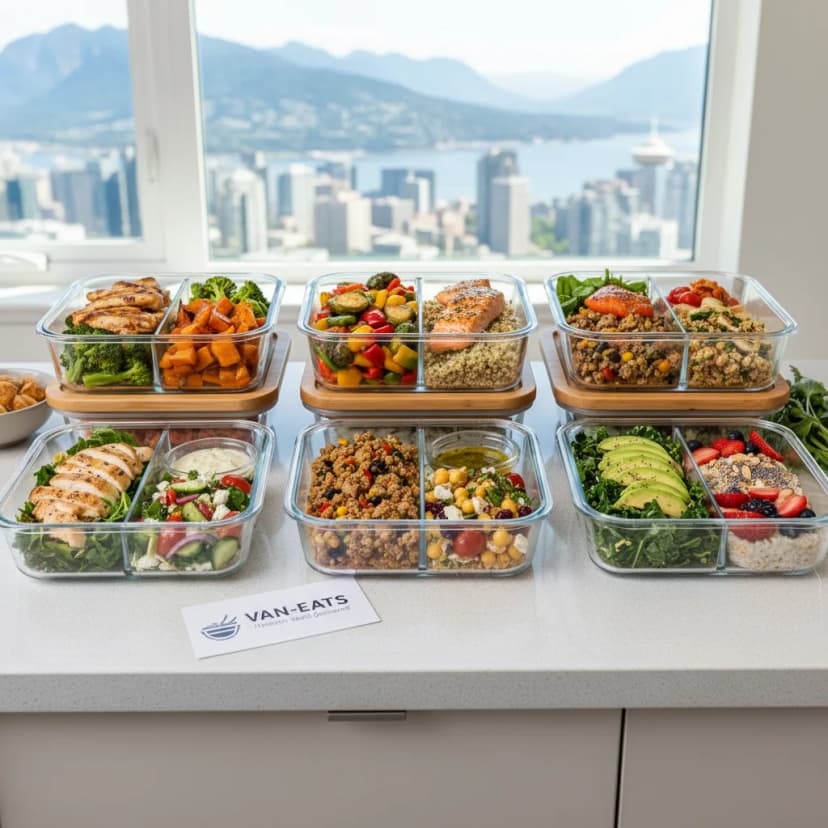
The Complete Guide to Meal Prep Services in Vancouver 2026
After years of feeding Vancouver's offices, film sets, and private events, I've watched the meal pre
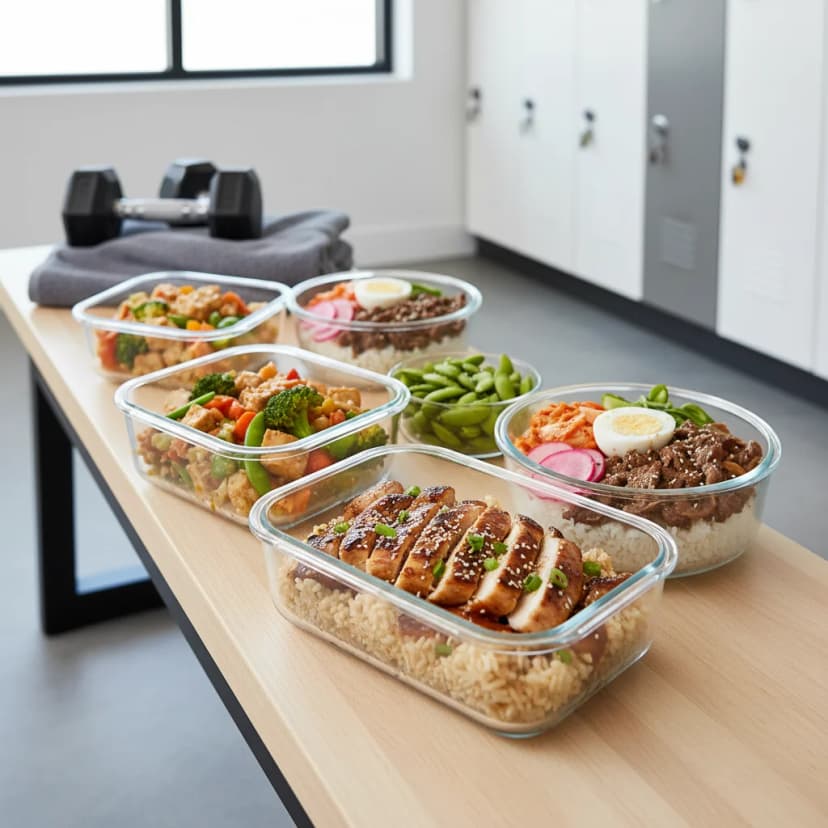
High-Protein Asian Meal Prep for Vancouver Gym-Goers
Discover high-protein Asian meal prep for Vancouver fitness enthusiasts. Expert guide to muscle-buil
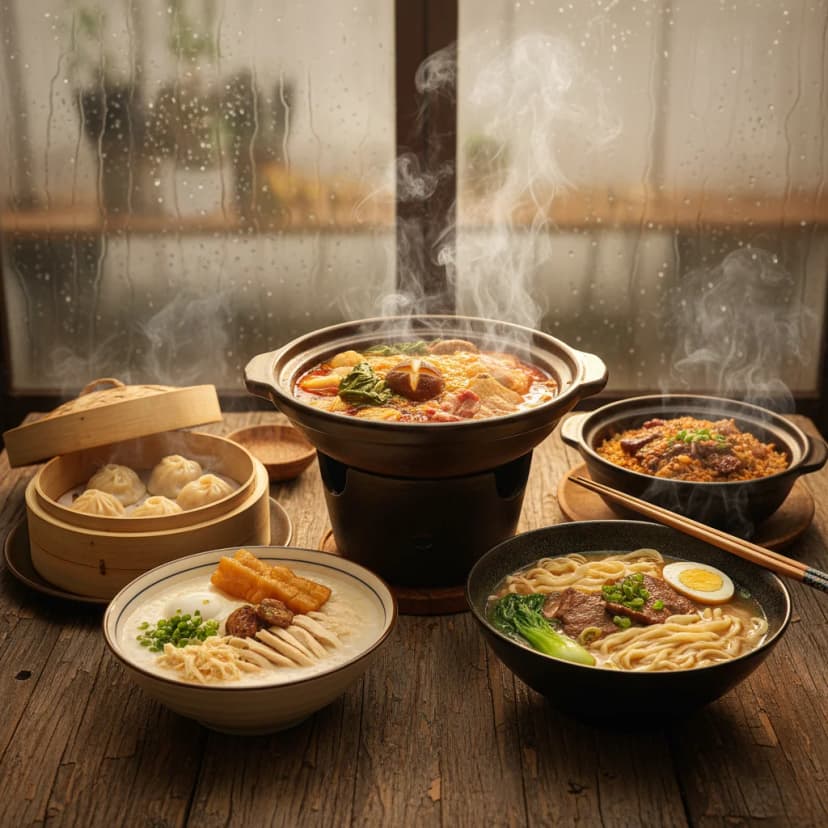
Best Chinese Comfort Food for Vancouver's Rainy Season
Discover Vancouver's best Chinese comfort foods for rainy season. Explore hot pot, noodle soups, con
Got a food question?
Explore our guides and discover the best of Vancouver's food scene.
Browse Guides