Spicy Food Guide Vancouver: From Mild to Mala
Explore Vancouver's spicy food scene — Sichuan mala, Thai bird's eye chili, Korean gochugaru, and Indian vindaloo. Best restaurants ranked by heat.
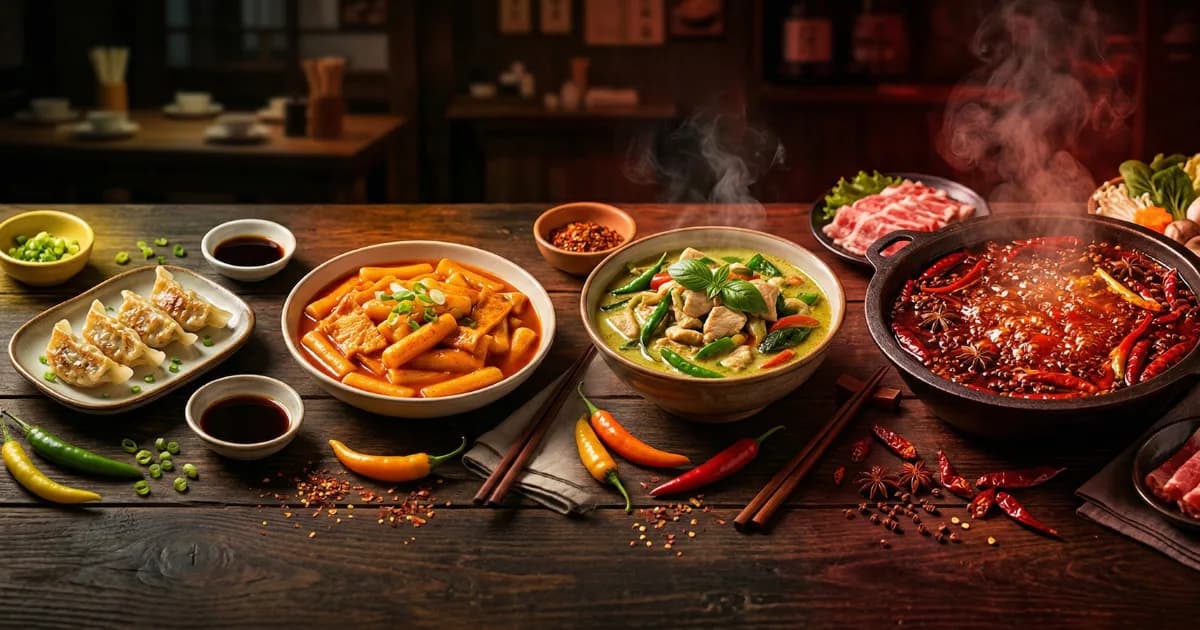
Vancouver is one of the few cities in North America where you can eat your way across the entire spectrum of Asian heat in a single weekend. Sichuan numbing-spice on Alexandra Road in Richmond. Thai bird's eye chili funk on Commercial Drive. Korean gochugaru ferment on Robson. South Indian ghost pepper intensity on Main Street. Japanese wasabi sting in Kerrisdale. Vietnamese lemongrass-chili depth in the Victoria-Fraserview corridor. The city's immigrant-driven restaurant scene means these aren't approximations of the original cuisines — they're cooked by people who grew up eating this food, using sourcing networks that import dried chilies, fermented pastes, and whole spices directly from origin regions[1].
What makes Vancouver's spicy food scene distinct isn't just variety. It's that the spice is authentic. Unlike cities where "spicy" means a splash of Sriracha on fusion tacos, Vancouver restaurants frequently maintain separate heat levels for different audiences. Ask for "zhong la" (medium spice) at a Sichuan restaurant here and you'll get actual medium Sichuan spice, not a watered-down version calibrated for a Western palate. This guide maps the full landscape of heat styles available in Metro Vancouver, from gentle warmth to genuinely painful intensity, with specific restaurants tested at each level.
Summary: Vancouver's immigrant-driven restaurant scene delivers authentic spicy food across every major Asian heat tradition. This guide covers Sichuan mala, Thai bird's eye chili, Korean gochugaru, Indian vindaloo, Japanese spice, and Vietnamese chili-lemongrass — with specific restaurants rated by heat level, neighbourhood locations, and advice on building spice tolerance. The city's direct import networks for dried chilies and fermented pastes mean the heat here is the real thing.
Understanding Heat: Not All Spice Is the Same
Before diving into restaurants, it helps to understand that "spicy" means fundamentally different things across Asian cuisines. The sensation you get from Sichuan peppercorn is neurologically distinct from the burn of a Thai bird's eye chili. Capsaicin — the compound in chili peppers — triggers pain receptors and produces the classic burning sensation. But hydroxy-alpha-sanshool, the active compound in Sichuan peppercorn, activates touch receptors instead, creating a tingling, numbing buzz that's closer to a mild electrical current than to heat[2].
This distinction matters when you're choosing where to eat. If you love the endorphin rush of capsaicin burn, Thai and Indian restaurants will deliver. If you prefer the complex, almost psychedelic sensation of numbing-spice layered over heat, Sichuan is your lane. Korean heat sits in the middle — fermented chili paste (gochujang) produces a slow-building, deeply savoury warmth rather than an immediate punch. Japanese spice is the outlier: wasabi and karashi mustard trigger nasal receptors (allyl isothiocyanate), producing a sharp, volatile flash that clears in seconds rather than lingering.
Sichuan Mala: The Numbing-Spicy Sensation
Mala literally translates to "numbing-spicy" — "ma" for the electric tingle of Sichuan peppercorn, "la" for the chili burn layered on top. It's a dual sensation that no other cuisine replicates at the same intensity. The numbing component is what makes mala addictive: hydroxy-alpha-sanshool activates the same tactile receptors that detect vibration, so your lips and tongue feel like they're buzzing at about 50 Hz[2]. Layer capsaicin heat on top of that numbness and you get a flavour experience that's genuinely unique.
Metro Vancouver has one of the strongest Sichuan restaurant concentrations outside of China, driven by immigration from Sichuan and Chongqing provinces over the past two decades[3]. The best options cluster along Kingsway (Burnaby-Vancouver border), in Richmond's food courts, and increasingly on Broadway near the new SkyTrain stations.
Key dishes to know:
- Mala hotpot (mala huoguo): A communal pot of simmering, chili-red broth packed with Sichuan peppercorn, dried red chilies, star anise, and chili bean paste. You cook raw ingredients at the table. Most places offer split pots — one spicy, one mild — so mixed-tolerance groups can eat together.
- Mapo tofu: Silken tofu in a fiery, oily sauce of doubanjiang (fermented chili bean paste), Sichuan peppercorn, minced pork, and fermented black beans. When done properly, the tofu slides apart at the touch of a chopstick and the sauce coats everything in numbing heat.
- Dan dan noodles: Wheat noodles in a sauce of sesame paste, chili oil, Sichuan peppercorn, preserved mustard greens, and minced pork. The balance between nutty sesame and sharp heat is the benchmark of a good Sichuan kitchen.
- Mala dry pot (mala xiangguo): Similar ingredient selection to hotpot but stir-fried without broth, concentrating the spice. This is where heat levels escalate quickly — a "te la" (extra-spicy) dry pot is one of the most intensely spiced dishes available in Vancouver.
Where to eat it:
Mala Garden on Kingsway is a consistent performer for both hotpot and dry pot. Their spice-level system goes from "wei la" (micro-spice) to "te la" (extra-spicy), and the jumps between levels are honest — ordering medium here means real medium, not tourist medium. For a more upscale hotpot experience, Liuyishou in Richmond (originally from Chongqing) uses beef tallow-based broth that carries the mala flavour differently than oil-based versions, producing a richer, heavier numbing sensation. Chongqing Xiaolong Kan on Alexandra Road is another strong Richmond option with aggressive pricing on their AYCE format.
Korean Spicy: Fermented Fire
Korean heat is patient. Where Sichuan numbs and Thai burns immediately, Korean spice builds slowly through fermented chili preparations that layer sweetness, umami, and heat together. The two foundational ingredients are gochugaru (coarsely ground red pepper flakes, moderately hot, fruity and slightly smoky) and gochujang (fermented red pepper paste, thick and sweet-savoury with a slow burn).
This fermentation-forward approach means Korean spicy food is more accessible than it might appear. A bowl of kimchi jjigae — fermented cabbage stew — delivers warmth that sneaks up on you over 10 minutes rather than punching you in the first bite. The heat is inseparable from the umami depth of fermented soybean, anchovy broth, and aged kimchi.
Key dishes to know:
- Tteokbokki: Chewy rice cakes in a thick, sweet-spicy gochujang sauce. Street-food origin but increasingly common as a restaurant appetizer. The sauce reduces and intensifies — the last few bites are always spicier than the first.
- Buldak (fire chicken): Chicken coated in an aggressively spicy sauce made from gochugaru, gochujang, and often supplemented with fresh chili. "Bul" means fire. The Korean chain BBQ Chicken has popularized this format, but independent restaurants dial the heat higher.
- Kimchi jjigae: Stew built on aged kimchi, pork belly, tofu, and anchovy-based broth. The older the kimchi, the more sour-spicy the stew becomes. This is everyday Korean comfort food, not a spice challenge — but old-kimchi versions have genuine kick.
- Jjamppong: Korean-Chinese spicy seafood noodle soup. A thick, red, shellfish-heavy broth with hand-pulled noodles. Hotter than most Korean dishes and underrated in the Vancouver Korean food conversation.
Where to eat it:
Damso Modern Korean on Robson consistently handles the spice-flavour balance well across their menu. Kosoo on West Broadway does a strong kimchi jjigae with properly aged kimchi. For buldak and fried-chicken-adjacent Korean spice, bb.q Chicken has multiple locations and lets you specify heat level. Sooda Korean BBQ on Kingsway offers jjamppong that hits harder than most — their kitchen doesn't pull punches when you ask for spicy.
Thai Spicy: Bird's Eye Burn With Balance
Thai cuisine treats chili heat as one component in a careful balance of hot, sour, sweet, and salty. Bird's eye chili (prik khi nu) delivers sharp, immediate capsaicin at 50,000-100,000 Scoville heat units — comparable to cayenne but with a brighter, more fruity character[4]. The genius of Thai cooking is that this heat is always counterbalanced: lime juice cuts through the burn, fish sauce adds salty depth, palm sugar rounds the edges, and fresh herbs like Thai basil and galangal add aromatic complexity.
This means Thai spicy food can be the most rewarding for people who want heat with flavour complexity rather than heat for its own sake. A properly made som tam (green papaya salad) delivers all five Thai flavour dimensions in every bite — the chili is essential but not dominant.
Key dishes to know:
- Som tam (green papaya salad): Pounded in a mortar with bird's eye chili, garlic, green beans, tomato, fish sauce, lime juice, and palm sugar. The pounding releases chili oils and distributes them through the shredded papaya. Spice level varies wildly by restaurant — some serve it mild for Western palates, others serve it Thai-hot by default.
- Tom yum goong: Hot and sour shrimp soup with lemongrass, galangal, kaffir lime leaves, and crushed bird's eye chili. The aromatic herbs create a fragrant, layered heat that's more complex than straight chili burn.
- Green curry (gaeng khiao wan): Despite its name meaning "sweet green curry," this can be one of the hottest Thai curries. Fresh green chilies, green peppercorns, and Thai basil in coconut cream. Good versions maintain herbal freshness rather than just heat.
- Pad krapao (holy basil stir-fry): Minced pork or chicken stir-fried with holy basil and generous bird's eye chili. This is Thai street food in its most direct form — no coconut cream to buffer the heat. Usually served with rice and a fried egg.
Where to eat it:
Maenam in Kitsilano is Vancouver's most celebrated Thai restaurant, led by a chef who trained in Thailand and maintains spice authenticity across the menu[5]. Expect to pay more, but the flavour complexity justifies it. Kin Kao on Main Street does excellent northern Thai dishes with honest heat levels. For everyday Thai with a strong spice hand, Thai Basil on Robson and Sala Thai on Commercial Drive both serve versions calibrated closer to Bangkok street stalls than to Canadian expectations. Ask for "pet mak" (very spicy) if you want the real thing.
Indian Spicy: Deep, Layered, Relentless
Indian cuisine uses chili differently from East and Southeast Asian traditions. Rather than a single chili type as the heat source, Indian cooking layers multiple spice components — Kashmiri chili for colour and moderate heat, green chili for sharpness, dried red chili for depth, and in extreme preparations, bhut jolokia (ghost pepper) or its relatives for outright pain. These are woven through complex spice blends (masalas) that include cumin, coriander, turmeric, fenugreek, and dozens of other non-hot spices, creating heat that's deeply embedded in flavour rather than sitting on top.
Metro Vancouver's Indian restaurant scene is anchored by Surrey's massive South Asian community, particularly along Scott Road and in the Newton neighbourhood. Main Street and Fraser Street in Vancouver proper also have strong options. The key distinction is between North Indian cooking (butter chicken, tikka masala — often mild to medium) and South Indian or Goan preparations that push heat much harder.
Key dishes to know:
- Vindaloo: Originally a Goan dish influenced by Portuguese cooking, vindaloo uses vinegar, garlic, and hot red chilies. A proper vindaloo should be tangy and intensely hot, not the generic "hot curry" that British-style Indian restaurants sometimes serve under the name.
- Phaal: The hottest standard curry on most Indian restaurant menus. Originated in British Bangladeshi restaurants but adopted widely. Made with bhut jolokia or Scotch bonnets, it's designed to be painfully hot. Not a traditional Indian dish, but available at several Vancouver-area restaurants as a heat challenge.
- Andhra-style chicken (chicken 65): South Indian preparation with a dry-spice heat profile — chili powder, fresh green chilies, curry leaves, and mustard seeds. The heat is drier and more immediate than sauce-based curries.
- Chettinad curry: From the Chettinad region of Tamil Nadu. Uses a distinctive masala with star anise, kalpasi (stone flower), and aggressive black and red pepper. Not as hot as phaal, but complex and warming with a long finish.
Where to eat it:
Vij's on Cambie remains one of Vancouver's most respected Indian restaurants, with dishes that are spiced with precision rather than brute force. For higher heat, Tasty Indian Bistro on Scott Road in Surrey doesn't hesitate with chili when you ask for spicy. Sula Indian Restaurant on West Broadway handles Goan vindaloo well. All India Sweets & Restaurant on Main Street serves reliable Punjabi food with the option to dial up heat. For the most authentic South Indian spice experience, make the trip to Surrey — Dosa Factory on King George Boulevard serves dosas with sambar and chutneys at genuine South Indian heat levels.
Japanese Spicy: Subtle, Volatile, Underrated
Japanese cuisine isn't known for heat, but it has its own distinct spice vocabulary that's worth exploring. The sensation profile is fundamentally different from other Asian heat traditions — wasabi and karashi mustard produce allyl isothiocyanate, a volatile compound that hits nasal passages rather than tongue receptors. The burn arrives instantly, peaks hard, and disappears within 30 seconds. No lingering. No buildup.
Beyond wasabi, Japan has a richer spice tradition than most people realize. Shichimi togarashi (seven-spice blend) combines red chili, Sichuan peppercorn, dried orange peel, black and white sesame, ginger, and nori — a subtle, complex heat designed for sprinkling on noodles and rice. And tantanmen (the Japanese adaptation of Sichuan dan dan noodles) has become a ramen category of its own, with Japanese kitchens developing their own approach to numbing-spice that's usually more refined and less aggressively oily than the Chinese original.
Key dishes to know:
- Tantanmen ramen: Sesame-based broth with chili oil, ground pork, and Sichuan peppercorn. Japanese versions tend to be creamier and more balanced than Chinese dan dan noodles. The best bowls layer numbing tingle under a rich, nutty broth.
- Karashi renkon: Lotus root stuffed with karashi mustard paste and deep-fried. A Kumamoto specialty occasionally found in Vancouver izakayas. The mustard hit is intense and immediate.
- Spicy miso ramen: Miso-based broth boosted with chili paste or togarashi. More of a warm glow than an intense burn, but with serious depth from the fermented miso.
Where to eat it:
Santouka Ramen (multiple locations) serves a reliable spicy miso option. Ramen Danbo on Robson has a tantanmen that balances sesame richness with honest Sichuan peppercorn tingle. For izakaya-style spice, Guu on Thurlow and other locations serves spicy tuna and various karashi preparations. Marutama Ramen offers a spicy modification to their signature tonkotsu that adds chili without overwhelming the chicken-based broth.
Vietnamese Spicy: Aromatic and Layered
Vietnamese cuisine builds heat through combination rather than concentration. Fresh chili, lemongrass, shrimp paste, and garlic create aromatic spice profiles that hit multiple senses simultaneously. The chili burn is typically moderate but wrapped in so much herbal and citrus complexity that it feels bigger than the Scoville count alone would suggest.
The essential Vietnamese spicy dish in Vancouver is bun bo Hue — a beef and pork noodle soup from the central Vietnamese city of Hue. Unlike pho (which is aromatic but not spicy), bun bo Hue builds heat through chili oil, lemongrass, shrimp paste, and annatto seed. The result is a soup that's simultaneously spicy, funky, citrusy, and deeply savoury. It's one of the most complex bowls of soup you can eat in Vancouver and it remains underordered compared to pho.
Other spicy Vietnamese dishes to seek out:
- Bo luc lac (shaking beef) with chili-lime dipping sauce — the fresh chili in the dip cuts through the rich, caramelized beef
- Bun rieu — crab-and-tomato noodle soup that's less spicy than bun bo Hue but carries a gentle chili warmth
- Pho with extra condiments — standard pho isn't spicy, but the table condiment setup (Sriracha, hoisin, fresh chili slices, chili-garlic sauce) lets you build your own heat level
Where to eat it:
Bun Cha Ca Hoang Yen on Victoria Drive serves one of the best bun bo Hue bowls in Vancouver — richly spiced broth with thick round noodles and generous meat portions. Pho Goodness in Chinatown is a solid everyday option with good condiment availability. Along Kingsway in Burnaby, the stretch of Vietnamese restaurants between Patterson and Joyce stations includes several family-run spots where asking for "cay" (spicy) gets you genuine heat without hesitation. Anh and Chi on Union Street does a more refined, modern Vietnamese take on spicy dishes, with careful heat calibration for each plate.
Mala Hotpot: The Social Spice Experience
Mala hotpot deserves its own section because it's not just a meal — it's a format. The social dining experience of sitting around a boiling, red-oil broth and cooking your own ingredients over 90 minutes to two hours is fundamentally different from ordering a spicy dish off a menu. Hotpot is the entry point for many Vancouverites into serious spice territory, because the communal format lowers the intimidation factor and the split-pot option lets cautious eaters participate.
The format:
Most Vancouver hotpot restaurants offer two pricing models. AYCE (all-you-can-eat) runs $25-$40 per person with unlimited ingredients from a menu of thinly sliced meats, seafood, vegetables, tofu, and noodles. Time limits are typically 90 minutes to two hours. A la carte lets you order specific plates and control quality better — premium cuts like marbled beef and live shrimp are usually better a la carte.
Broth levels matter more than you think. Most places offer three to five spice levels. The mildest ("wei la" or "micro-spicy") adds flavour without real heat — good for beginners. Medium ("zhong la") is where the Sichuan peppercorn numbing becomes noticeable. Hot ("da la") will make most people sweat. Extra-hot ("te la") is a genuine challenge — the broth is opaque red, coated in chili oil, and loaded with whole dried chilies and Sichuan peppercorns.
Hotpot strategy: If you're new, order the split pot (yuanyang guo). Put delicate items like fish balls and leafy greens in the mild side; cook fatty meats, mushrooms, and root vegetables in the spicy side. The fat from meat absorbs and distributes the mala flavour, while leafy greens turn painfully spicy because they absorb broth like sponges. Sesame dipping sauce with garlic is the classic accompaniment — the oil coats your mouth and slightly buffers the heat.
Top hotpot picks:
- Liuyishou (Richmond): Beef tallow broth, Chongqing-style. The flagship experience for mala hotpot in Metro Vancouver.
- Haidilao (Richmond, Burnaby): The global chain known for service theatrics (noodle-dancing, birthday performances) and consistent quality. Their broth is slightly milder than Liuyishou but the ingredient quality and soup base variety are excellent.
- Chongqing Xiaolong Kan (Richmond): Aggressive AYCE pricing with broth that leans heavy on the numbing side of mala.
- Mala Garden (Kingsway): Not exclusively hotpot — they do dry pot and individual dishes too — but their hotpot option is strong with well-calibrated spice levels.
Building Your Spice Tolerance: A Progression Guide
Spice tolerance is physiological, not just psychological. Regular exposure to capsaicin genuinely reduces the sensitivity of TRPV1 receptors (the pain receptors that capsaicin activates), a process called desensitization[6]. This means tolerance can be systematically built. Here's a practical four-week progression using Vancouver restaurants:
Week 1 — Foundation (mild): Start with Japanese spicy miso ramen or Korean kimchi jjigae. These dishes deliver heat within a rich, fatty, savoury context that naturally buffers the burn. Add shichimi togarashi to udon. Have Thai green curry with full coconut milk (the fat absorbs capsaicin and slows the burn). Goal: get comfortable with warmth on every meal.
Week 2 — Building (medium): Order medium-spice mala hotpot and cook in the spicy side for the full session. Try Korean tteokbokki. Have som tam at a Thai restaurant and ask for medium spice ("pet glang"). Eat bun bo Hue at a Vietnamese restaurant. Goal: tolerate sustained moderate heat across a full meal without needing to stop.
Week 3 — Pushing (hot): Order Sichuan mapo tofu at full spice. Try buldak at a Korean restaurant. Have vindaloo at an Indian restaurant (specify "Indian-hot, not Canadian-hot"). Get Thai pad krapao with extra chili ("pet mak"). Goal: eat dishes that make you sweat without distress.
Week 4 — Testing (very hot to extreme): Order "da la" or "te la" mala dry pot. Try phaal curry. Eat Thai som tam at "Thai-hot" level. Return to mala hotpot and order the full-spicy pot without the split. Goal: discover your current ceiling — the point where pain overrides pleasure.
After four weeks, most people find that what was "unbearable" in week one is now comfortable. The TRPV1 desensitization is real and measurable.
What Actually Cools Your Mouth: The Science
When the mala hotpot overwhelms you, reaching for water is the worst choice. Capsaicin is hydrophobic — it doesn't dissolve in water, so swishing water around your mouth just redistributes the compound without removing it. Here's what actually works, ranked by effectiveness:
Full-fat dairy: Milk, yogurt, ice cream. Casein, a protein in dairy, binds directly to capsaicin molecules and strips them from your tongue's receptors. This is the only commonly available substance that actually removes capsaicin rather than masking it. Whole milk is better than skim because the fat also helps dissolve the capsaicin[7].
Granulated sugar: Place dry sugar directly on your tongue. Sugar doesn't neutralize capsaicin, but it activates sweet-taste receptors that competitively interfere with the pain signal. Surprisingly effective as a rapid intervention.
Starchy carbohydrates: Rice, bread, noodles. These physically absorb and scrape capsaicin molecules off mucous membranes. This is why rice is the default accompaniment to spicy food across Asian cuisines — it's functional, not just filler.
Acidic liquids: Lime juice, vinegar. Capsaicin is slightly more soluble in acidic solutions than in water. This partially explains why Thai cuisine pairs chili with lime — the acid doesn't eliminate heat but does help break it down faster.
Alcohol: Ethanol dissolves capsaicin better than water. Beer with spicy food isn't just cultural — there's a chemical rationale. But alcohol also irritates mucous membranes, so the net effect is modest. A beer helps; it doesn't cure.
What doesn't work: Water (redistributes capsaicin), carbonated beverages (the CO2 irritation adds to the pain), and breathing with your mouth open (evaporative cooling doesn't affect capsaicin binding).
Best Restaurants by Heat Level
For quick reference, here's a tiered ranking of Vancouver's best spicy restaurants organized by how much heat you can expect:
Mild to Medium (Good entry point, flavourful heat without pain)
| Restaurant | Cuisine | Dish to Order | Area |
|---|---|---|---|
| Miku | Japanese | Wasabi aburi sushi | Downtown |
| Santouka | Japanese | Spicy miso ramen | Multiple |
| Damso | Korean | Kimchi jjigae | Robson |
| Kosoo | Korean | Sundubu jjigae | W Broadway |
| Maenam | Thai | Green curry | Kitsilano |
Medium to Hot (Solid heat, will make you sweat)
| Restaurant | Cuisine | Dish to Order | Area |
|---|---|---|---|
| Liuyishou | Sichuan | Mala hotpot (zhong la) | Richmond |
| Kin Kao | Thai | Som tam (pet glang) | Main Street |
| Sooda | Korean | Jjamppong | Kingsway |
| Bun Cha Ca Hoang Yen | Vietnamese | Bun bo Hue | Victoria Dr |
| Vij's | Indian | Lamb popsicles | Cambie |
Hot to Extreme (Serious capsaicin — know what you're getting into)
| Restaurant | Cuisine | Dish to Order | Area |
|---|---|---|---|
| Mala Garden | Sichuan | Dry pot (te la) | Kingsway |
| Chongqing Xiaolong Kan | Sichuan | AYCE hotpot (max spice) | Richmond |
| Tasty Indian Bistro | Indian | Phaal curry | Surrey |
| Thai Basil | Thai | Pad krapao (pet mak) | Robson |
| Sala Thai | Thai | Green curry (Thai-hot) | Commercial |
Frequently Asked Questions
What is the spiciest restaurant in Vancouver?
For sustained, painful heat, Mala Garden on Kingsway at their "te la" (extra-spicy) dry pot level and Tasty Indian Bistro in Surrey for phaal curry are the strongest contenders. Mala Garden's extreme level combines concentrated chili oil with heavy Sichuan peppercorn numbing in a stir-fried format that doesn't dilute the spice with broth. Tasty Indian's phaal uses bhut jolokia-derived heat. Both restaurants will serve genuine extreme heat without softening it, but you need to explicitly request maximum spice.
Is mala hotpot suitable for someone who doesn't eat spicy food?
Yes, and it's actually one of the best ways to try spicy food for the first time. Nearly every mala hotpot restaurant in Vancouver offers a split pot (yuanyang guo) with one spicy side and one non-spicy side (usually mushroom or tomato broth). You can cook the same ingredients in either side, taste the spicy broth at your own pace, and retreat to the mild side when needed. Order the lowest spice level ("wei la" or "micro-spicy") for your first time — it adds flavour and mild warmth without real pain.
Where can I find authentic Thai-hot food in Vancouver without it being toned down?
Kin Kao on Main Street and Sala Thai on Commercial Drive are the most reliable for serving Thai food at authentic heat levels. The key phrase is "pet mak" (very spicy) — say it with confidence and most Thai restaurants will take you seriously. At Maenam in Kitsilano, the kitchen maintains authentic spice levels as a default on many dishes. Ordering in Thai or specifying "Thai-spicy, not Canadian-spicy" usually gets better results than simply asking for "extra spicy" in English.
What should I drink with spicy food?
Full-fat milk is the most effective beverage for capsaicin burn — the casein protein binds directly to capsaicin molecules and removes them from your tongue. Lassi (Indian yogurt drink) works on the same principle and pairs naturally with Indian spicy food. Beer is moderately effective because ethanol partially dissolves capsaicin. Avoid water, sparkling water, and hot tea — water redistributes capsaicin without removing it, carbonation adds irritation, and heat intensifies the burn. Plain white rice between bites physically scrubs capsaicin off your palate.
Can you build a tolerance to spicy food, and how long does it take?
Yes, spice tolerance is a real physiological process. Repeated capsaicin exposure causes TRPV1 pain receptors on your tongue to become less sensitive through desensitization. Most people notice meaningful improvement within two to three weeks of eating moderately spicy food daily. Start with Korean kimchi jjigae or Japanese spicy miso ramen, progress to Thai green curry and mala hotpot at medium spice by week two, and push to vindaloo or high-level mala by week three. The key is consistency — daily or every-other-day exposure drives receptor adaptation. Tolerance fades after two to three weeks without spicy food.
References
[1]: Statistics Canada, "Immigration and Ethnocultural Diversity: Key Results from the 2021 Census," October 2022. Vancouver CMA has the highest proportion of visible minority population among Canadian metropolitan areas, with Chinese and South Asian communities being the largest groups. statcan.gc.ca
[2]: Bautista, D.M. et al., "Pungent products from Szechuan pepper excite sensory neurons by inhibiting two-pore potassium channels," Nature Neuroscience, vol. 11, pp. 772-779, 2008. This study identified hydroxy-alpha-sanshool as the compound responsible for the tingling, numbing sensation of Sichuan peppercorn, showing it activates mechanoreceptors at approximately 50 Hz. doi.org/10.1038/nn.2143
[3]: Cho, Lily, "Eating Chinese: Culture on the Menu in Small Town Canada," University of Toronto Press, 2010. Documents the growth of Chinese regional cuisine in Metro Vancouver, including the expansion of Sichuan and Chongqing restaurant clusters following immigration waves from Western China.
[4]: Bosland, P.W. and Votava, E.J., "Peppers: Vegetable and Spice Capsicums," 2nd ed., CABI Publishing, 2012. Bird's eye chili (Capsicum frutescens) is rated at 50,000-100,000 Scoville heat units, comparable to cayenne pepper but with distinct fruity aromatic compounds.
[5]: Vancouver Magazine, "Maenam," restaurant review, updated 2024. Chef Angus An's Kitsilano Thai restaurant has earned consistent critical acclaim for maintaining spice authenticity while adapting presentation for a Canadian fine-dining context. vanmag.com
[6]: O'Neill, J. et al., "Unravelling the Mystery of Capsaicin: A Tool to Understand and Treat Pain," Pharmacological Reviews, vol. 64, no. 4, pp. 939-971, 2012. Describes TRPV1 receptor desensitization through repeated capsaicin exposure, the physiological mechanism behind spice tolerance building. doi.org/10.1124/pr.112.006163
[7]: Nasrawi, C.W. and Pangborn, R.M., "Temporal effectiveness of mouth-rinsing on capsaicin mouth-burn," Physiology & Behavior, vol. 47, no. 4, pp. 617-623, 1990. Demonstrated that whole milk was significantly more effective than water at reducing perceived capsaicin burn, with casein identified as the primary active agent.
Related Articles
Vegetarian and Vegan Asian Food in Vancouver: 30+ Options
Vancouver offers one of North America's deepest selections of plant-based Asian restaurants, spannin
Vancouver Ramen Guide: From Tonkotsu to Tantanmen
Explore Vancouver's best ramen shops and styles, from creamy tonkotsu to fiery tantanmen. Covers 5 b
Surrey and South Vancouver Asian Food Guide: Beyond the City Centre
Surrey and South Vancouver hold some of Metro Vancouver's most authentic and affordable Asian dining
Got a food question?
Explore our guides and discover the best of Vancouver's food scene.
Browse Guides