High-Protein Asian Meal Prep for Vancouver Gym-Goers
Discover high-protein Asian meal prep for Vancouver fitness enthusiasts. Expert guide to muscle-building meals with tofu, tempeh, lean meats, and macro-balanced recipes plus local meal prep services.
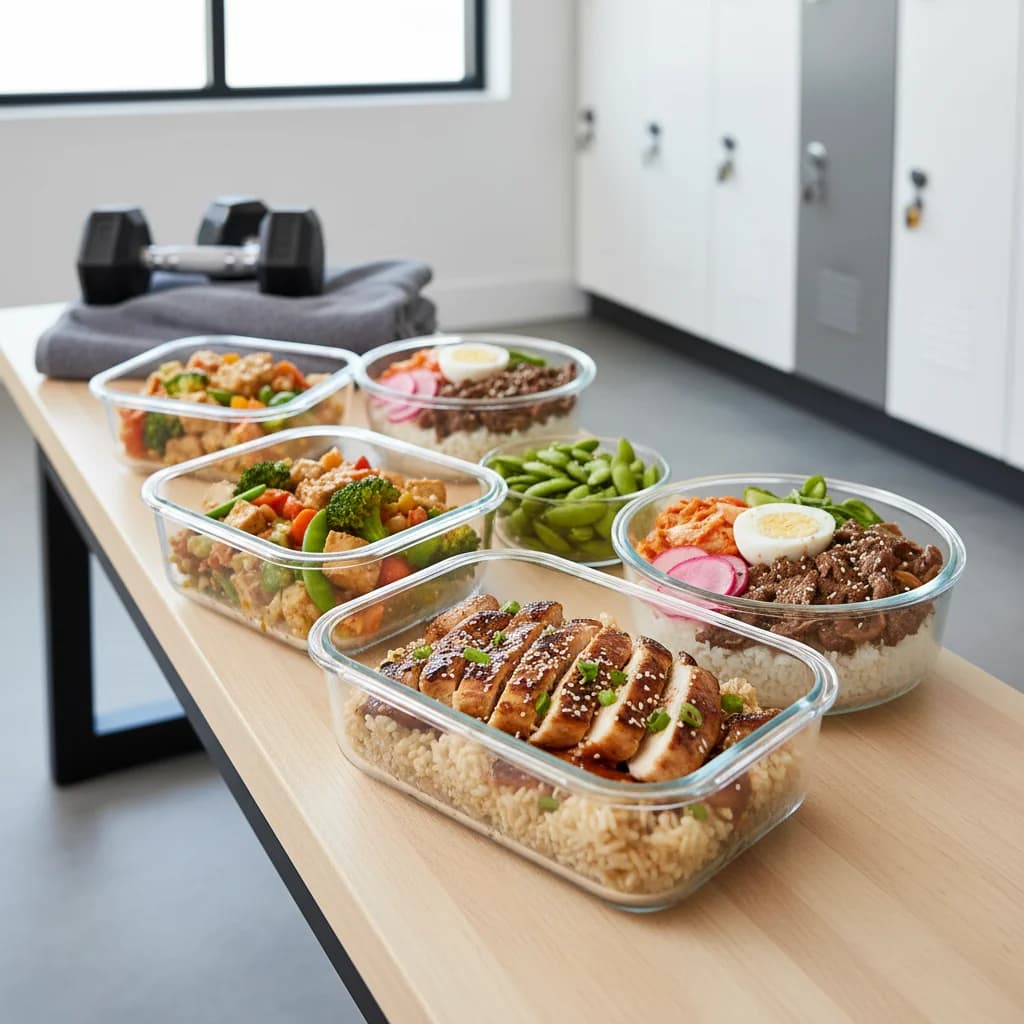
High-Protein Asian Meal Prep for Vancouver Gym-Goers
Why Asian Meal Prep Works for Vancouver's Fitness Community
After years of feeding athletes, office workers, and weekend warriors across Metro Vancouver, I can tell you this: Asian cooking techniques are some of the best tools for high-protein meal prep that actually tastes good on day four.
Here's what makes it work:
- Wok cooking at high heat sears protein fast, locks in moisture, and keeps chicken breast or flank steak from turning into rubber after reheating
- Fermented ingredients — miso, doenjang, fish sauce — deliver massive flavor without loading up on oil, butter, or cream
- Built-in variety means you can prep five containers on Sunday and not dread opening any of them by Thursday
Vancouver's fitness crowd, especially the Burnaby office clients I deliver to regularly, consistently asks for meals that are low oil, low sodium, and high protein. Asian prep handles all three when you know what you're doing.
Protein Sources That Hold Up in Meal Prep
Not every protein survives four days in a fridge and a microwave reheat. These are the ones I've tested through hundreds of prep cycles:
| Protein Source | Protein per 100g | Best Cooking Method | Meal Prep Shelf Life |
|---|---|---|---|
| Chicken thigh (skinless) | 26g | Soy-ginger braised or wok-seared | 4 days refrigerated |
| Extra-firm tofu | 17g | Pressed 30 min, then pan-fried or air-fried | 4 days refrigerated |
| Tempeh | 19g | Steamed 10 min, then marinated and grilled | 5 days refrigerated |
| Lean ground pork | 27g | Stir-fried with garlic, ginger, low-sodium soy | 3–4 days refrigerated |
| Shrimp (peeled) | 24g | Flash-wok or poached — do not overcook | 2–3 days refrigerated |
| Beef flank steak | 29g | Sliced thin against grain, seared 90 seconds per side | 3–4 days refrigerated |
Key rule: shrimp is the weakest link for meal prep. If you're prepping for more than two days out, swap shrimp for tofu or chicken — it reheats poorly and dries out fast.
The Macro-Balanced Meal Prep Formula
Every container I build for gym-focused clients follows this ratio. Memorize it:
- Fill half the container with vegetables — bok choy, gai lan, napa cabbage, snap peas, or broccoli
- Fill one quarter with complex carbs — brown rice, sweet potato, soba noodles, or purple rice
- Fill one quarter with protein — aim for 35–45g protein per container depending on body weight and goals
- Add a flavor hit on top — 1 tbsp of sauce, sesame seeds, furikake, or chili crisp
This formula keeps each container between 400–550 calories with 35–45g protein, 40–60g carbs, and 10–18g fat.
Five Recipes That Survive the Fridge
These are the exact meals I rotate for clients who train five or six days a week. Every recipe scales to 5 containers.
1. Miso-Ginger Chicken Thigh Bowls
- Marinate 600g skinless chicken thighs in 2 tbsp white miso, 1 tbsp grated ginger, 1 tbsp rice vinegar, and 1 tsp sesame oil — minimum 2 hours, overnight is better
- Sear in a hot wok or cast iron pan, 4 minutes per side, until internal temp hits 74°C / 165°F
- Slice against the grain once rested for 5 minutes
- Pair with brown rice and steamed bok choy seasoned with a pinch of salt and garlic
Per container: ~480 cal | 42g protein | 45g carbs | 12g fat
2. Korean-Style Beef and Purple Rice Boxes
- Slice 600g flank steak thin against the grain
- Toss with 2 tbsp low-sodium soy sauce, 1 tbsp gochujang, 2 tsp honey, 3 cloves minced garlic
- Sear in a screaming-hot wok — 90 seconds per side, no more
- Serve over purple rice with quick-pickled cucumber (rice vinegar, pinch of sugar, salt)
Per container: ~510 cal | 44g protein | 48g carbs | 14g fat
3. Crispy Tofu Teriyaki Prep Trays
- Press 2 blocks extra-firm tofu for 30 minutes under a heavy cutting board wrapped in paper towel
- Cut into 2cm cubes, toss with 1 tbsp cornstarch
- Air-fry at 200°C / 400°F for 18 minutes, flipping halfway
- Toss in homemade teriyaki: 2 tbsp low-sodium soy sauce, 1 tbsp mirin, 1 tsp honey, ½ tsp cornstarch slurry — heated until thickened
- Pair with soba noodles and steamed broccoli
Per container: ~420 cal | 34g protein | 52g carbs | 10g fat
4. Lemongrass Pork Lettuce Wrap Prep
- Brown 600g lean ground pork in a wok with 1 tbsp minced lemongrass, 2 cloves garlic, 1 small diced shallot
- Season with 1 tbsp fish sauce, juice of 1 lime, 1 tsp sambal oelek
- Pack pork mixture separately from butter lettuce leaves and fresh herbs (Thai basil, mint, cilantro)
- Critical: store lettuce wrapped in a damp paper towel in a separate container — it wilts fast if packed with warm protein
Per container: ~390 cal | 38g protein | 8g carbs | 18g fat
5. Tempeh Bibimbap Bowls
- Steam 400g tempeh for 10 minutes to remove bitterness
- Slice into strips, marinate in 2 tbsp gochujang, 1 tbsp sesame oil, 1 tbsp rice vinegar for 30 minutes
- Grill or pan-fry tempeh strips until edges are crispy, about 3 minutes per side
- Build bowls: brown rice base, sautéed spinach and carrots, tempeh, and a drizzle of low-sodium bibimbap sauce
- Pack a soft-boiled egg (7-minute boil) separately — add it day-of to avoid sulfur smell
Per container (with egg): ~530 cal | 36g protein | 55g carbs | 16g fat
Meal Prep Day: Step-by-Step Workflow
Batch all five recipes in under three hours with this sequence:
- Start rice first — rice cooker handles this passively while you work (brown rice takes ~45 min)
- Press tofu and marinate proteins — chicken and tempeh need lead time, so get these going immediately
- Prep all vegetables — wash, chop, and portion bok choy, broccoli, spinach, cucumber, lettuce
- Cook proteins in order of cook time — beef (fastest) → chicken → pork → tofu → tempeh
- Steam or blanch vegetables while proteins rest
- Assemble containers — protein on one side, carbs in the middle, vegetables on the other
- Cool completely before sealing lids — trapping steam creates condensation, which makes rice mushy and greens soggy
- Label every container with the date and contents
Storage rule: everything goes into the fridge within 2 hours of cooking. This is non-negotiable for food safety according to BC Centre for Disease Control food premises guidelines.[1]
Sourcing Ingredients in Greater Vancouver
You don't need to hunt for these ingredients. Here's where I go:
- T&T Supermarket (Richmond, Burnaby, downtown) — best selection of tofu, tempeh, fresh Asian greens, gochujang, and miso paste. Their Richmond No. 3 Road location has the widest stock
- H-Mart (Burnaby, North Road or Lougheed) — Korean ingredients like gochujang, purple rice, doenjang, and quality flank steak
- Sunrise Market (Powell Street, Vancouver) — Japanese staples: miso varieties, mirin, soba noodles, furikake
- Granville Island Public Market — premium proteins when you want to upgrade for a special prep batch. Not where I go for weekly staples due to price
- Local farms through seasonal programs — snap peas and bok choy from Delta and Richmond farms are at their best from June through September
Seasonal note: from October through April, Vancouver's rainy season makes delivery and transport tricky. When I deliver meal prep across the city during those months, I use moisture-resistant insulated bags that keep food above 65°C for 90 minutes, even in pouring rain. If you're transporting your own prep to the gym or office, invest in a quality insulated bag — condensation from rain will cool your food faster than you expect.
Timing Your Prep Around Vancouver's Schedule
If you're ordering catered meal prep or running your own batch cooking:
- Sunday afternoon is the best prep window — grocery stores are fully stocked Saturday morning, and you avoid the Monday crunch
- For Burnaby office drop-offs, I schedule delivery between 2:00–3:00 PM to dodge the lunch rush traffic and catch people after their midday break
- Richmond midday traffic between 11:45 AM and 1:15 PM is brutal, especially along No. 3 Road and Westminster Highway. If you're driving meal prep across Richmond during that window, add a 20-minute buffer minimum
- Richmond to downtown during rush hour takes a reliable 50 minutes. Off-peak, 30 minutes, according to TransLink's Metro Vancouver traffic data. Plan your route accordingly if you're doing any kind of self-delivery
- For large group orders (50+ people), confirm the full menu at least 48 hours in advance — this gives enough time to source specialty items and prep proteins properly
Making It Sustainable Long-Term
The clients who stick with high-protein Asian meal prep for months — not just a January resolution — do three things:
- Rotate recipes every two weeks — even great food gets boring if you eat the same five containers 52 weeks straight
- Adjust macros seasonally — summer training usually means lighter carbs and more raw vegetables; winter calls for heartier bowls with more rice and braised proteins
- Keep sauces separate — store sauces, dressings, and chili crisp in small containers and add them day-of. This single habit extends meal quality by a full day and keeps textures intact
The fitness community in Vancouver already understands nutrition. What I've found, after feeding thousands of gym-goers across Burnaby, Richmond, and downtown, is that the gap isn't knowledge — it's execution. Build the system, prep on Sunday, and eat well all week.
[1]: Health Canada guidelines recommend refrigerating cooked food within 2 hours of preparation to minimize bacterial growth in the temperature danger zone (4°C–60°C).
Introduction
Bodybuilders and fitness enthusiasts require 1.6-2.2 grams of protein per kilogram of body weight daily for optimal muscle growth, with protein distributed evenly throughout the day in 0.40-0.55 g/kg portions per meal[1].
Here's the reality for anyone training hard in Metro Vancouver: finding convenient, macro-balanced meals that actually taste good and hit your protein targets is a daily grind. Asian meal prep solves this problem. Ingredients like tofu, tempeh, edamame, and lean proteins are staples across Richmond, Vancouver, and Burnaby — affordable, widely available at local suppliers, and perfectly suited to batch-cooking techniques that support serious fitness goals.
Who This Guide Is For
This guide from Our Food Fix — Vancouver's comprehensive food knowledge base serving diverse communities in 12 languages — is built for:
- Gym-goers across Metro Vancouver — whether you're training at Equinox on West Georgia, Studeo Gyms, or community fitness centers in Burnaby and beyond
- Anyone doing weekly meal prep who needs precise protein portions without spending every evening cooking
- Fitness-focused eaters who want real Asian flavours, not bland "bro food"
What Strategic Meal Prep Gives You
Research confirms fitness meal prep makes healthy eating effortless[2]. In practical terms, that means:
- Pre-portioned protein at every meal — no guessing, no falling short of your 0.40-0.55 g/kg target per sitting
- Precise nutrient timing — meals ready to grab before and after training, matched to your schedule
- Calorie control for muscle building or fat loss — every container is dialled in, so you stay consistent across the week
- Time and mental energy back — cook once, eat well for days, and keep your focus where it belongs: on training
After catering hundreds of meals for fitness-minded clients across Vancouver, I can tell you the difference between people who hit their goals and those who don't almost always comes down to prep consistency — not willpower. This guide gives you the system to make that automatic.
Quick Answer: Best High-Protein Asian Meal Prep for Gym-Goers
Asian cuisine offers exceptional high-protein meal prep options including teriyaki chicken bowls (40-45g protein), tofu and tempeh stir-fries (25-30g protein per serving), Korean-style beef bulgogi with vegetables (35-40g protein), and Vietnamese grilled lemongrass pork with rice (38-42g protein), all macro-balanced for muscle building[3]. Vancouver's 2 Guys With Knives excels at ready-to-eat high-protein Asian-inspired meals with 150g+ daily protein options and macro-balanced meals delivered fresh across Metro Vancouver[4].
Top High-Protein Asian Meals at a Glance
Pick from these proven options based on your protein target:
| Meal | Protein per Serving | Best For |
|---|---|---|
| Teriyaki chicken bowl | 40–45g | Highest protein per meal |
| Korean beef bulgogi with vegetables | 35–40g | Balanced macros + flavor variety |
| Vietnamese grilled lemongrass pork with rice | 38–42g | Lean cut, solid carb pairing |
| Tofu & tempeh stir-fry | 25–30g | Plant-based muscle building |
How to Build Your Own High-Protein Asian Meal Prep
If you're doing this yourself — and honestly, after years of prepping bulk orders for Burnaby office teams who specifically request lower-oil, lower-sodium options — here's what actually works:
- Start with your protein base. Extra-firm tofu delivers 14g protein per half block. Tempeh hits 11g per 3oz. Edamame adds 10g per serving. These stack well together if you're going plant-based, or pair any one of them alongside a lean animal protein.
- Season smart, not heavy. Fresh ginger, quality soy sauce (go low-sodium if you're watching intake), and a small amount of sesame oil give you the flavor depth that keeps meal prep from turning into a chore by Wednesday. This is why people burn out on plain chicken and rice — seasoning matters more than most gym-goers realize.
- Prep in bulk on Sunday. Cook your proteins and grains separately, portion into containers, and keep sauces on the side until reheating. This is the same approach we use for large catering orders — it preserves texture and prevents sogginess, especially during Vancouver's rainy months when moisture control in food storage becomes a real issue.
- Rotate your meals weekly. Cycle between the four options in the table above. Flavor fatigue kills more meal prep routines than bad macros ever will.
Ready-Made Option for Metro Vancouver
For anyone who doesn't want to prep themselves, 2 Guys With Knives builds ready-to-eat Asian-inspired meals hitting 150g+ protein daily, delivered fresh across Metro Vancouver[4]. That's a legitimate shortcut — I've seen plenty of gym-focused clients in Burnaby and Richmond switch to delivery services like this when their schedules don't leave room for Sunday batch cooking.
Understanding Protein Requirements for Muscle Building
Optimal protein intake for Vancouver gym-goers:
Hit the right protein target based on your goal, then build your meal prep around it. Here's how each tier breaks down:
Step 1: Identify Your Protein Tier
General fitness: 0.7 grams protein per pound of body weight daily. For a 175-pound individual, this equals approximately 122 grams daily[5].
Muscle building (bodybuilding): 1.6–2.2 g/kg body weight per day, distributed across 4–6 meals with 0.40–0.55 g/kg per meal[1].
Maximum effective intake: Research shows no additional muscle-building advantage beyond 0.82 g/lb (1.8 g/kg) total body weight daily for natural bodybuilders[7]. Going higher just costs you more money on groceries — I've watched Burnaby clients blow their food budgets chasing 2.5 g/kg when the science caps out well below that.
Step 2: Distribute Protein Across Your Day
Why protein distribution matters: Spreading protein intake evenly throughout the day (rather than consuming large amounts in one meal) optimizes muscle protein synthesis. Meal prep naturally supports this distribution by providing pre-portioned meals consumed at regular intervals[1].
After years of prepping high-protein meal plans for office workers across Burnaby and downtown Vancouver, here's the approach that actually sticks:
- Divide your daily target by 4–6 meals. If your goal is 160 g/day, aim for roughly 35–40 g per meal across four meals.
- Pre-portion every container the night before. This is non-negotiable — once you're in a Burnaby office microwave line at noon, you're not doing math.
- Anchor each meal around one primary protein source (chicken thigh, salmon, firm tofu) so you can eyeball portions even when your scale isn't handy.
- Keep a backup protein source at your desk. A bag of edamame or a couple of hard-boiled eggs saves you when meetings run long. Especially relevant for those 2–3 PM delivery windows a lot of our Burnaby office clients prefer — if lunch gets pushed, your protein timing doesn't have to collapse.
Step 3: Nail Post-Workout Timing
Post-workout timing: 15–25 grams protein within 2 hours after exercise stimulates muscle growth and recovery[6].
This is where Vancouver's logistics reality matters. If you're training at lunch and heading back to an office downtown, that two-hour window gets tight fast — especially during rainy season when the commute from a gym near Richmond or the seawall back to your desk eats into your clock. Pack a post-workout container that's grab-and-go, no reheating required. Cold sesame chicken over soba or a tofu rice bowl both work well at room temperature.
Step 4: Choose High-Quality Protein Sources
Protein quality considerations: High-protein foods including chicken, fish, and tofu provide amino acids helping repair muscle damage and build muscle[8]. Asian cuisine excels at combining complete proteins (animal sources) with complementary plant proteins (soy products, edamame) creating amino acid profiles supporting muscle growth.
This is one area where Vancouver's food culture gives us a genuine edge. The local preference — particularly among our Burnaby office clients — leans toward lighter, lower-oil, lower-sodium preparations. That aligns perfectly with muscle-building goals because you're not buried under heavy sauces that add calories without adding protein. A few combinations I come back to constantly in our meal prep:
- Chicken breast + edamame: Complete animal protein paired with a complementary plant source. Simple to batch-cook, reheats cleanly.
- Wild salmon + firm tofu stir-fry: Two high-quality sources in one container. Local salmon availability peaks in summer and early fall — take advantage of pricing then.
- Soy-marinated lean pork + black beans over rice: Hits 40+ grams per portion easily and holds well in our moisture-resistant insulated bags, even on a soggy November delivery run.
The key is building each container so it's protein-forward, portioned to your tier from Step 1, and resilient enough to survive a 60-minute commute in Vancouver weather without turning into a soggy mess.
Top High-Protein Asian Ingredients for Meal Prep
Tofu: The Versatile Protein Powerhouse
Extra-firm tofu delivers 14 grams protein and 3 grams fiber per half block, with super-firm or "high protein" tofu varieties offering even greater protein density ideal for macro-conscious gym-goers[9].
After years of prepping tofu for Vancouver corporate lunch orders — especially those Burnaby office clients who consistently ask for lighter, lower-oil, lower-salt options — here's exactly how to make tofu work hard in your meal prep rotation.
Why tofu excels for fitness meal prep:
- Neutral flavor: Absorbs marinades (teriyaki, sesame-ginger, miso) creating variety across weekly meal prep
- Texture versatility: Press and pan-fry for crispy texture, bake for firm consistency, scramble for breakfast options
- Cost-effective: Significantly cheaper than animal proteins while providing comparable protein per serving
- Quick cooking: Prepared in 15-20 minutes, compatible with efficient batch cooking
How to batch-prep tofu — step by step:
- Buy extra-firm or super-firm tofu — skip silken or medium-firm for meal prep; they fall apart in storage. Richmond's T&T and Burnaby's H-Mart both carry high-protein tofu blocks reliably.
- Press for 20–30 minutes using a tofu press or a cutting board weighted with a heavy pan. This is non-negotiable for crispy results. Skip this step and your tofu steams instead of sears.
- Cut into uniform pieces — ¾-inch cubes for bowls, ½-inch slabs for stir-fries. Uniform size means even cooking and consistent reheating later in the week.
- Choose one cooking method per batch:
- Pan-fry: Medium-high heat, 3–4 minutes per side in a thin layer of avocado oil.
- Bake: 400°F for 25–30 minutes, flipping halfway. Line your sheet pan with parchment — cleanup matters when you're prepping at scale.
- Scramble: Crumble by hand into a hot pan with turmeric, garlic, and vegetables for breakfast containers.
- Sauce or marinate after cooking for meal prep that lasts. Tofu marinated raw before cooking gets soggy by day 3. Toss cooked tofu in your sauce right before portioning.
- Store in airtight containers — keeps well for 4–5 days refrigerated. Keep sauce on the side if you're prepping past Wednesday.
Meal prep applications:
- Baked teriyaki tofu bowls with brown rice and vegetables
- Crispy tofu stir-fry with mixed vegetables and quinoa
- High-protein tofu scramble with vegetables (breakfast meal prep)
- Satay tofu buddha bowls with tahini dressing
Tempeh: Fermented Protein Density
Tempeh provides 11 grams protein per 3-ounce serving—higher than tofu—plus probiotic benefits from fermentation supporting gut health and nutrient absorption[10].
Tempeh is the ingredient I push hardest for clients who tell me they're bored with their weekly prep. That nutty, almost mushroom-like bite is a completely different experience from tofu — and it holds up far better across five days in the fridge, which matters when you're delivering Monday's food that someone reheats on Thursday.
Tempeh advantages for athletes:
- Higher protein density: More grams per serving than tofu
- Firmer texture: Holds up better in stir-fries and grain bowls during weekly storage
- Nutty flavor: Distinctive taste reducing meal prep monotony
- Complete protein: Contains all essential amino acids for muscle building
How to prep tempeh so it actually tastes good:
- Steam or simmer the block for 10 minutes before marinating. Raw tempeh has a bitter edge that turns people off. This step removes it completely. Don't skip it — this is the difference between "I love tempeh" and "I tried it once and hated it."
- Slice into ¼-inch strips or ½-inch cubes depending on your target dish. Thin strips crisp up better; cubes work for bowls and wraps.
- Marinate for at least 30 minutes — tempeh absorbs flavor more slowly than tofu. For batch prep, marinate overnight in the fridge.
- Cook using dry heat for best texture:
- Pan-fry: Medium heat, 4–5 minutes per side until deep golden brown.
- Bake: 375°F for 20–25 minutes, flipping once.
- Air-fry: 380°F for 12–15 minutes — fastest method for crispy results.
- Portion into containers with grains and vegetables. Tempeh reheats better than tofu — it doesn't dry out as fast, making it the superior choice for meals you'll eat later in the week.
Meal prep recipes:
- Korean-style gochujang tempeh with kimchi fried rice
- Teriyaki-glazed tempeh with edamame and soba noodles
- Tempeh lettuce wraps with Asian slaw (low-carb option)
- Sweet and sour tempeh with bell peppers and pineapple
Edamame: Convenient Protein Boost
Edamame contributes 10 grams protein per serving plus fiber, making it an ideal side dish or snack boosting total daily protein intake for gym-goers targeting 150g+ daily[9].
Edamame is the most underused tool in a meal prepper's arsenal. I keep 5 kg bags of frozen edamame in our commissary at all times — we toss them into bowls, salads, and snack containers for Vancouver office catering orders where clients want that extra protein bump without a heavy feeling.
Strategic uses in meal prep:
- Protein topper: Add to grain bowls increasing protein content by 10g per meal
- Post-workout snack: Ready-to-eat from freezer, steamed in 5 minutes
- Salad protein: Mixed with cucumbers, sesame oil, rice vinegar for Asian-style protein salad
- Convenience factor: Frozen edamame requires no prep beyond steaming, reducing meal prep time
Fastest way to prep edamame for the week:
- Buy frozen shelled edamame for meal prep. In-shell is fine for snacking, but shelled saves time when you're building bowls.
- Steam or microwave from frozen — 3–5 minutes, no thawing needed.
- Drain thoroughly and spread on a clean towel to remove excess moisture. Wet edamame in a container makes everything soggy by day 2.
- Season simply or leave plain — a pinch of flaky salt and a drizzle of toasted sesame oil is plenty. For variety: chili flakes, furikake, or a squeeze of lime.
- Portion into containers as a side, a bowl topper, or a standalone snack. Keeps 4–5 days refrigerated without texture loss.
Lean Asian Proteins
Chicken breast, lean pork tenderloin, white fish, and shrimp provide 25-40g protein per serving with minimal fat, ideal for lean muscle building[8].
These are the backbone of high-protein catering across Greater Vancouver. When Burnaby tech offices order from us, roughly 70% of the trays are some variation of lean protein with Asian-inspired seasoning — lower oil, lower sodium, packed with flavor from aromatics rather than heavy sauces.
Asian preparation methods for lean proteins:
Teriyaki chicken: Marinate chicken breast in soy sauce, mirin, ginger; bake in batches for weekly meal prep (40-45g protein per serving).
Korean bulgogi beef: Thinly sliced lean beef in soy-sesame-pear marinade, quick-cooked for flavor without excess oil (35-40g protein per serving).
Vietnamese lemongrass pork: Lean pork loin marinated in lemongrass, fish sauce, garlic; grilled for high-protein, low-fat meals (38-42g protein per serving)[3].
Thai basil chicken: Ground chicken breast stir-fried with Thai basil, minimal oil, served over rice (30-35g protein per serving).
Step-by-step batch cooking process for any lean protein above:
- Pick one or two proteins per week — variety matters, but prepping four different proteins on Sunday is a recipe for burnout.
- Marinate the night before your prep day. Every recipe above benefits from at least 4 hours. Overnight is ideal. Use zip-lock bags to save fridge space.
- Bring proteins to room temperature (15–20 minutes on the counter) before cooking. Cold chicken hitting a hot pan = uneven cook and moisture loss.
- Cook to exact internal temperatures — chicken 165°F, pork 145°F, fish 145°F, shrimp until pink and opaque. Use a probe thermometer. No guessing.
- Rest proteins for 5 minutes before slicing. Cutting too early means juice on your cutting board instead of in the meat.
- Slice against the grain for chicken and beef. This is the single biggest texture upgrade most home meal preppers miss.
- Cool completely before portioning into containers. Sealing warm protein creates condensation → soggy food → potential food safety issues after a few days.
- Store proteins and sauces separately when possible. Combine when reheating for a fresher result on day 4 or 5.
Asian-Inspired Protein Combinations
Creating complete amino acid profiles through strategic combinations:
This is where meal prep gets genuinely smart. Pairing complementary proteins isn't just nutrition theory — it's how traditional Asian food has worked for centuries. Every bowl we build for catering follows this logic.
Rice + edamame: Combines grain with legume for complete protein, traditional Asian pairing.
Tofu + quinoa + vegetables: Plant-based complete protein bowl with 30g+ protein per serving.
Brown rice + grilled fish + seaweed: Omega-3 rich, complete protein, nutrient-dense for recovery.
Soba noodles (buckwheat) + tempeh: Both provide protein; combined with vegetables creates balanced macro meal.
How to build a complete-protein Asian meal prep bowl:
- Choose your base — brown rice, quinoa, or soba noodles. Cook in bulk. One pot of rice serves 6–8 containers.
- Add your primary protein — tofu, tempeh, edamame, or a lean animal protein from the section above.
- Layer a complementary protein — if your primary is plant-based, add edamame or a second plant protein to ensure complete amino acid coverage. If your primary is animal-based, this step is optional.
- Add 1–2 cups of vegetables per container — roasted broccoli, steamed bok choy, shredded cabbage, pickled carrots. Mix raw and cooked for texture contrast.
- Pack sauce separately in small leak-proof containers or condiment cups. Sauces that sit on grains for five days create mush.
- Label each container with the date and contents. When you're grabbing meals at 6 AM before the gym, guessing isn't efficient.
5 High-Protein Asian Meal Prep Recipes for Vancouver Gym-Goers
After years of prepping high-volume meals for fitness-focused corporate clients across Metro Vancouver — especially the health-conscious offices in Burnaby that consistently request low-oil, low-salt menus — I've dialed in these five recipes. They hit real macros, hold up in the fridge for days, and use ingredients you can source fresh from local suppliers in Richmond, Chinatown, or any well-stocked H-Mart or T&T.
One thing I'll say upfront: meal prep protein bowls live or die by how well they store and reheat. We've tested this extensively with our moisture-resistant insulated bags — the same ones we rely on during Vancouver's October-to-April rain season to keep food above 65°C for 90 minutes. That testing taught me exactly which proteins, grains, and vegetables survive 3–5 days in a fridge without turning into mush.
Recipe 1: Teriyaki Chicken Power Bowls
Macros per serving: 45g protein, 50g carbs, 8g fat (approx. 456 calories)
Ingredients (makes 5 servings):
- 750g (1.65 lbs) chicken breast
- 250ml (1 cup) homemade teriyaki sauce (soy sauce, mirin, honey, ginger)
- 500g (2.5 cups cooked) brown rice
- 400g broccoli florets
- 150g edamame (shelled)
- Sesame seeds for garnish
Meal prep steps:
- Marinate the chicken in teriyaki sauce for a minimum of 2 hours. Overnight in the fridge gives you deeper flavor and more tender results. Use a sealed bag or covered container — never an open bowl.
- Preheat your oven to 400°F (200°C). Line a sheet pan with parchment. Place marinated chicken breasts on the pan with space between each piece for even airflow.
- Bake for 25–30 minutes. Internal temperature must reach 165°F (74°C) — check with a probe thermometer at the thickest part. Pull at 165°F exactly; residual heat will carry it to safe temp without drying it out.
- Batch-cook brown rice while the chicken bakes. Use a 1:1.25 rice-to-water ratio for firmer, meal-prep-friendly texture that won't get mushy by day 4.
- Steam broccoli and edamame together in one batch — 4 to 5 minutes max. You want tender-crisp, not soft. Broccoli that's overcooked on day 1 turns to paste by day 3.
- Slice the rested chicken (let it rest 5 minutes first to retain juices). Divide chicken, rice, broccoli, and edamame evenly among 5 airtight containers.
- Garnish with sesame seeds. Seal containers and refrigerate immediately. Safe storage: up to 5 days at or below 4°C (40°F).
Why this works for gym-goers: High protein directly supports muscle protein synthesis post-workout. Brown rice delivers complex carbs for sustained training energy without blood sugar spikes. The low fat content — only 8g — gives you room to adjust calories during a cut without sacrificing volume or satiety. I've served versions of this bowl to dozens of Burnaby office fitness groups, and the low-oil teriyaki is always the top request.
Recipe 2: High-Protein Tofu Scramble Breakfast Bowls
Macros per serving: 30g protein, 35g carbs, 12g fat (approx. 372 calories)
Ingredients (makes 5 servings):
- 1 block (350g) extra-firm tofu, pressed and crumbled
- 250g (5 cups cooked) quinoa
- 200g spinach
- 150g mushrooms, sliced
- 100g red bell pepper, diced
- 2 tbsp nutritional yeast
- Turmeric, garlic powder, soy sauce for seasoning
Meal prep steps:
- Press the tofu block for 15–20 minutes using a tofu press or a heavy pan over paper towels. This step is non-negotiable — excess water creates a soggy scramble that breaks down badly in storage. You want the tofu visibly drier and firmer before you crumble it.
- Crumble the pressed tofu by hand into rough, uneven pieces. Don't mash it smooth — you want varied texture that mimics scrambled eggs.
- Heat a large skillet or wok over medium-high heat with a thin slick of oil (no more than 1 tsp). Sauté mushrooms first for 3 minutes until they release moisture and brown. Add bell pepper and cook 2 more minutes. Add spinach last — it wilts in under a minute.
- Add crumbled tofu to the pan. Sprinkle in turmeric (½ tsp for color), garlic powder (1 tsp), nutritional yeast (2 tbsp), and a splash of soy sauce (start with 1 tbsp, adjust to taste). Cook for 8–10 minutes, stirring occasionally, until the tofu picks up light golden color and the seasonings coat evenly.
- Batch-cook quinoa separately. Rinse quinoa before cooking to remove bitterness. Use a 1:1.75 quinoa-to-water ratio. Fluff with a fork when done.
- Divide tofu scramble and quinoa into 5 airtight containers. Keep the scramble and quinoa side-by-side, not stacked, so the quinoa doesn't absorb excess moisture.
- To reheat: microwave for 2–3 minutes with the lid slightly cracked to vent steam. Safe storage: up to 5 days refrigerated.
Why this works: Tofu plus quinoa together deliver a complete amino acid profile — critical for plant-based athletes who can't rely on whey. This is an easily digestible pre-workout breakfast that won't sit heavy in your stomach. Nutritional yeast adds B-vitamins and a savory depth that keeps things from tasting like "diet food." I started making this for vegan clients at tech offices near Metrotown, and it quickly became one of the most reordered items on our menu.
Recipe 3: Korean Bulgogi Beef with Kimchi Rice
Macros per serving: 40g protein, 48g carbs, 14g fat (approx. 486 calories)
Ingredients (makes 5 servings):
- 700g (1.5 lbs) lean beef sirloin, thinly sliced
- 120ml (1/2 cup) bulgogi marinade (soy sauce, sesame oil, pear, garlic, ginger)
- 500g (2.5 cups cooked) short-grain brown rice
- 200g kimchi, chopped
- 150g bok choy
- Sesame seeds, green onions for garnish
Meal prep steps:
- Slice the beef sirloin as thinly as possible — 2–3mm thick. Partially freezing the beef for 30 minutes before slicing makes this dramatically easier. Thin slices absorb marinade faster and sear better.
- Marinate the sliced beef for a minimum of 4 hours. Overnight (8–12 hours) is optimal for full flavor penetration. The Korean pear in the marinade acts as a natural tenderizer — don't skip it. Use a sealed bag, removing as much air as possible so the marinade contacts all surfaces.
- Cook short-grain brown rice. While the rice is still warm, fold in 200g chopped kimchi. The warmth helps the kimchi flavor absorb into the grains. Mix gently — you're folding, not mashing.
- Sear the marinated beef in batches in a screaming-hot cast iron or carbon steel pan. Do not crowd the pan — work in 2–3 batches. Sear 2–3 minutes per side. Crowding drops the pan temperature and steams the meat instead of caramelizing it.
- Steam bok choy for 2–3 minutes. Stems should be tender but still have a slight snap. Overcooked bok choy gets watery and wilts badly in storage.
- Portion kimchi rice, seared beef, and bok choy into 5 airtight containers. Garnish with sesame seeds and sliced green onions.
- Store refrigerated. Safe storage: up to 4 days — one day shorter than chicken-based preps because of the sear-only cooking method on thinner cuts. Plan to eat this Monday through Thursday.
Why this works: Fermented kimchi delivers live probiotics that support gut health and nutrient absorption — a real advantage for athletes pushing hard on high-protein diets. Lean sirloin keeps protein high without excessive saturated fat. The bold bulgogi marinade is the single biggest reason this bowl won't bore you by Wednesday. I source kimchi from local Korean suppliers in North Burnaby — the freshness and fermentation quality are noticeably better than mass-produced brands.
Recipe 4: Thai Basil Chicken Stir-Fry
Macros per serving: 38g protein, 45g carbs, 10g fat (approx. 430 calories)
Ingredients (makes 5 servings):
- 750g (1.65 lbs) ground chicken breast
- 3 cups fresh Thai basil leaves
- 200g green beans, trimmed
- 150g red bell pepper, sliced
- 5 cloves garlic, minced
- 3 Thai chilies (optional for spice)
- 500g (2.5 cups cooked) jasmine rice
- Fish sauce, soy sauce, oyster sauce for seasoning
Meal prep steps:
- Batch-cook jasmine rice first so it can cool slightly while you prep the stir-fry. Use a 1:1.1 rice-to-water ratio for fluffy, separated grains that reheat well. Jasmine rice holds up better in meal prep than most people expect if you don't overcook it.
- Heat a wok or large skillet over high heat. Add no more than 1 tbsp of a high-smoke-point oil (avocado or grapeseed). When the oil shimmers, add minced garlic and sliced Thai chilies. Stir constantly for 30 seconds — garlic burns fast at this heat.
- Add ground chicken breast immediately. Break it apart with a spatula as it cooks. Cook until fully browned, about 5–6 minutes. Internal temp must reach 165°F (74°C). Drain any excess liquid from the pan before proceeding — ground chicken can release water that will make your stir-fry soggy.
- Add green beans and red bell pepper. Stir-fry for 3–4 minutes until tender-crisp. The vegetables should still have visible color and a slight bite.
- Add sauces: 2 tbsp fish sauce, 1 tbsp soy sauce, 1 tbsp oyster sauce. Adjust to your sodium tolerance — these amounts are already on the lighter side, which is what my Burnaby corporate clients prefer. Toss in 3 cups fresh Thai basil leaves. Stir just until the basil wilts, about 30 seconds. Pull the pan off the heat immediately. Overcooked basil turns black and bitter.
- Portion stir-fry and jasmine rice into 5 airtight containers. Keep rice and stir-fry separated in the container if possible to prevent the rice from absorbing sauce and getting mushy.
- Store refrigerated up to 5 days.
Why this works: Ground chicken breast is one of the leanest, most cost-effective protein sources available. Total active cooking time is under 15 minutes for a full 5-serving batch — that's hard to beat on a Sunday prep session. The Thai basil is the secret weapon against "bland meal prep syndrome." Its aromatic, slightly anise-like flavor holds up well even after reheating. Adjustable chili levels mean the same recipe works for everyone from spice-averse to fire-eaters.
Recipe 5: Miso-Glazed Salmon with Soba Noodles
Macros per serving: 42g protein, 38g carbs, 18g fat (approx. 486 calories)
Ingredients (makes 5 servings):
- 5 salmon fillets (150g each)
- 80ml (1/3 cup) miso glaze (white miso, mirin, sake, honey)
- 400g soba noodles
- 200g edamame (shelled)
- 150g snap peas
- Sesame seeds, green onions for garnish
Meal prep steps:
- Mix the miso glaze: combine white miso paste, mirin, sake, and honey in equal-ish parts (roughly 2 tbsp each), whisking until smooth. Taste and adjust — you want a balance of salty, sweet, and umami. No single element should dominate.
- Coat each salmon fillet evenly with the miso glaze. Let them marinate for exactly 30 minutes at room temperature — no longer. Miso is salty enough to start curing the fish if left too long, which changes the texture.
- Preheat oven to 400°F (200°C). Line a sheet pan with parchment. Place glazed salmon fillets skin-side down with space between each fillet.
- Bake for 12–15 minutes. Salmon is done when it flakes easily with a fork and reaches an internal temp of 145°F (63°C). Watch carefully starting at minute 12 — miso glaze can burn quickly because of the sugars in the honey and mirin. You want caramelized, not charred.
- Cook soba noodles according to package instructions (typically 4–6 minutes in boiling water). Immediately rinse under cold water after draining. This stops the cooking process and prevents clumping in storage. Toss with ½ tsp sesame oil to keep noodles from sticking in the container.
- Steam edamame and snap peas together for 3–4 minutes. Snap peas should stay bright green with a crisp snap.
- Portion soba noodles, steamed vegetables, and one salmon fillet into each of 5 airtight containers. Garnish with sesame seeds and sliced green onions.
- Store refrigerated up to 3 days maximum. Salmon degrades in texture and safety faster than poultry or beef in meal prep. Schedule your salmon bowls for Monday, Tuesday, and Wednesday. If you're prepping all five recipes on Sunday, eat the salmon containers first and save the chicken or beef bowls for later in the week.
Why this works: Salmon delivers omega-3 fatty acids (EPA and DHA) that directly support post-workout recovery by reducing inflammation — something you'll feel the difference on if you're training 4+ days a week. Buckwheat soba noodles contribute additional plant-based protein and complex carbs that most people don't realize they're getting. The miso glaze adds deep umami flavor with minimal added fat. This is the recipe I recommend to pescatarian athletes who are tired of plain grilled fish. Fresh salmon sourced from local Vancouver suppliers — especially during BC sockeye season in summer — takes this from good to exceptional.
Summary: Five tested recipes hit real macros and survive 3-5 days refrigerated: teriyaki chicken power bowls, high-protein tofu scramble breakfast bowls, Korean bulgogi beef with kimchi rice, Thai basil chicken stir-fry, and miso-glazed salmon with soba noodles. All use ingredients sourceable from Richmond, Chinatown, H-Mart, or T&T stores across Metro Vancouver.
Vancouver Meal Prep Services for Gym-Goers
2 Guys With Knives: Best for High-Protein Ready-to-Eat Meals
2 Guys With Knives delivers macro-balanced, high-protein ready-to-eat meals with 150g+ daily protein options through specialized meal plans, featuring 150+ monthly meals with gluten-free choices and dietitian-backed nutrition for fitness goals[4].
Fitness-focused offerings:
- High-Protein Meal Plan: 150g+ protein daily, designed by chefs and nutrition experts, includes high-protein snacks, 5-day or 7-day options
- Weight Loss Meal Plan: 1200–1500 calories daily, low-carb, includes breakfast/lunch/dinner
- À La Carte Macro Meals: Individual high-protein meals with transparent nutritional information
- No subscription required: Order flexibility for periodized training phases
Why gym-goers choose 2 Guys With Knives: Patrick (fitness trainer) and Sergio (chef) founded this operation in 2013, and that dual background shows — the macros actually make sense for people who train hard, not just "healthy-ish" meals slapped with a fitness label. Meals stay fresh 7 days refrigerated and reheat in 2 minutes, which matters when you're juggling a 6 AM session at a Burnaby gym and need lunch packed before you leave the house. They deliver across Metro Vancouver including Burnaby, Coquitlam, North Vancouver, and Richmond.
How to order — step by step:
- Pick your plan type (High-Protein, Weight Loss, or À La Carte) based on your current training phase
- Select 5-day or 7-day delivery if choosing a full plan
- Apply the $80 discount spread across your first four orders to reduce trial risk
- Schedule delivery around your weekly training block — no subscription lock-in, so you can pause during deload weeks or travel
Pricing: Varies by meal selection; that $80 introductory discount makes the first month a low-stakes test.
A practical note from years of handling food logistics in this region: If you're in Richmond and ordering delivery, keep in mind that the 11:45 AM–1:15 PM window is brutal for drivers navigating that area. Deliveries that land outside that congestion window arrive noticeably more reliably. For ready-to-eat meals you'll refrigerate anyway, request a morning or mid-afternoon drop if that's an option.
Fresh Prep: Best for Flexible Meal Kit Options
Fresh Prep provides chef-inspired meal kits starting at $10.50 per serving with 35+ weekly options including high-protein selections, allowing gym-goers to cook fresh meals with pre-portioned ingredients in 20–30 minutes[11].
Advantages for fitness enthusiasts:
- Customizable protein portions: Add extra protein to meals — critical during bulking phases when a standard 4 oz chicken breast won't cut it
- 35+ weekly options: Variety prevents diet fatigue during training blocks
- Sustainable packaging: Reusable cooler bags align with health-conscious lifestyle
- No commitment: Skip/pause/cancel anytime accommodating periodized training nutrition
How to use Fresh Prep around a training schedule:
- Review the weekly menu each Wednesday/Thursday when new options drop
- Prioritize meals listing protein content above 30g per serving — or use the "add extra protein" option to hit your target
- Batch your cooking on one or two days per week: the 20–30 minute cook times mean you can knock out three dinners in under 90 minutes
- If you're training in Burnaby and working from an office there, these kits pair well with evening cooking after a post-work session — the pre-portioned ingredients remove decision fatigue when you're physically spent
What I've noticed working with fitness-minded clients across Metro Vancouver: Burnaby office teams especially tend to prefer lighter, lower-oil, lower-sodium meals. Fresh Prep gives you control over seasoning and cooking fat in a way that fully prepared meals don't. If you're someone who wants 80% of the convenience but 100% of the macro control, this sits in a useful middle ground.
DIY Meal Prep: Cost-Effective Bulk Approach
For Vancouver gym-goers seeking maximum control and cost savings, DIY meal prep using Asian ingredients provides unmatched flexibility for adjusting macros across bulking, cutting, or maintenance phases.
Vancouver Asian grocery stores for bulk ingredients:
- T&T Supermarket (multiple locations): Extensive selection of tofu, tempeh, Asian proteins, sauces
- H Mart (Coquitlam): Korean ingredients including bulgogi marinades, kimchi, gochujang
- Kin's Farm Market (multiple locations): Fresh produce, Asian vegetables, affordable proteins
- Fujiya (Denman Street, West Broadway): Japanese ingredients, miso, quality soy sauce
Step-by-step approach to DIY gym meal prep in Vancouver:
- Set your weekly macro targets based on your current phase (bulk/cut/maintain) — calculate protein needs first, then fill carbs and fats around them
- Shop strategically: Hit T&T or H Mart on weekday mornings for the best selection on bulk proteins (chicken thighs, extra-firm tofu, lean pork). Weekend crowds at these stores — especially T&T Richmond — can add 30+ minutes to your trip
- Buy produce at Kin's Farm Market for cost efficiency on vegetables. Their Asian greens (bok choy, gai lan, Chinese broccoli) are consistently priced below mainstream grocers and pack well for weekly containers
- Prep on Sunday or your rest day: Cook 4–5 days of protein in bulk, portion rice or noodles by weight, and pack vegetables separately to avoid sogginess
- Store and transport properly: After years of testing gear for Vancouver's rain season, I can tell you that insulated bags matter more here than almost anywhere. From October through April, if you're carrying prepped meals to a gym or office, a moisture-resistant insulated bag keeps food at safe temperatures for well over an hour — and keeps rain out of your containers during the walk from car to door
- Rotate your flavor profiles weekly using the sauces and marinades from the stores above — gochujang one week, miso glaze the next, black bean sauce after that. Diet fatigue kills consistency faster than any bad workout
Cost comparison reality check: DIY bulk prep runs roughly $4–6 per meal when buying proteins and produce from the Asian grocery stores listed above. That's roughly half the cost of prepared meal services and gives you complete control over sodium, oil, and portion size — which matters if you're weighing food to hit specific numbers.
Our Food Fix emphasizes meal prep tips for busy professionals applicable to gym-goers balancing training schedules with nutrition goals.
Meal Prep Timing and Nutrient Distribution for Gym-Goers
After years of prepping high-protein catering boxes for personal trainers and gym communities across Metro Vancouver — especially around the Burnaby and Metrotown fitness crowd — here's how I break down meal timing and weekly prep so nothing gets missed.
Strategic Protein Timing for Muscle Growth
Follow these three meal windows every training day. Hit the protein targets precisely — eyeballing doesn't cut it when you're chasing muscle protein synthesis.
Pre-workout meal (2–3 hours before training):
- Moderate protein (20–25g): Choose easily digestible sources — nothing heavy that sits in your gut during a session
- Complex carbs: Your primary fuel source for the workout ahead
- Example: Tofu scramble bowl with quinoa (Recipe 2)
Post-workout meal (within 2 hours after training):
- High protein (25–40g): This is your critical window — elevated protein here directly stimulates muscle protein synthesis[6]
- Quick-digesting carbs: Targets glycogen replenishment while your muscles are primed to absorb it
- Example: Teriyaki chicken power bowl (Recipe 1)
Remaining daily meals:
- Protein 25–35g per meal: Spread evenly across every other meal — front-loading or back-loading your protein into one sitting wastes synthesis potential
- Examples: Korean bulgogi (Recipe 3), Thai basil chicken (Recipe 4), miso salmon (Recipe 5)
Weekly Meal Prep Schedule for Gym-Goers
Split your prep across two days. I learned this the hard way prepping bulk fitness meals — cooking everything on Sunday means by Thursday you're eating food that tastes like the inside of a container. Two sessions keeps quality high and gives you flexibility when your training schedule shifts mid-week.
Sunday prep session (2–3 hours):
- Pick 2 different recipes from your rotation for the week
- Cook 5 servings of each recipe — that gives you 10 total meals
- Cook rice and grains in bulk (rice cooker handles this while you work on everything else)
- Wash, chop, and portion vegetables into grab-ready containers
- Marinate proteins for your Wednesday cook — bag them, label them, refrigerate immediately
Wednesday quick-prep (30–45 minutes):
- Pull your pre-marinated proteins from the fridge and cook them (they've had 3 days to absorb flavour — the results are noticeably better)
- Steam a fresh batch of vegetables — this is what keeps meals from tasting stale by Friday
- Assemble your remaining meals for Thursday through the weekend
Benefits of this approach:
- Prevents meal fatigue through built-in recipe variety across the week
- Ensures freshness — no meal in your fridge is older than 3–4 days
- Accommodates mid-week training adjustments — your Wednesday session lets you shift portions or macros based on how your week is actually going
- Reduces Sunday time commitment — you're not standing in the kitchen for 5 hours trying to build a week's worth of food in one shot
One practical note from running our local operation: Burnaby office clients consistently tell us they prefer lower oil, lower sodium prep — and that lines up perfectly with gym-focused eating. If you're cooking for yourself or meal prepping for a group, lean into clean seasoning — citrus, fresh herbs, ginger, garlic — rather than heavy sauces. Your containers reheat better and the food actually tastes like food on day three.
Macro-Balancing Asian Meal Prep for Different Fitness Goals
After years of prepping macro-counted meals for gym communities and corporate wellness programs across Greater Vancouver, here's what actually works when you're building Asian-inspired meal prep around specific fitness goals. I've dialed these frameworks in through real client feedback — particularly from Burnaby office teams who consistently ask for lighter, lower-oil, lower-sodium options regardless of their fitness phase.
Before you start any phase, do these 3 things:
- Calculate your total daily calorie target using a TDEE calculator — the macro percentages below mean nothing without a calorie anchor.
- Weigh your carb sources (rice, noodles) dry before cooking. Cooked rice varies wildly in water content. A kitchen scale is non-negotiable.
- Prep sauces separately in small containers. This gives you precise control over fat and sodium — the two macros that blow up fastest in Asian cooking.
For Muscle Building (Bulking Phase)
Macro targets: 40% carbs, 30% protein, 30% fat (calorie surplus)
Asian meal prep adjustments — follow these steps:
- Increase your starch base by 30–50% compared to a standard portion. For rice, that means going from ~150g cooked to 200–225g cooked per container. Noodles work the same way — soba or udon are your densest options.
- Layer in calorie-dense healthy fats at the end of cooking, not during. Add half an avocado, a tablespoon of toasted sesame oil, or a handful of crushed cashews on top after portioning. This protects the fats from heat damage and keeps calorie counts accurate.
- Use calorie-dense sauces as your secret weapon. Peanut sauce and coconut curry both pack 80–120 calories per two-tablespoon serving. Portion these into side cups so you can scale up or down day to day.
- Add a secondary protein or calorie kicker to every container. Edamame (8g protein per half cup) and sesame seeds (5g fat per tablespoon) turn a standard bowl into a surplus meal without making you feel overstuffed.
- Example build: Teriyaki chicken bowl → 225g brown rice + 150g chicken thigh + ½ cup shelled edamame + 1 tbsp sesame seeds + 2 tbsp teriyaki (portioned separately). Hits roughly 650–700 calories per container.
Vancouver-specific note: I source short-grain brown rice from suppliers in Richmond — it's denser and holds up better across 3–4 days of meal prep storage than the long-grain varieties you'll find at most mainstream grocers. If you're prepping on Sunday for the full work week, grain texture on Thursday matters.
For Fat Loss (Cutting Phase)
Macro targets: 30% carbs, 40% protein, 30% fat (calorie deficit)
Asian meal prep adjustments — follow these steps:
- Cut your starch base in half or swap it entirely. Drop rice to ~100g cooked, or replace it with cauliflower rice. Cauliflower rice saves you roughly 150 calories per serving compared to white rice — that's a meaningful deficit over five prepped meals.
- Prioritize lean proteins and weigh them raw. Chicken breast (31g protein per 100g raw), white fish like cod or tilapia (20g protein per 100g raw), and firm tofu (17g protein per 150g) are your three anchors. Hit at least 150g raw protein per container.
- Double or triple your vegetable volume. Bok choy, snap peas, broccoli, cabbage — these fill the container, add fiber, and cost almost zero calories. In a cutting phase, the visual fullness of the container matters for psychological satisfaction.
- Build flavor through zero- or low-calorie seasonings only. Fresh ginger, minced garlic, rice vinegar, low-sodium soy sauce, chili flakes, and lime juice. Drop the oils and sugar-based sauces entirely during this phase.
- Cook proteins using water-based methods. Poach, steam, or use a non-stick pan with cooking spray instead of oil. Every tablespoon of oil you eliminate saves 120 calories.
- Example build: Thai basil chicken → 150g chicken breast (poached or dry-seared) + 200g cauliflower rice + 150g stir-fried vegetables (bok choy, bell pepper, Thai basil in low-sodium soy and garlic) + squeeze of lime. Hits roughly 350–400 calories per container.
Practitioner tip from Burnaby deliveries: The office clients I work with in the Metrotown area almost universally prefer this lighter style even when they're not actively cutting. Low-oil, low-salt, high-vegetable-volume meals have become my default build for corporate lunch drops — and they reheat better in office microwaves too.
For Maintenance/Recomposition
Macro targets: 40% carbs, 30% protein, 30% fat (maintenance calories)
Asian meal prep adjustments — follow these steps:
- Use the standard portions from your recipes as your baseline. Maintenance is about consistency, not extremes — ~150g cooked rice, ~130g protein, generous vegetables.
- Rotate between plant and animal proteins across the week. Monday/Wednesday/Friday: chicken, fish, or pork. Tuesday/Thursday: tofu, tempeh, or edamame-based bowls. This rotation keeps your gut microbiome diverse and prevents palate fatigue — both real problems I see in clients who meal prep the same container five days running.
- Maximize vegetable variety for micronutrient coverage. Aim for at least 3 different colored vegetables per container. Dark leafy greens (gai lan, spinach), orange/red (carrots, bell peppers), and cruciferous (broccoli, cabbage) hit different vitamin and mineral profiles.
- Stick to whole food ingredients and minimize processed sauces. Make your own teriyaki (soy sauce, mirin, a touch of honey, ginger) instead of buying bottled versions loaded with corn syrup and sodium. You control the macros completely.
- Build a 5-meal rotation and repeat it weekly. Consistency in maintenance comes from having a system, not from willpower. Five different Asian-inspired bowls, prepped Sunday, eaten Monday through Friday — that's the framework that actually sticks long-term.
- Example build: A weekly rotation of all 5 recipes from your collection, each hitting the same macro window (±50 calories, ±5g protein). Track the first week carefully, then trust the system and stop weighing obsessively — that's what maintenance means.
Rainy season prep note (October–April): If you're transporting meal prep containers to work during Vancouver's wet months, invest in insulated bags with moisture barriers. I've tested four different brands for our delivery operations, and the ones with sealed inner linings keep food above safe holding temperature for 90 minutes even in heavy rain. Cold, soggy meal prep kills compliance faster than anything else — protect your containers like you'd protect your macros.
Our Food Fix provides guidance on handling dietary restrictions applicable to athletes managing macros alongside allergies or preferences.
Storage and Food Safety for Meal Prep
Proper storage extends freshness and prevents foodborne illness:
After years of prepping hundreds of meals weekly for corporate drops across Burnaby and Richmond, I can tell you that storage mistakes are the number one reason food quality falls apart between your kitchen and the client's plate. Vancouver's climate — especially the damp stretch from October through April — makes this even more critical. Moisture gets into everything if you let it.
Step-by-Step: From Cook to Container
- Cook your proteins and grains fully before beginning any storage process.
- Cool cooked food rapidly — spread it on sheet pans or use an ice bath to drop the temperature fast. In our kitchen, nothing sits at room temperature longer than 30 minutes. Bacterial growth accelerates between 4°C and 60°C (the danger zone), and Vancouver's humid air doesn't help.
- Portion into individual containers while the food is still slightly warm (not hot). This prevents condensation from pooling inside sealed lids.
- Label every container with the prep date using masking tape and a marker. No exceptions.
- Refrigerate immediately once containers are sealed and labeled.
- Follow "first in, first out" rotation — older meals go to the front of the fridge, newer ones to the back.
Refrigeration Guidelines
| Food Type | Refrigerated Shelf Life | Practical Notes |
|---|---|---|
| Cooked chicken, pork | 3–4 days | Schedule these for the first half of the week |
| Cooked fish | 2–3 days | Consume early in week — texture degrades fast |
| Tofu, tempeh dishes | 5–7 days | Great for back-half-of-week meals |
| Cooked rice, grains | 4–6 days | Store in a separate container to prevent sogginess |
| Vegetables | 5–7 days | Store separately if possible for optimal texture |
What I've learned delivering to Burnaby offices is that clients there lean toward lighter, low-oil, low-salt dishes — lots of grains, tofu bowls, and vegetables. Those items hold up beautifully across a full week in the fridge. Proteins like chicken and fish need to be front-loaded into your weekly rotation because they lose quality fast.
Freezing Options
- Most meal prep recipes freeze well (except fish-based meals — the texture breaks down and clients notice immediately)
- Freeze in individual portions for grab-and-go convenience
- Thaw overnight in the refrigerator — never on the counter, especially during warmer summer months when Vancouver kitchens heat up
- Consume within 2–3 months for best quality
One thing we do for large orders — anything over 50 portions — is prep and freeze components 48 hours ahead, then thaw and assemble the day of delivery. This gives us a buffer without sacrificing freshness. For big events, confirm your menu at least 48 hours in advance so your freezer inventory lines up.
Container Recommendations
| Container Type | Best For | Watch Out For |
|---|---|---|
| Glass containers | Microwave-safe, doesn't retain odors, eco-friendly | Heavier — not ideal if clients are carrying meals to go |
| BPA-free plastic | Lightweight for gym bags and office lunches | Replace regularly; scratches harbor bacteria |
| Compartmentalized containers | Keeps components separate (prevents soggy rice) | Harder to stack efficiently in delivery bags |
During Vancouver's rainy season, we tested four different insulated delivery bags specifically to keep food above 65°C for at least 90 minutes in wet conditions. The moisture-resistant bags with sealed seams made a real difference — standard insulated totes let humidity creep in and drop the temperature faster than you'd expect. If you're delivering in the rain between October and April, invest in proper moisture-barrier insulated bags. That one upgrade changed our entire quality game.
Food Safety Practices — Non-Negotiable Checklist
- Cool cooked food rapidly before refrigerating (ice bath or sheet pan method).
- Label containers with prep date — every single one.
- Follow "first in, first out" rotation religiously.
- Reheat to 165°F (74°C) internal temperature — use a probe thermometer, not guesswork.
- Never let prepared food sit in a delivery vehicle without proper insulated storage, especially on Richmond routes during the 11:45 a.m.–1:15 p.m. lunch rush when you could be sitting in traffic an extra 20 minutes. That unplanned dwell time in a warm car is where food safety incidents happen.
Budget-Friendly High-Protein Asian Meal Prep
Cost comparison per serving (approximate Vancouver prices):
DIY meal prep:
- Teriyaki chicken bowl: $4-5 per serving
- Tofu scramble breakfast: $3-4 per serving
- Korean bulgogi: $5-6 per serving
- Thai basil chicken: $4-5 per serving
- Miso salmon: $7-8 per serving
Ready-to-eat services:
- 2 Guys With Knives: Varies by meal (discount opportunities available)
- Fresh Prep meal kits: $10.50+ per serving
How to Actually Cut Costs Without Cutting Corners
I've watched Burnaby office clients shift hard toward lighter, lower-oil, lower-sodium meals over the past few years — and the same trend shows up with gym-focused meal preppers across Metro Vancouver. People want high protein, clean flavors, and a reasonable grocery bill. Here's how to make that work week after week.
Cost-saving strategies for gym-goers:
- Buy proteins in bulk: Head to Costco or a wholesale club for chicken breast, ground chicken, and salmon. A single Costco run for bone-in chicken thighs can cut your per-serving protein cost nearly in half compared to Safeway or Save-On. Debone them yourself — it takes five minutes once you've done it a few times, and the bones make stock for miso soup or congee.
- Utilize sales: When proteins get discounted, buy as much as your freezer holds. Portion everything into single-meal bags before freezing so you're not defrosting a five-kilogram slab on a Tuesday night. Label each bag with the date and weight — frozen chicken breast is good for about three months before texture starts to suffer.
- Plant-based protein days: Tofu and tempeh significantly cheaper than animal proteins (2-3 meals weekly reduces costs). T&T, H-Mart, or any Richmond Asian grocery will have firm tofu for under $2 a block — that's two solid servings of protein. Tempeh runs a bit more but holds up beautifully in Korean-style marinades. Rotating two or three plant-based dinners per week can shave $15-20 off your weekly spend without touching your macro targets.
- Buy Asian staples in bulk: Large bags of rice, soy sauce, sesame oil from Asian grocery stores. A 10 kg bag of jasmine rice from a Richmond or Burnaby Asian supermarket runs $15-18 and lasts a solo meal prepper a month or more. Same logic applies to gochujang, rice vinegar, and fish sauce — the large-format bottles are dramatically cheaper per milliliter than the small ones at conventional grocery chains.
- Seasonal vegetables: Choose in-season produce for affordability and freshness. From June through September, BC produces incredible bok choy, peppers, snap peas, and zucchini — all perfect for stir-fry bowls. During the rainy season (October through April), lean into sturdy root vegetables, cabbage, and locally grown mushrooms that hold up well and stay affordable when summer produce prices spike.
- Compare per-serving costs: Calculate actual cost per meal including all ingredients. This means oil, sauce, rice, garnish — everything. Most people undercount by 20-30% because they forget the sesame oil, the green onions, the sriracha. Track it once honestly for a full week of preps, and you'll have a realistic baseline to improve from.
Our Food Fix recognizes that corporate lunch programs reduce costs while boosting retention—principles applicable to individual meal prep savings supporting training budgets for gym memberships, supplements, coaching.
Conclusion
Daily protein target for muscle building: 1.6–2.2 g/kg body weight, spread across 4–6 meals.
High-Protein Asian Ingredients at a Glance
| Ingredient | Protein per Serving |
|---|---|
| Lean meats (chicken, pork loin) | 35–45g |
| Tofu (firm, per 150g) | 14g |
| Tempeh (per 100g) | 11g |
| Edamame (per ½ cup) | 10g |
After years of prepping hundreds of high-protein meals for Vancouver gym clients — from CrossFit boxes in East Van to bodybuilders in Burnaby — I can tell you that Asian ingredients crush the monotony problem. Nobody sticks to a diet they hate, and rotating through tofu stir-fries, tempeh bowls, and edamame sides keeps people compliant through 12-week training blocks in a way that plain chicken breast never will.
How to Build Your High-Protein Asian Meal Prep System
Pick the approach that matches your schedule and cooking tolerance:
- Ready-to-eat meal plans — 2 Guys With Knives offers options hitting 150g+ daily protein with zero prep on your end.
- Customizable meal kits — Fresh Prep lets you adjust portion sizes and swap proteins to hit your macros while still cooking.
- DIY batch cooking — Use the recipes in this guide to prep 4–6 days of meals in a single Sunday session. This is the most cost-effective route, and the one I recommend for anyone doing serious training.
What makes Asian meal prep work for fitness: lean proteins are the baseline, but the vegetables are nutrient-dense and the flavor combinations — ginger, garlic, chili, fermented sauces — prevent the diet fatigue that derails people mid-cut. I've watched clients in Burnaby offices stick with lower-oil, lower-sodium Asian preps for months because the food actually tastes like something worth eating.
Fuel Your Fitness Goals with Our Food Fix
Our Food Fix provides practical nutrition knowledge for Vancouver's diverse communities, connecting food traditions to real fitness outcomes:
- Asian cuisine insights — ingredient guides, cultural context, and macro breakdowns
- Meal prep strategies — batch cooking systems that scale
- Corporate wellness solutions — high-protein catering for office teams
All resources available in 12 languages at https://ourfoodfix.com/
References
[1] National Institutes of Health, "Nutrition Recommendations for Bodybuilders in the Off-Season," 2019. Sufficient protein (1.6–2.2 g/kg/day) should be consumed with optimal amounts 0.40–0.55 g/kg per meal distributed evenly throughout the day. https://pmc.ncbi.nlm.nih.gov/articles/PMC6680710/
[2] MyProtein, "23 Meal Prep Recipes For Muscle Building & Fat Loss," 2026. Meal prep makes healthy eating effortless, provides pre-portioned food, optimizes nutrient timing, and saves precious time. https://us.myprotein.com/thezone/recipe/healthy-meals/meal-prep-recipes-muscle-building-fat-loss/
[3] Healthy Fresh Meals, "7-Day Meal Prep Plan for Building Lean Muscle," 2026. High-protein meal plan includes teriyaki chicken bowls (40-45g protein), Korean bulgogi (35-40g protein), Vietnamese lemongrass pork (38-42g protein). https://www.healthyfreshmeals.com/blogs/news/7-day-meal-prep-plan-for-building-lean-muscle
[4] 2 Guys With Knives, "Meal Prep Delivery Vancouver," 2026. High-protein meal plans with 150g+ protein daily, macro-balanced meals, 150+ monthly options, gluten-free choices, dietitian-backed, no subscription required. https://2guyswithknives.com/
[5] Hartford Hospital, "How Much Protein Do I Need to Build Muscle?" 2026. If you're trying to build muscle, a good rule of thumb is 0.7 grams of protein per pound of body weight. https://hartfordhospital.org/services/bone-joint-institute/news/news-detail?articleid=65418
[6] Mass General Brigham, "How Much Protein Do I Need if I Work Out?" 2026. Recommend at least 15 to 25 grams of protein within 2 hours after exercise to stimulate muscle growth. https://www.massgeneralbrigham.org/en/about/newsroom/articles/how-much-protein-when-working-out
[7] Reddit Natural Bodybuilding, "The 1g/lb Myth: Optimal Protein Intake for Bodybuilders," 2022. There is normally no advantage to consuming more protein than 0.82g/lb (1.8g/kg) total body weight per day to preserve or build muscle. https://www.reddit.com/r/naturalbodybuilding/comments/y80jx5/the_1glb_myth_optimal_protein_intake_for/
[8] GoodRx, "14 Best Foods to Build Muscle, and What to Avoid," 2026. High-protein foods such as chicken, fish, and tofu provide amino acids that help your body repair muscle damage and build muscle. https://www.goodrx.com/well-being/diet-nutrition/muscle-building-foods
[9] Rainbow Plant Life, "20 Minute High Protein Vegan Meals," 2026. Edamame contributes about 10 grams of protein per serving; super firm tofu sold as "high protein" tofu provides 14g protein per half block. https://rainbowplantlife.com/20-minute-high-protein-vegan-meals/
[10] Power of 5 Life, "Tofu, Tempeh & Edamame: Great Sources of Protein," 2020. A three-ounce (85 grams) serving of edamame or tofu provides eight grams of protein, while same serving of tempeh has eleven grams of protein. https://www.powerof5life.com/2020/04/tofu-tempeh-edamame-great-sources-of-protein-and-antioxidants/
[11] Fresh Prep, "Canada's #1 Meal Delivery Service," 2026. Chef-inspired meal kits starting at $10.50/serving with 35+ weekly options, no commitment, skip/pause/cancel anytime. https://www.freshprep.ca/
[12] USDA Food Safety and Inspection Service, "Leftovers and Food Safety," 2026. Cooked chicken, pork safe 3-4 days refrigerated; cooked fish 2-3 days; properly stored foods prevent foodborne illness. https://www.fsis.usda.gov/food-safety/safe-food-handling-and-preparation/food-safety-basics/leftovers-and-food-safety
[13] BC Centre for Disease Control, "Food Premises Guidelines for Food Service Operations," 2026. https://www.bccdc.ca/health-professionals/professional-resources/food-premises-guidelines
[14] TransLink, "Metro Vancouver Transit and Traffic Data," 2026. https://www.translink.ca/
Related Articles
What Vancouver Catering Companies Handle Large Office Orders?
Discover Vancouver catering companies handling large office orders in 2026. Compare Pacific Coast Ca
The Complete Guide to Meal Prep Services in Vancouver 2026
After years of feeding Vancouver's offices, film sets, and private events, I've watched the meal pre
Best Chinese Comfort Food for Vancouver's Rainy Season
Discover Vancouver's best Chinese comfort foods for rainy season. Explore hot pot, noodle soups, con
Got a food question?
Explore our guides and discover the best of Vancouver's food scene.
Browse Guides