Best Pho in Vancouver: A Neighbourhood-by-Neighbourhood Guide
Where to find the best pho in Vancouver. A local's neighbourhood-by-neighbourhood guide covering every broth style from Kingsway to Richmond, with prices and tips.
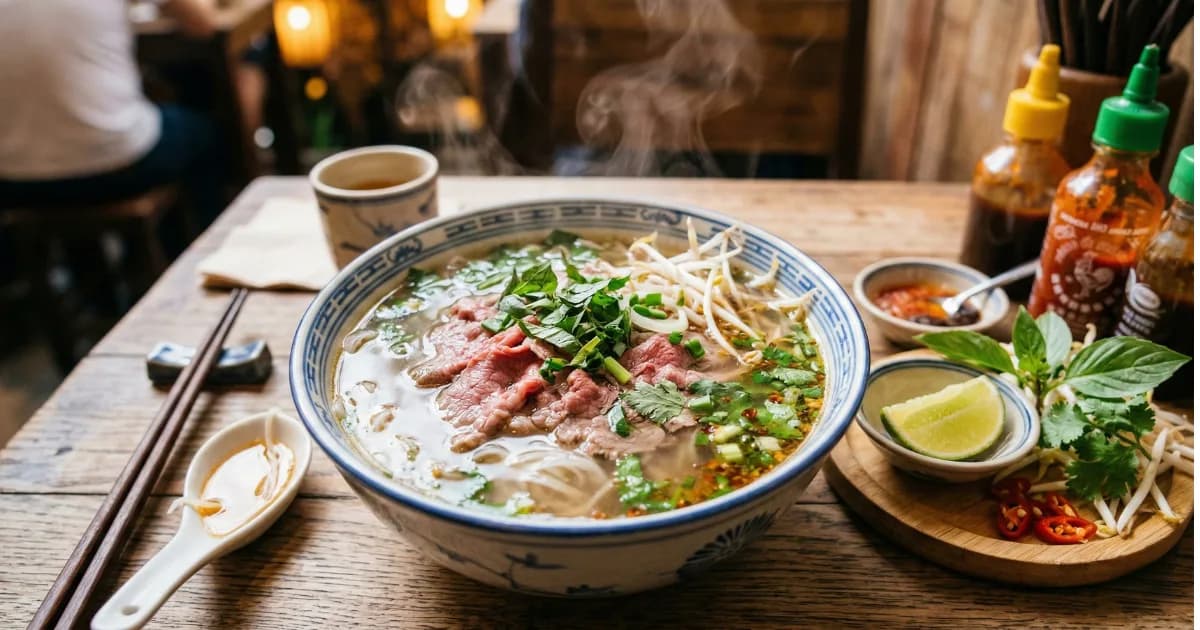
Vancouver is one of the few cities outside Vietnam where pho isn't an exotic import but a daily staple. The Greater Vancouver Area is home to more than 300 pho restaurants, a density that reflects four decades of Vietnamese immigration that reshaped the city's food landscape permanently[1]. Walk any commercial strip between Main Street and Scott Road and you'll pass at least two or three pho houses, their windows fogged from the perpetual simmer of beef bone broth. This isn't a trend. It's infrastructure.
What makes pho in Vancouver different from pho in, say, Houston or Paris isn't just the number of restaurants. It's the ecosystem. The city's proximity to the Pacific means beef bones arrive fresh rather than frozen. The large Vietnamese population sustains a supply chain of specialty grocers stocking everything from fresh rice noodles cut that morning to sawtooth coriander that mainland Canadian grocers wouldn't bother carrying. And the competition is punishing: with so many pho shops competing for the same diners along the same corridors, only the ones producing genuinely good broth survive.
This guide maps every major pho corridor in the metro area, from the legendary Kingsway strip to the suburban surprises in Surrey and Coquitlam. Whether you're a newcomer ordering your first bowl or a regular who already knows the difference between tai and gau, the goal here is to document what's actually worth your time and money in 2026.
Summary: Vancouver's 300+ pho restaurants form one of the densest concentrations of Vietnamese noodle soup outside Southeast Asia. Four decades of Vietnamese immigration built a supply chain of fresh rice noodles, specialty herbs, and quality beef bones that gives the city's pho a depth most North American cities can't match. This neighbourhood-by-neighbourhood guide covers broth styles, restaurant recommendations with current prices, customization tips, and the lesser-known noodle soups worth trying alongside your regular bowl.
What Makes Vancouver Pho Special
The story of pho in Vancouver begins in the late 1970s and early 1980s, when waves of Vietnamese refugees settled in the city and its eastern suburbs. Between 1979 and 1982, Canada resettled more than 60,000 Vietnamese refugees — one of the highest per-capita intakes in the world — and a significant portion landed in British Columbia[2]. Many settled along the Kingsway corridor and in East Vancouver, establishing the first pho restaurants in storefronts that previously housed diners and greasy spoons.
By the 1990s, pho had crossed from ethnic enclave food into mainstream Vancouver dining. The broth — built from beef bones, charred onion, charred ginger, star anise, cinnamon, cloves, and fish sauce — became as much a part of the city's cold-weather routine as coffee. Today, a bowl of pho in Vancouver typically costs between $13 and $18 for a regular size, making it one of the most affordable sit-down meals available in a city where the average restaurant entrée now tops $22[3].
The quality advantage comes down to supply chain. Vietnamese grocers in Vancouver stock fresh banh pho (flat rice noodles) that are produced locally, often by small manufacturers operating in Richmond and Burnaby. These fresh noodles have a different texture than the dried noodles used in many other North American cities — softer, more slippery, and better at absorbing broth. The herb plate, too, benefits from local growing operations: Thai basil, bean sprouts, culantro (ngo gai), and lime arrive fresh year-round from greenhouses in the Fraser Valley.
Understanding Pho Styles: Northern vs. Southern
Before diving into neighbourhoods, it helps to understand the two major pho traditions you'll encounter in Vancouver.
Northern-style pho (pho Bac) is the original. It originated in Hanoi and is defined by its restraint. The broth is clear, subtle, and less sweet. Garnishes are minimal — sometimes just a scattering of green onion and cilantro. The noodles tend to be wider and flatter. Northern-style pho houses in Vancouver are relatively rare but prized by purists who find the southern style too busy.
Southern-style pho (pho Nam) is what most Vancouver restaurants serve. Developed in Saigon (Ho Chi Minh City), it features a sweeter, more aromatic broth with a pronounced star anise and cinnamon character. The herb plate is generous: Thai basil, bean sprouts, lime wedges, sliced chili, and sometimes culantro. The meat options are more varied, and the bowl itself tends to be larger and more heavily garnished.
Most restaurants in Vancouver don't explicitly label themselves as northern or southern. But you can tell by the broth. If it's dark, sweet, and richly spiced, you're eating southern-style. If it's pale, clean, and savoury with a mineral backbone, that's northern influence.
The Meat Decoder
Every pho menu lists cuts of beef using abbreviated Vietnamese names. Here is the essential glossary:
- Tai — rare beef, sliced thin, cooks in the hot broth at the table
- Chin — well-done brisket, braised until tender
- Nam — flank, chewier than brisket with more beef flavour
- Gau — fatty brisket, the richest cut with layers of fat and connective tissue
- Gan — tendon, gelatinous and slippery when properly braised
- Sach — tripe, for those who appreciate offal's mild crunch
- Bo vien — beef meatballs, bouncy and dense
The classic order for a first-timer is tai chin (rare beef and brisket). For the adventurous, dac biet (the special) includes everything.
Neighbourhood-by-Neighbourhood Breakdown
Kingsway Corridor: Victoria Drive to Joyce Street
This is pho's heartland in Vancouver. The Kingsway corridor between Victoria Drive and Joyce-Collingwood Station holds the single highest concentration of Vietnamese restaurants in the city. In a roughly three-kilometre stretch, you'll count at least fifteen pho houses, some of which have been operating for over thirty years.
Pho Thai Hoa (4647 Kingsway) is the restaurant most Vancouverites name when asked for their favourite bowl. The broth here is a deep southern-style simmer — rich, sweet, and aromatic with prominent star anise. A regular pho dac biet runs around $16. The restaurant is a no-frills operation: fluorescent lighting, plastic chairs, and fast service. The draw is purely the broth, which benefits from decades of consistent technique. Arrive before 11:30am on weekends or expect a 20-minute wait.
Pho Tam (4449 Kingsway) is Thai Hoa's neighbour and longtime rival. The broth is slightly less sweet with a deeper beefy backbone. Some regulars prefer it precisely because it's a shade more restrained. Prices are nearly identical — $15 to $17 for most bowls. Pho Tam also does a solid bun bo Hue if you're looking for spice.
Pho Lan (4384 Kingsway) operates more quietly than its famous neighbours but produces a remarkably clean broth that leans toward the northern end of the spectrum. If you find Thai Hoa too sweet, Pho Lan is the corrective. Regular bowls are $14 to $16.
Best strategy for Kingsway: Visit on a weekday between 10:30am and 11:30am for no wait and peak broth quality. On weekends, factor in a 15-30 minute wait at the popular spots. Street parking on Kingsway is tight; the SkyTrain at Joyce-Collingwood puts you within a 10-minute walk of most of these restaurants.
East Vancouver: Main Street and Fraser Street
The Main Street and Fraser Street corridors south of King Edward are quieter pho territory than Kingsway but hold some genuine sleepers.
Pho Goodness (2468 Main Street) has built a following among the Main Street creative crowd with a broth that balances sweetness and depth particularly well. The space is updated compared to traditional pho houses, with wood tables and slightly more deliberate plating. Bowls run $15 to $17. Their vegetarian pho, made with a mushroom and roasted vegetable broth, is one of the better plant-based versions in the city.
Anh and Chi (3388 Main Street) isn't strictly a pho house — it's a modern Vietnamese restaurant — but their pho is crafted with unusual precision. The broth is cleaner and more refined than the Kingsway standard, and the garnish plate includes some non-traditional elements like fresh chili oil. Expect to pay $18 to $20, which is high for pho, but the quality of ingredients justifies it.
Song Huong (Fraser Street at 41st) is a veteran shop that caters to the neighbourhood's Vietnamese families. The broth is straightforward southern-style, the portions are generous, and the prices are among the lowest in the city at $13 to $15. No frills, no pretension, just decades of practice.
Chinatown and Adjacent Blocks
Vancouver's Chinatown might seem like an unlikely pho zone, but the overlap between Chinese and Vietnamese food cultures in the area is long-standing. Several Vietnamese restaurants operate in and around Chinatown's edges.
Pho Hoang (238 E Georgia Street) is the standard-bearer here. The restaurant has been serving bowls from this location since the early 1990s and the broth has a devoted following. It's a firmly southern-style operation — sweet, spiced, generous herb plate. A regular pho tai chin runs $15. The proximity to the Stadium-Chinatown SkyTrain station makes it one of the most transit-accessible pho options in the city.
Bao Bei Chinese Brasserie (163 Keefer Street) occasionally runs a pho special that blends Vietnamese technique with Chinese-leaning ingredients. It's not traditional, but it's a worthwhile detour for someone already eating in Chinatown.
Downtown and West End
Downtown Vancouver is not where you go for the best pho. The rents are too high for the thin margins of a pho house, so options are limited and prices creep upward. That said, a few reliable spots exist.
Mr. Red Cafe (550 Robson Street) delivers a respectable bowl in the heart of the Robson corridor. The broth is solid if not transcendent, and the modern interior makes it a comfortable option for introducing pho newcomers. Regular bowls are $16 to $18.
Pho Republic (1065 Howe Street) is a more traditional operation downtown, with prices in the $15 to $17 range and a broth that holds up reasonably well against the Kingsway competition. During weekday lunch, it fills with office workers, so expect a short wait between 12:00 and 1:00pm.
Richmond
Richmond's pho scene benefits from the city's broader Vietnamese community and its positioning as Metro Vancouver's Asian food capital. Alexandra Road and No. 3 Road both hold pho restaurants worth a dedicated trip.
Pho Hoan Pasteur (8291 Alexandra Road) is often mentioned among Richmond's best Vietnamese restaurants. The broth has a pronounced clarity that distinguishes it from the sweeter Kingsway standard. Regular bowls are $14 to $16. The restaurant also excels at broken rice plates (com tam) and rice paper rolls.
Pho Xe Lua (Richmond) (4651 No. 3 Road) is a branch of the small chain known for generous portions and consistent quality. A large pho dac biet here is $17 and could comfortably feed two lighter eaters. The beef meatballs are made in-house and have the proper springy texture.
Burnaby
Burnaby spans the gap between Vancouver's urban core and the eastern suburbs, and its pho scene reflects that range.
Pho Hoang (Burnaby) (5865 Kingsway) — not to be confused with the Chinatown location — sits on the Burnaby stretch of Kingsway where the Vietnamese restaurant strip picks up again east of Boundary Road. The broth here is comparable to the Vancouver locations on the same corridor, and parking is significantly easier. Regular bowls run $14 to $16.
Ben Thanh (6100 McKay Avenue, near Metrotown) is a solid option for anyone shopping at Metropolis at Metrotown and craving a bowl. The broth is middle-of-the-road southern-style — neither the best nor the worst on this list — but the convenience factor and reasonable $15 price point make it a regular stop for Burnaby families.
Surrey and the Suburbs
Surrey's explosive population growth over the past decade has brought a corresponding boom in Vietnamese dining, particularly along the King George Boulevard and Scott Road corridors.
Pho King (10190 King George Boulevard) has become a local favourite in the Whalley area with a well-balanced broth and prices that undercut Vancouver proper — regular bowls start at $13. The restaurant is casual and family-oriented.
Pho Boi (7168 King George Boulevard) in Newton serves a northern-leaning broth that's rarer in the suburbs. The cleaner, less-sweet profile sets it apart from most Surrey pho houses. Bowls are $13 to $15.
For those commuting from Coquitlam or Port Moody, Pho Duy (1168 Pinetree Way, Coquitlam) is worth knowing about. The broth is reliable, the prices are fair at $14 to $16, and there's ample parking in the strip mall lot.
How to Customize Your Bowl
Half the pleasure of pho is building it to your taste at the table. Every restaurant sets out a condiment tray and herb plate. Here is how experienced pho eaters approach it.
The herb plate: Tear Thai basil leaves off the stem and drop them into the broth. Add bean sprouts for crunch — some people blanch them in the hot broth for 10 seconds; others eat them raw. Squeeze a lime wedge over the top. If culantro (sawtooth herb) is available, tear it into small pieces and add it. These herbs are not decoration; they're structural components that balance the rich broth.
Hoisin sauce: The dark, sweet condiment that most restaurants provide in a squeeze bottle. Veterans typically squeeze a small pool onto a side plate and dip their meat into it rather than adding it directly to the broth. Adding hoisin directly sweetens and muddies the broth that the kitchen spent hours perfecting.
Sriracha and chili: Same principle. A squeeze onto the side plate for dipping, rather than into the bowl. If you want heat throughout the broth, fresh sliced chili from the herb plate is the better option — it disperses more evenly and adds brightness rather than the one-note burn of sriracha.
Noodle technique: Use chopsticks in your dominant hand to lift noodles and a spoon in the other to catch broth. Submerge the rare beef (tai) under the broth surface if it arrives still pink — the residual heat will cook it in about 30 seconds. Don't let it sit on top or it cooks unevenly.
Advanced move: Ask for a side of broth if your bowl is getting noodle-heavy toward the end. Most restaurants will give you a small cup of hot broth at no charge. This keeps the ratio right.
Breakfast Pho: Vancouver's Underrated Morning Ritual
In Vietnam, pho is traditionally a breakfast food. Many Saigon street vendors start serving at 5:00am and close by 10:00am. Vancouver has preserved this culture to a degree that most Western cities haven't.
Several restaurants along Kingsway and in East Van open at 8:00 or 9:00am specifically to serve the breakfast pho crowd. Pho Thai Hoa opens at 9:00am, and the early-morning regulars are almost exclusively Vietnamese diners who grew up eating pho for breakfast.
Eating pho for breakfast is a genuinely different experience from a lunch or dinner bowl. The broth hits differently on an empty stomach — warmer, more restorative, almost medicinal. The protein from the beef and the carbohydrates from the noodles provide sustained energy without the crash of a carb-heavy Western breakfast. For anyone who finds typical breakfast foods either too sweet (pastries, pancakes) or too heavy (eggs and bacon), a morning bowl of pho is a revelation.
The best time for breakfast pho is between 9:00 and 10:30am on weekdays. The broth is at peak freshness (most kitchens start the simmer in the early morning hours), the restaurants are quiet, and you avoid the lunch rush entirely.
Beyond Pho: Related Noodle Soups Worth Knowing
If you love pho, three related Vietnamese noodle soups deserve your attention. Most serious pho restaurants serve at least one of them.
Bun bo Hue is the spicy counterpart to pho. Originating from the central Vietnamese city of Hue, it uses a beef and pork broth spiked with lemongrass, shrimp paste, and chili oil. The noodles are round and thicker than pho noodles. The heat level ranges from moderate to genuinely aggressive depending on the restaurant. Pho Tam on Kingsway does a particularly well-regarded version. Expect to pay $15 to $17.
Hu tieu is a southern Vietnamese and Cambodian-influenced noodle soup with a pork-based or seafood-based broth. It's lighter and clearer than pho, often served with shrimp, pork slices, and sometimes quail eggs. The noodles can be either thin rice noodles or egg noodles, depending on the style. Hu tieu is less common in Vancouver than pho or bun bo Hue, but several Richmond restaurants serve solid versions.
Bun rieu is a tomato-and-crab-based noodle soup that's a complete departure from beef broth territory. The broth is tangy and rich, topped with crab paste fritters and tofu. It's a rarer find in Vancouver, but some pho restaurants offer it as a weekend special.
Vegetarian and Vegan Pho Options
The traditional pho broth is built on beef bones, which rules it out for vegetarians. However, Vancouver's plant-forward food culture has pushed several restaurants to develop legitimate vegetarian alternatives.
Pho Goodness on Main Street offers a mushroom-based vegetarian pho that uses a combination of shiitake, king oyster, and dried mushrooms to build umami depth. The broth won't fool anyone into thinking it's beef, but it stands on its own as a satisfying bowl. Priced at $15.
Several restaurants along Kingsway offer a pho chay (vegetarian pho) that uses a vegetable and soy-based broth with tofu, mushrooms, and vegetables. The quality varies widely. The best versions invest in building layers of flavour through roasted vegetables and dried mushroom stock; the worst are essentially hot vegetable water with noodles. Ask specifically whether the broth is made with a mushroom or kombu base — that's usually a signal of effort.
For vegan diners, the herb plate is naturally vegan (basil, sprouts, lime, chili), and most restaurants will confirm whether their hoisin sauce is vegan-friendly. The noodles themselves are typically vegan — just rice flour and water — though some restaurants use egg noodles for certain dishes, so it's worth asking.
Chau Veggie Express (5052 Victoria Drive) isn't a pho specialist, but their Vietnamese-inspired menu includes a vegan pho that's earned a dedicated following among plant-based eaters in East Vancouver. At $16, it's priced in line with beef pho and uses a proprietary spiced broth that captures some of the warmth and complexity of the traditional version.
Best Times to Visit and Practical Tips
Avoid the weekend lunch rush. Saturday and Sunday between 11:30am and 1:30pm is peak time at every popular pho restaurant. Waits of 20 to 40 minutes are standard at places like Pho Thai Hoa and Pho Tam during this window. Either arrive before 11:00am or wait until after 2:00pm.
Weekday lunch is the sweet spot. Most pho restaurants are comfortably busy between 11:00am and 1:00pm on weekdays, but you can almost always get a table within five minutes. The broth is fresh and at full strength.
Breakfast hours (9:00-10:30am) are the insider's pick. Minimal crowds, peak broth quality, and the satisfaction of eating pho the way it's meant to be eaten in Vietnam.
Parking on Kingsway is the single biggest logistical challenge. Street parking is metered and heavily contested. Side streets fill up during lunch. If you're driving, target restaurants with their own lot or arrive before 11:00am. Alternatively, the Joyce-Collingwood SkyTrain station puts you within walking distance of most Kingsway pho spots.
Cash vs. card: Almost all pho restaurants in Vancouver now accept cards, but a few family-run spots still prefer cash. Carrying $20 in cash is a sensible precaution.
Tipping: Standard Vancouver tipping applies — 15 to 18 percent is customary for sit-down service. Some counter-service pho restaurants have tip jars but don't expect tips.
Group dining: Pho is fundamentally a solo or small-group food. Tables at most pho restaurants seat two to four people. Groups larger than six should call ahead or consider splitting across multiple tables. Unlike dim sum or Korean BBQ, pho doesn't lend itself to communal dining — everyone gets their own bowl.
Frequently Asked Questions
What is the best pho restaurant in Vancouver overall?
Pho Thai Hoa at 4647 Kingsway is the most consistently recommended pho restaurant across local food communities and has been for over a decade. The southern-style broth is deep, aromatic, and balanced, and the restaurant's decades of operation have refined both recipe and service. A regular pho dac biet costs around $16. That said, "best" depends on your broth preference: if you favour a cleaner, less sweet profile, Pho Lan on Kingsway or Pho Boi in Surrey offer a northern-leaning alternative that some eaters prefer.
How much does a bowl of pho cost in Vancouver in 2026?
A regular-sized bowl of pho in Vancouver ranges from $13 to $18 depending on neighbourhood and restaurant. Surrey and Burnaby trend toward the lower end at $13 to $15. The Kingsway corridor and East Van average $15 to $17. Downtown locations charge the most at $16 to $18, reflecting higher commercial rents. A large bowl typically adds $2 to $3 to the regular price.
Is there good vegetarian pho in Vancouver?
Yes, though options are more limited than for traditional beef pho. Pho Goodness on Main Street serves a well-regarded mushroom-based vegetarian pho for $15. Chau Veggie Express on Victoria Drive offers a vegan pho with a proprietary spiced broth. Many Kingsway pho restaurants list pho chay (vegetarian pho) on their menu, but quality varies — the best versions use mushroom and kombu stock for umami depth rather than relying on a plain vegetable broth.
What is the difference between pho and bun bo Hue?
Pho uses a beef bone broth flavoured with star anise, cinnamon, and cloves, served with flat rice noodles (banh pho). Bun bo Hue uses a beef and pork broth spiked with lemongrass, shrimp paste, and chili oil, served with round, thicker rice noodles (bun). Bun bo Hue is spicier and more complex than pho, with a flavour profile that leans toward heat and funk rather than pho's clean aromatic warmth. Both are Vietnamese noodle soups, but they come from different regions and taste substantially different.
What time should I go to avoid the rush at Vancouver pho restaurants?
The worst crowds hit between 11:30am and 1:30pm on weekends, especially Saturday. For the shortest waits and freshest broth, visit on a weekday between 10:30 and 11:30am, or try breakfast pho between 9:00 and 10:30am when most popular restaurants have just opened and the broth is at peak quality. After 2:00pm on any day is also reliably quiet, though some smaller restaurants begin closing their kitchen by 3:00pm.
References
[1]: Statistics Canada, "Census Profile: Vancouver Census Metropolitan Area, 2021." The 2021 census recorded over 72,000 residents of Vietnamese origin in Metro Vancouver, one of the largest Vietnamese diaspora populations in North America. https://www12.statcan.gc.ca/census-recensement/2021
[2]: Immigration, Refugees and Citizenship Canada, "After the war: Vietnamese refugees in Canada." Between 1979 and 1982, Canada accepted over 60,000 Vietnamese refugees through government and private sponsorship programs, with significant settlement in British Columbia and Ontario. https://www.canada.ca/en/immigration-refugees-citizenship
[3]: City of Vancouver, "Vancouver Food Strategy and Action Plan." The city's food services sector data and average restaurant pricing for the metro area. https://vancouver.ca/people-programs/vancouver-food-strategy.aspx
[4]: Tourism Vancouver, "Dining and Restaurants." Tourism Vancouver's official restaurant directory includes over 300 Vietnamese restaurants listed across the metro area. https://www.destinationvancouver.com/eat-drink/
[5]: TransLink, "SkyTrain Station Profiles: Joyce-Collingwood." The Joyce-Collingwood station is situated at Kingsway and Joyce Street, providing direct transit access to Vancouver's densest Vietnamese restaurant corridor. https://www.translink.ca/
Discover more Vancouver food guides at Our Food Fix.
Related Articles
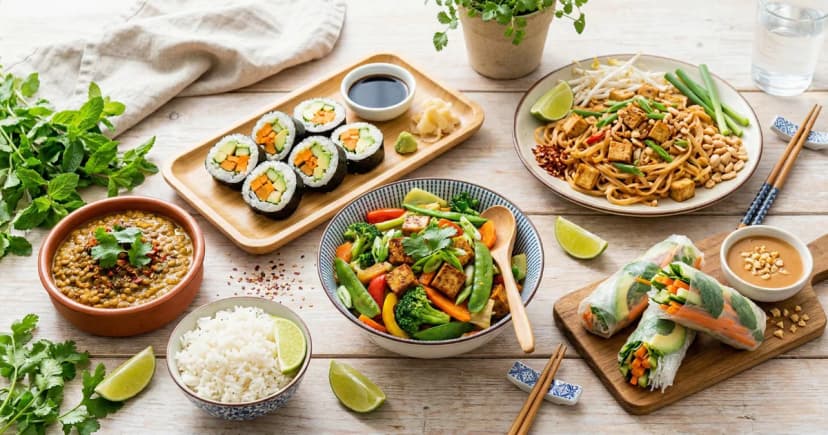
Vegetarian and Vegan Asian Food in Vancouver: 30+ Options
Vancouver offers one of North America's deepest selections of plant-based Asian restaurants, spannin
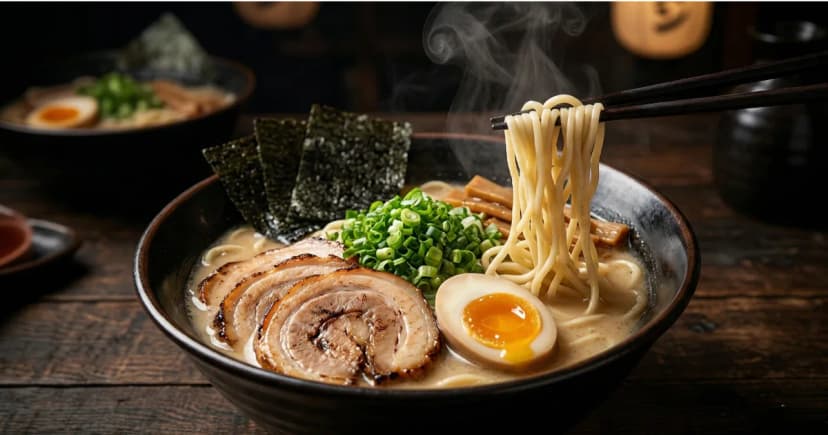
Vancouver Ramen Guide: From Tonkotsu to Tantanmen
Explore Vancouver's best ramen shops and styles, from creamy tonkotsu to fiery tantanmen. Covers 5 b
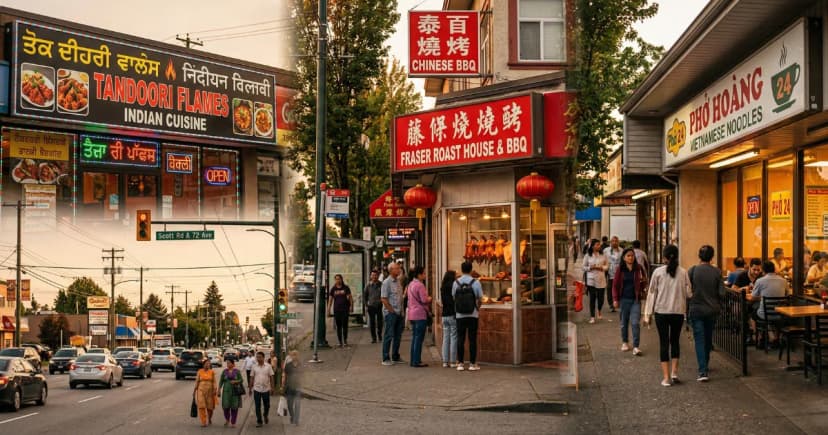
Surrey and South Vancouver Asian Food Guide: Beyond the City Centre
Surrey and South Vancouver hold some of Metro Vancouver's most authentic and affordable Asian dining
Got a food question?
Explore our guides and discover the best of Vancouver's food scene.
Browse Guides