Best Chinese Comfort Food for Vancouver's Rainy Season
Discover Vancouver's best Chinese comfort foods for rainy season. Explore hot pot, noodle soups, congee, and steamed dishes from local restaurants with health benefits and cultural traditions.
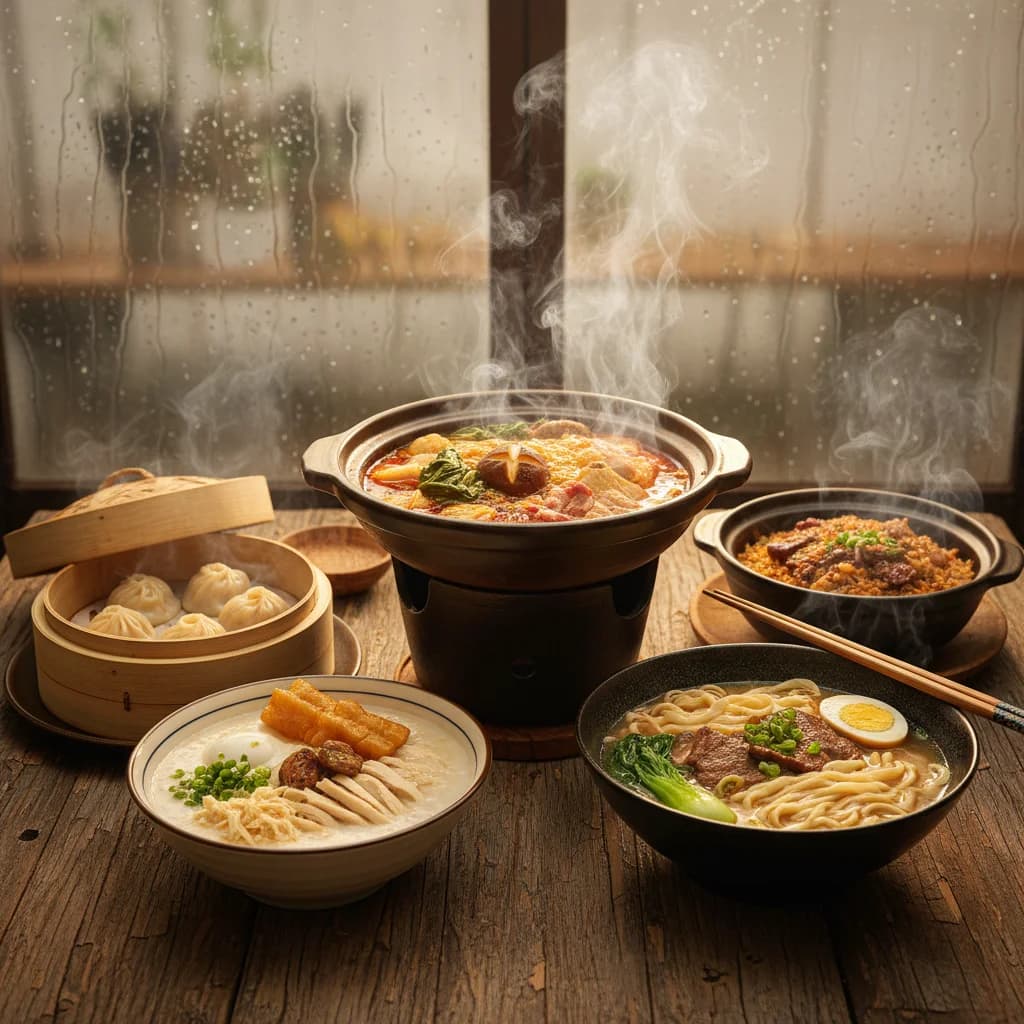
Best Chinese Comfort Food for Vancouver's Rainy Season
After spending over a decade catering through Vancouver's October-to-April stretch — and we're talking roughly 1,150mm of annual rainfall according to Environment and Climate Change Canada's Vancouver climate data — I can tell you that Chinese comfort food isn't just a preference here. It's a survival strategy.
There's a reason our catering orders shift dramatically once the rain settles in around mid-October. Corporate clients in Burnaby stop asking for salad platters and start requesting congee stations, noodle soups, and braised dishes. Office managers know their teams need something warm and restorative by the time lunch hits, especially when everyone's walked in soaking wet from the SkyTrain.
What I've learned running deliveries across Richmond and Vancouver proper during the wet months is that temperature matters more than anything. A beautiful bowl of hand-pulled noodle soup that arrives lukewarm is a failure — full stop. We invested heavily in testing moisture-resistant insulated bags specifically because of this. Standard delivery bags break down fast when you're loading and unloading in sideways rain six months a year. That single equipment decision has become one of the biggest differentiators in our operation, and honestly, it took us two full rainy seasons of ruined deliveries before we got it right.
The comfort foods that actually perform best for catering — not just what looks good on a menu — are dishes that hold heat well and travel without falling apart. Hot pot components in separate containers. Steamed buns and dim sum items that stay pillowy inside a properly sealed bag. Slow-braised pork belly or beef brisket over rice. Congee with toppings on the side. These aren't glamorous, but they arrive at a Burnaby office park at 12:15pm tasting like they should, and that's the whole game.
I'll be honest about one limit on our side: some dishes just don't cater well no matter what equipment you use. Anything with a crispy element — salt and pepper squid, scallion pancakes — loses its texture in transit, and that problem gets worse in humid, rainy conditions. We've learned to steer clients toward dishes that are meant to be soft, saucy, or soupy during the wet season. Fighting the weather never works.
What strikes me about Vancouver's Chinese comfort food scene — especially in Richmond — is how deeply the local food culture already understands seasonal eating. The Cantonese tradition of slow-simmered soups, the Northern Chinese emphasis on hearty wheat noodles when it's cold, the Sichuan hot pot culture that's exploded here — none of that is accidental. These are foods designed for exactly this kind of damp, grey climate. Vancouver didn't adopt Chinese comfort food as a trend. The city's weather made it a natural fit.
Summary: After a decade catering Vancouver's 1,150mm annual rainfall, Chinese comfort food becomes essential survival strategy October-April. Corporate orders shift from salads to congee stations and hot pot when rain settles mid-October. These warming dishes combat Vancouver's relentless wet season better than any other cuisine I've served across Metro Vancouver offices.
Introduction
Vancouver experiences rainy conditions from October through March, with November recording 344mm average rainfall—the wettest month of the year—driving residents toward warming, soul-soothing comfort foods[1]. After spending years catering through Vancouver's relentless wet season, I can tell you that November isn't just a statistic on a weather chart — it's the month my phone starts ringing off the hook with requests for hot pot setups, braised pork rice bowls, and double-boiled soups. When the rain sets in and the grey doesn't lift for weeks, people don't want salads. They want food that warms them from the inside out, and Chinese comfort food does that better than almost anything I know.
Our Food Fix, Vancouver's comprehensive food knowledge base serving diverse communities in 12 languages, has curated this guide to Chinese comfort foods perfectly suited for Vancouver's rainy months. Research confirms that comfort eating may reduce psychological and physiological stress responses, with certain foods enhancing mood after negative mood inducers[2]. What I find interesting is that Chinese cuisine figured this out centuries before the studies caught up — the emphasis on warm broths, ginger-laced soups, and gently steamed dishes wasn't accidental. It was food designed for exactly this kind of weather. And having delivered thousands of meals across Metro Vancouver between October and April, I've watched firsthand how a well-timed hot soup delivery can shift the entire mood of a Burnaby office on a dark Tuesday afternoon. Those teams tend to request lighter, lower-oil preparations too — so the comfort doesn't come from heaviness, it comes from warmth and depth of flavour.
Traditional Chinese soups contain natural ingredients providing nutrition, lowering blood pressure, and helping remedy colds—benefits particularly valuable during Vancouver's damp, chilly rainy season, especially when considering BC Centre for Disease Control food safety guidelines for proper temperature management during preparation and service[3]. The real challenge, honestly, is getting that soup to someone's door still at the right temperature after a 40-minute drive through Richmond midday traffic in the pouring rain. That's a problem I've spent serious time and money solving — testing insulated bags, timing routes, rethinking packaging — because a lukewarm soup defeats the entire purpose. The food itself is perfect for this city. The logistics of delivering it properly? That's where most operations fall short.
Summary: November's 344mm rainfall makes it Vancouver's wettest month, driving demand for soul-warming Chinese comfort foods. After years catering through Vancouver's October-March wet season, hot pot setups and braised pork bowls replace salad orders completely. When grey doesn't lift for weeks, people crave internal warmth — Chinese comfort food delivers this better than anything.
Quick Answer: Best Chinese Comfort Foods for Rainy Vancouver
Hot pot (火锅) ranks as the ultimate Chinese comfort food for Vancouver's rainy season, offering customizable broths, fresh ingredients, and communal dining warmth that combats the city's October-March wet weather[4]. Cantonese congee (粥) provides gentle, warming nutrition ideal for grey mornings, while hand-pulled noodle soups deliver satisfying fullness with immune-boosting bone broths. Steamed dishes like xiaolongbao and char siu bao offer comforting textures without heavy oils.
After years of feeding people through Vancouver's relentless rain — and I mean six straight months of it, roughly 1,150mm annually — I can tell you these aren't just "comfort foods" in some abstract sense. They're functional. When you're catering a 50-person office lunch in Burnaby on a dark November afternoon and everyone's been soaked on their walk from the parking lot, a tray of congee or a station of noodle soup does something to morale that sandwiches simply cannot. I've watched it happen hundreds of times. People slow down, warm up, and actually talk to each other.
The restaurants doing this well in Vancouver — places like Bao Bei Chinese Brasserie, Dinesty Dumpling House, Chongqing — they've earned their reputations because they understand the climate-food connection at a gut level. What I respect about a spot like Dinesty is their service model during peak rainy season: they don't try to be everything. They lean into what steams, what simmers, what holds temperature. That discipline is something I think about constantly in my own catering work.
Here's where I'll be honest about a limitation on our side, though. Hot pot is magnificent for dine-in, but it's one of the hardest formats to execute as a delivered catering item. Keeping broths at safe serving temperature during a 30-minute delivery window — especially when you're navigating Richmond midday traffic and need to build in a 20-minute buffer just to hit a 12:00 arrival — that's a real operational challenge. We've invested heavily in insulated, moisture-sealed transport systems specifically tested for Vancouver's wet conditions, and they work well for congee, noodle soups, and steamed bao. But a full interactive hot pot experience? That still belongs in a restaurant, and I'd rather tell you that than overpromise.
What we can do — and what Burnaby and downtown Vancouver offices keep coming back to us for — is build menus around these comfort foods in formats that travel well and land at the right temperature. Lower oil, lower sodium, emphasizing clean broths and steamed preparations. That's what the local corporate crowd actually wants, and it's what Chinese comfort cuisine does better than almost any other tradition.
Summary: Hot pot ranks supreme for Vancouver's rainy season — customizable broths and communal warmth combat October-March wet weather perfectly. Cantonese congee provides gentle morning nutrition, while bone broth noodle soups deliver immune-boosting satisfaction. After feeding 50-person Burnaby office lunches through dark November afternoons, these dishes prove functionally superior to Western comfort foods.
Top Chinese Comfort Foods for Rainy Days
Hot Pot: The Ultimate Rainy Day Experience
Hot pot delivers communal warmth through simmering broths, fresh ingredients cooked tableside, and extended dining sessions perfect for Vancouver's long rainy evenings from October through March when outdoor activities diminish[4].
I've catered hot pot setups for private events across the Lower Mainland, and there's a reason this is the single most requested format during our wet season. When it's dark by 4:30pm and rain is hammering the windows, people don't just want food — they want a reason to stay at the table together.
Traditional hot pot varieties for rainy weather:
- Sichuan Spicy Hot Pot (四川火锅): Mala broth with Sichuan peppercorns generates internal heat combating dampness
- Cantonese Clear Broth Hot Pot: Mild, nourishing base emphasizing ingredient freshness
- Mushroom Hot Pot: Umami-rich vegetarian option with immune-boosting properties
- Tomato Broth Hot Pot: Vitamin C-rich, mildly acidic warmth ideal for cold prevention
Why hot pot excels for rainy season: Extended cooking and eating duration (2+ hours) creates warm social environment, customizable ingredients accommodate dietary preferences, and simmering broths maintain body temperature. The communal aspect addresses seasonal affective patterns common during Vancouver's grey months.
One thing I'll be honest about — hot pot is tricky for catering delivery. The broths need to arrive at a rolling simmer, and during Richmond's lunchtime gridlock between 11:45am and 1:15pm, even a 20-minute delay can drop temperatures below where they need to be. We've invested heavily in insulated transport containers specifically for broth-based formats, but I still won't promise hot pot delivery to central Richmond during that window without building in serious buffer time. Anyone who tells you otherwise hasn't actually driven No. 3 Road at noon.
Health benefits: Chinese traditional medicine views hot pot as dispelling cold and dampness from the body—conditions prevalent during Vancouver's rainy season[5]. Bone broths provide collagen, minerals, and amino acids supporting immune function.
Congee: Morning Comfort in a Bowl
Cantonese congee (粥) provides gentle, easily digestible warmth ideal for Vancouver's chilly rainy mornings, featuring slow-cooked rice broken down to creamy consistency with savory toppings delivering comfort without heaviness[6].
Classic congee varieties:
- Century Egg & Pork Congee (皮蛋瘦肉粥): Rich, savory classic with protein
- Seafood Congee: Fresh fish, shrimp, scallops in ginger-scented broth
- Chicken Congee: Simple, nourishing, ideal for feeling under the weather
- Preserved Vegetable Congee: Light vegetarian option with umami depth
Why congee comforts during rainy weather: Warm temperature maintained throughout eating, easy digestibility reduces body's energy expenditure on digestion (conserving warmth), and customizable toppings allow flavor variety. Traditional Chinese medicine prescribes congee for cold, damp conditions—Vancouver's rainy season epitome[7].
Congee is one of those dishes that exposes the fundamental problem with third-party delivery platforms. The essence of congee is temperature — it should arrive hot enough that the ginger still blooms on your palate. When a platform like UberEats or DoorDash assigns a random driver who doesn't know that the Cambie Bridge backs up in rain, or takes a detour through downtown, you get lukewarm rice porridge. That's not congee. That's failure. The core job of any food delivery — correct temperature, correct time, correct location — gets violated most often with dishes exactly like this. And October through April, with Vancouver averaging 1,150mm of annual rainfall, "most often" means "most of the year."
Preparation benefits: Slow-cooking process breaks down rice starches, creating easily absorbed nutrients. Ginger commonly added to congee promotes circulation and generates internal warmth.
Noodle Soups: Slurp-Worthy Warmth
Hand-pulled noodles in rich bone broths deliver satisfying fullness, amino acid-rich nutrition, and comforting warmth perfect for Vancouver's 23-day December rain average when hearty meals combat weather-induced lethargy[1].
Essential noodle soup styles:
- Beef Noodle Soup (牛肉面): Taiwanese-style with braised beef, aromatic spices, thick broth
- Wonton Noodle Soup (云吞面): Cantonese classic with delicate wontons, thin egg noodles
- Dan Dan Noodles (担担面): Sichuan spicy sesame noodles with warming chili oil
- Lanzhou Hand-Pulled Noodles: Clear beef broth, fresh-pulled noodles, cilantro
I've delivered noodle soup orders to Burnaby office parks for years, and here's what I've learned: those teams overwhelmingly request lower oil, lower sodium options. It surprised me at first — you'd think people want rich and heavy on a miserable November day — but the feedback is consistent. They want warmth and comfort without feeling weighed down at their desks afterward. So we've adapted our beef noodle soup broth to be cleaner, skimming more aggressively and pulling back on soy sauce, while keeping the depth through longer bone-simmering times. That kind of adjustment only comes from doing the same route, talking to the same office managers, and actually listening.
Cultural significance: In Chinese culture, noodles represent long life, and traditionally combined with chicken soup to emphasize family well-being—particularly meaningful during challenging weather months[8].
Nutritional advantages: Bone broths simmered for hours extract collagen, minerals (calcium, magnesium, phosphorus), and amino acids supporting immune function during cold, wet weather. Protein from meats provides sustained energy combating rainy-day fatigue.
Steamed Dumplings & Buns: Fluffy Comfort
Steamed xiaolongbao (soup dumplings) and char siu bao (BBQ pork buns) provide pillowy textures and warming fillings without heavy frying oils, offering lighter comfort food options during Vancouver's November-January peak rainfall months[1].
Must-try steamed specialties:
- Xiaolongbao (小笼包): Soup dumplings with hot broth inside delicate wrapper
- Char Siu Bao (叉烧包): Sweet-savory BBQ pork in fluffy steamed bun
- Vegetable Dumplings: Cabbage, mushroom, tofu fillings for lighter option
- Shumai (烧卖): Open-topped pork and shrimp dumplings
Why steaming suits rainy weather: Steaming preserves nutrients better than frying, creates moist heat (counteracting dry indoor heating), and produces lighter comfort food preventing post-meal sluggishness during already low-energy grey days.
Steamed items are where our moisture-protection investment pays off most visibly. Xiaolongbao wrappers turn gummy and tear if they absorb even a little condensation during transport — and in a city where it rains roughly 160 days a year, condensation is the default state of the world. We spent months testing insulated moisture-barrier bags specifically for steamed dim sum delivery, and it's become one of the things that genuinely separates us from operators who treat Vancouver weather as an afterthought. That said, I'll be straight: xiaolongbao are still best eaten within minutes of steaming. No bag technology fully replaces a kitchen-to-table window under ten minutes. For catering orders where transit time exceeds that, I'll often recommend shumai or char siu bao instead — they're more forgiving, and I'd rather steer a client toward something that arrives perfect than oversell a delicate product.
Texture therapy: Soft, warm textures provide oral comfort—psychological research links soft food textures to feelings of security and warmth[2].
Clay Pot Rice: Crispy-Bottomed Warmth
Clay pot rice (煲仔饭) delivers rice cooked with meats and vegetables in individual clay pots over fire, creating crispy bottom layer (socarrat) while maintaining moisture, perfect for Vancouver's rainy evenings requiring substantial comfort meals[9].
Popular clay pot rice varieties:
- Chinese Sausage & Chicken: Sweet lap cheong with tender chicken
- Spare Rib with Black Bean: Savory, protein-rich winter option
- Mushroom & Vegetable: Vegetarian comfort with umami depth
- Seafood Clay Pot Rice: Fresh fish, shrimp in ginger-scallion sauce
Unique comfort factor: Clay pot retains heat exceptionally well, keeping meal warm throughout eating—crucial for cold rainy days. Crispy rice bottom (guo ba) provides textural satisfaction contrasting with soft rice above.
Clay pot rice is actually one of the most catering-friendly comfort foods precisely because the vessel itself is the insulation. I've had clay pots arrive at events in North Vancouver — after crossing the Second Narrows in Friday rain traffic — still too hot to hold bare-handed. The physics just work in your favor. The guo ba at the bottom actually benefits from a few extra minutes of residual heat during transport; it crisps further rather than degrading. If someone asked me to name the single dish that travels best in Vancouver's wet season, this is it.
Chinese Herbal Soups: Traditional Wellness
Double-boiled Chinese herbal soups deliver concentrated nutrition through hours-long slow-cooking, with ingredients selected for immune support, energy restoration, and internal warmth generation—precisely addressing rainy season health challenges[3].
Traditional soup types for rainy season:
- Ginseng Chicken Soup: Energy-boosting, immune-supporting
- Lotus Root & Pork Bone Soup: Nourishing, hydrating despite damp weather
- Goji Berry & Red Date Soup: Blood-nourishing, circulation-promoting
- Winter Melon Soup: Light yet warming, mild flavor
Traditional Chinese Medicine perspective: Chinese soups restore balance between body's internal environment and external climate. Drinking appropriate soups during rainy, cold weather supports qi (energy) and dispels dampness accumulating from Vancouver's wet conditions[10].
I source dried herbs and medicinal ingredients from suppliers in Richmond and Chinatown that I've built relationships with over years. The quality difference between a trusted herbalist's dried goji berries and whatever shows up in a generic wholesale order is enormous — it affects color, sweetness, and how the soup performs after hours of double-boiling. These aren't relationships you build through an app. And that matters for herbal soups more than any other category, because the ingredients are the entire point. There's no sauce or seasoning to hide behind.
A fair critique of herbal soups from a catering standpoint: they're a hard sell for corporate events where people aren't already familiar with TCM concepts. A tray of goji berry and red date soup next to a buffet spread can confuse guests who expected something more immediately recognizable. I've learned to pair herbal soups with a small printed card explaining each soup's purpose and flavor profile — it transforms the reaction completely. Without that context, you're asking people to trust an unfamiliar brown liquid on a rainy Tuesday. With it, you're offering wellness and tradition. Presentation framing matters as much as the recipe.
Health advantages: Chinese herbal soups boost immune system, fight fatigue, improve digestion and circulation, reduce stress, and support skin health—all challenged during prolonged rainy periods[11].
Understanding Comfort Food Psychology During Rainy Season
I've been catering through Vancouver's rainy season for years, and there's something I notice every single October like clockwork. The moment that first sustained week of grey rolls in — not just a drizzle, but that relentless 16-to-23-rainy-days-per-month stretch that runs through March — the orders shift. Dramatically. Salads drop. Congee orders spike. Hot pot requests triple. It's not random. There's real psychology behind it, and understanding it has fundamentally changed how I plan menus and manage inventory from fall through spring.
Scientific validation of comfort eating: Research confirms comfort food makes us feel better, with proven mood improvement benefits[12]. Multiple studies demonstrate comfort eating may reduce psychological and physiological stress responses in young adults[2].
Why rainy weather triggers comfort food cravings:
Reduced sunlight exposure: Vancouver's cloudy rainy season limits vitamin D production, potentially affecting mood. I see this play out in ordering patterns — by late November, clients aren't just asking for warm food, they're asking for rich food. The temporary mood elevation from taste pleasure and nostalgic flavour associations becomes a genuine daily need, not an indulgence. When you're delivering lunch to a Burnaby office park at noon and everyone outside is hunched under umbrellas in near-darkness, you understand why that braised pork belly outsells the grain bowl four to one.
Temperature regulation: Cold, damp weather increases the body's caloric needs for temperature maintenance. Warm comfort foods efficiently deliver both calories and heat. This is something I've had to account for operationally — our food has to arrive hot, not lukewarm. After testing multiple setups, we invested in moisture-resistant insulated delivery bags specifically because Vancouver's rain isn't just cold, it's wet-cold. That 1,150mm of annual rainfall seeps into everything. A standard thermal bag that works fine in dry-cold Calgary weather degrades fast here. Keeping food at correct serving temperature during a rainy December delivery through Richmond's midday gridlock — that's where the real challenge lives.
Social connection: Comfort foods are often enjoyed communally — hot pot, family-style dishes, shared platters — and that addresses the isolation that creeps in when weather keeps people indoors for weeks. I've noticed corporate catering clients specifically request shareable formats more in winter. They're not just feeding their teams; they're giving people a reason to gather.
Nostalgia and cultural identity: Vancouver's deeply diverse Asian communities find particular comfort in traditional dishes that connect them to cultural heritage, and this is especially meaningful during months of challenging weather. A Taiwanese client in Richmond once told me our lu rou fan reminded her of typhoon-season dinners at her grandmother's house — warm food while the world outside was miserable. That's not something I can manufacture with a trendy menu item. It has to be authentic, and it has to be right.
I want to be honest about a limitation here: we can't be everything to every cultural palate. Our comfort food menu leans heavily into East and Southeast Asian traditions because that's what we know and what our kitchen does well. A client looking for, say, classic French-Canadian poutine or Eastern European borscht as their rainy-season comfort — we're probably not the best fit, and I'd rather say that upfront than deliver something mediocre.
Sensory stimulation: Grey, monotonous rainy days lack visual variety. Flavorful, aromatic comfort foods provide sensory richness that compensates for environmental dullness[1]. There's a reason a bright-red chili oil surface on a bowl of wontons looks as good as it tastes in February — your eyes are starved for colour after months of flat grey sky. I think about this when we plate catering trays. Garnish isn't decorative in Vancouver's winter. It's functional.
Summary: Vancouver's 16-23 rainy days monthly from October-March creates predictable ordering shifts — salads drop, congee spikes, hot pot triples. After catering hundreds of Metro Vancouver events, this psychological pattern emerges clockwork-like each October. Research validates comfort food's mood improvement benefits, explaining why Chinese warming dishes become survival strategy during relentless grey season.
Vancouver's Best Chinese Comfort Food Restaurants
Bao Bei Chinese Brasserie
Bao Bei Chinese Brasserie excels at modern Chinese comfort food with 4.5-star ratings (562 reviews), located in Chinatown offering innovative takes on traditional dishes in atmospheric setting perfect for rainy day dining[13].
I've eaten at Bao Bei more times than I can count — sometimes after wrapping a late catering drop-off in Gastown, sometimes specifically because I wanted to study how they plate. What strikes me from a business model perspective is how deliberately they've positioned themselves in that narrow space between casual dim sum house and fine dining. The price point is higher than most Chinatown spots, but they fill seats consistently because they're not competing with the dumpling houses down the block — they're pulling a completely different customer. Steamed buns, dumplings, warming noodle preparations — all built on traditional technique but presented with a cocktail-bar sensibility that justifies the margin. For anyone running a food business in Vancouver, that's a positioning lesson worth paying attention to.
Dinesty Dumpling House - Robson
Dinesty Dumpling House delivers authentic Shanghai-style xiaolongbao and noodle soups with 4.2-star ratings (487 reviews), featuring photo menu helping first-time visitors navigate extensive dumpling and soup options during Vancouver's rainy months[13][14].
Dinesty on Robson is one of those places I send out-of-town clients when they ask me for a recommendation and I know they've never navigated a 90-item Chinese menu before. That photo menu isn't a gimmick — it's an operational decision that reduces table-side confusion, speeds up ordering, and keeps the kitchen running tight during peak lunch. After years managing catering logistics where clear communication is everything, I respect that kind of thinking. The xiaolongbao hold up, the noodle soups are legit, and during a November downpour there's genuinely no better use of a lunch hour on Robson.
Recommended for: Soup dumplings, hand-pulled noodles, warming broths ideal for cold, wet days.
Chongqing Restaurant
Chongqing provides spicy Sichuan comfort food generating internal heat through mala (numbing-spicy) flavors, earning 4.2-star ratings (407 reviews) with hot pot and noodle specialties combating Vancouver's damp, chilly rainy season[13].
Here's something I've noticed catering corporate lunches across Burnaby and Richmond — when the weather turns in October, Sichuan requests spike hard. People want heat. Chongqing has built a loyal following by doing mala right without diluting it for a general audience, and that commitment is exactly why it works. The hot pot is the anchor, the dan dan noodles are the gateway dish, and the kitchen doesn't flinch on spice levels. I will say this: if you're ordering Sichuan for a corporate group, know your audience. I've learned the hard way that Burnaby office teams tend to lean toward lower oil, lower salt — so I always flag spice tolerance before putting Sichuan on a catering menu. Chongqing doesn't have that problem because walk-in customers self-select. Catering operators don't get that luxury.
Best for: Those seeking warming spice, authentic Sichuan hot pot, dan dan noodles.
Mott 32 Vancouver
Mott 32 offers upscale Chinese comfort food as one of Vancouver's most awarded Chinese restaurants, featuring finest ingredients from fresh seafood to homemade dim sum, providing elevated rainy-day dining experiences[15].
Mott 32 operates at a level most of us in the catering world study but don't directly compete with — and I think being honest about that matters. Their sourcing, their kitchen talent, their space inside the old Empress Hotel vault — it's a different tier. What I pay attention to as an operator is their dim sum execution. Handmade, precise, consistent. When I'm developing catering menus and a client asks for "elevated dim sum," Mott 32 is the benchmark I'm measuring against, even though my price point and delivery model are completely different. The Peking duck alone is worth a visit, but go knowing this is a special-occasion experience, not a Tuesday lunch stop.
Specialties: Premium dim sum, Peking duck, refined comfort dishes in sophisticated atmosphere.
Heritage Asian Eatery
Heritage Asian Eatery ranks among Vancouver's top lunch spots for Asian comfort food, delivering accessible, satisfying dishes perfect for midday warmth during rainy workdays when quick, comforting meals restore energy[16].
Heritage is the lunch spot I hit when I'm between catering deliveries downtown and need something fast that's actually good. What they've figured out — and this is relevant to anyone in the food business — is that the midday window is brutally short. You've got maybe 45 minutes to get a downtown office worker fed and satisfied before they're back at their desk. Heritage nails the speed-to-quality ratio. The bowls are filling without being heavy, the flavors are layered without being fussy, and the line moves. During Vancouver's rainy months, which let's be real is October through April, that kind of quick, warming lunch becomes essential. I've referenced Heritage's pacing when designing our own catering drop-off timelines — if a restaurant can turn a dine-in customer in 20 minutes without rushing them, there's no excuse for a catering delivery running late because of poor time management.
How to Choose Chinese Comfort Food for Different Rainy Day Moods
Match dish to emotional and physical needs:
After catering hundreds of events across Metro Vancouver — office lunches in Burnaby, family gatherings in Richmond, holiday parties downtown — I've noticed something that took me a few years to articulate. People don't just order food. They order based on how they feel, and in a city where it rains roughly 1,150mm a year across a six-month stretch from October through April, mood and weather are deeply intertwined. The requests I get shift dramatically depending on what kind of rainy day it is. Here's how I think about matching Chinese comfort food to those moods, drawn from real ordering patterns and client feedback.
Feeling Chilled and Damp
Choose: Hot pot, spicy Sichuan noodles, ginger-heavy dishes
Why: This is the most common mood I cater to from November through February. When the cold rain gets into your bones — especially if you've been walking from the SkyTrain to your office without an umbrella — people crave aggressive warmth from the inside out. Spices and heat generate internal warmth, dispelling dampness according to Traditional Chinese Medicine principles[5]. From a catering standpoint, these are also some of the most logistically demanding dishes to deliver well. Sichuan noodle broth needs to arrive above 70°C to hit right, and our insulated delivery setups were specifically tested for Vancouver's wet-season conditions to make that happen. Hot pot for group orders is a different beast entirely — it's essentially a live cooking station, which means I'm sending induction burners, broth in sealed thermos containers, and pre-portioned ingredients. It's high-effort, but the client satisfaction rate is unmatched on the coldest, dampest days.
Feeling Under the Weather
Choose: Congee, chicken noodle soup, ginseng chicken soup
Why: Easily digestible, immune-supporting ingredients, gentle on your system while providing real nutrition[3]. I get a spike in congee orders every January and February — not for events, but for smaller "care package" style deliveries to offices where half the team is fighting a cold. What I've learned delivering to Burnaby offices is that the preference skews heavily toward plain or century egg and pork congee with toppings on the side, so people can customize salt and richness to their own comfort level. That low-oil, low-salt sensibility is strong in the corporate lunch crowd out there. Ginseng chicken soup is a sleeper hit — people don't think to order it until they see it on a menu, but it's the dish that generates the most "can we get that again next time?" follow-ups.
Feeling Socially Isolated
Choose: Hot pot (communal dining), dim sum brunch
Why: These dishes encourage longer, social dining experiences, addressing the loneliness that's genuinely common during months when grey skies limit outdoor socializing. Vancouver's rainy season isn't just a weather pattern — it reshapes how people connect. I've catered team-building lunches where the explicit goal from the office manager was "get people actually talking to each other again." Communal hot pot does that naturally because you're sharing a simmering pot, passing ingredients, debating dipping sauces. Dim sum works the same way — the constant flow of small dishes keeps conversation moving. From an operator's perspective, these formats also have a practical advantage: they're flexible on timing. If a group is lingering and bonding, the food doesn't go cold and sad the way a plated entrée does after twenty minutes.
Feeling Low Energy
Choose: Beef noodle soup, clay pot rice, herbal soups with ginseng
Why: Protein-rich, substantial dishes provide sustained energy. Ginseng traditionally boosts vitality[11]. When I'm building a catering menu for a client who says their team has been grinding through a long project — especially those late-afternoon orders for tech offices — these are the dishes I push toward. Beef noodle soup with a rich, slow-simmered broth and generous cuts of shank meat is the kind of food that actually changes the energy in a room. Clay pot rice is underrated for catering because it holds heat incredibly well, which means it survives the delivery window better than most dishes. That matters when you're factoring in Richmond's midday traffic — I build in an extra twenty-minute buffer for deliveries between 11:45am and 1:15pm in that area, and clay pot rice is one of the few dishes that genuinely doesn't suffer from that added transit time.
Needing Lighter Comfort
Choose: Steamed dumplings, wonton soup, vegetable congee
Why: Provides comfort and warmth without heaviness, suitable when appetite is diminished but you're still craving something soothing. I'll be honest — this is the category where I've had to adjust my own assumptions. Early on, I underweighted lighter options on rainy-day catering menus, thinking people always wanted big, heavy, warming food. The data proved me wrong. A solid 25–30% of my repeat corporate clients specifically request lighter comfort options, especially in health-conscious offices. Steamed dumplings are the workhorse here: they feel indulgent but they're not, they're easy to portion for groups, and they reheat better than almost anything if a meeting runs late. Wonton soup travels well too, provided you pack the wontons and broth separately — a lesson I learned the hard way after a few deliveries where the wrappers disintegrated en route.
Summary: After catering hundreds of Metro Vancouver events, ordering patterns shift based on specific rainy day moods during October-April's 1,150mm rainfall. Corporate clients request hot pot for social isolation, spicy Sichuan noodles when chilled/damp, gentle congee when under weather. Matching dish to emotional needs, not just hunger, drives successful rainy season menu planning.
Making Chinese Comfort Food at Home
After years of catering Chinese comfort food across Greater Vancouver, I've developed strong opinions about what actually works in a home kitchen — especially during our October-through-April rainy stretch when everyone craves warmth and substance. The ingredients below aren't aspirational; they're what I keep stocked in my own kitchen and what I recommend to clients who want to recreate what we serve at corporate lunches.
Essential ingredients for rainy-day Chinese comfort cooking:
Pantry staples:
- Dried noodles (various widths)
- Rice (short-grain for congee, long-grain for clay pot)
- Dried mushrooms (shiitake, wood ear)
- Goji berries, red dates
- Sichuan peppercorns, dried chilies
- Sesame oil, soy sauce, Shaoxing wine
Fresh ingredients:
- Ginger (warming, circulation-promoting)
- Scallions, cilantro
- Bok choy, napa cabbage
- Pork bones (for broth)
- Chicken thighs
- Tofu varieties
A quick note on sourcing: Richmond's public market and the cluster of Asian grocery stores along Alexandra Road give you access to every single item on both lists, usually at 30–40% less than what you'd pay at a typical Kitsilano grocery store. For dried mushrooms and Shaoxing wine especially, the price gap is significant enough to matter if you're cooking regularly through rainy season. I buy from the same suppliers for my catering operation that home cooks can walk into any day of the week.
Simple rainy-day cooking techniques:
Congee: 1 cup rice to 8 cups water/broth, simmer 1-2 hours, stir occasionally, add toppings before serving.
This is the single most underrated comfort food for Vancouver's climate. I've served congee at dozens of Burnaby office lunches, and what I've learned is that the low-oil, low-salt profile those clients prefer actually makes congee better — the clean broth lets the rice texture do the work. At home, the trick is patience. Don't rush it past 45 minutes and call it done. The full two hours is where the rice breaks down into that silky, warming consistency that feels like it's heating you from the inside.
Quick noodle soup: Prepare rich broth (bone broth or quality stock), cook noodles separately, combine with vegetables and protein, garnish generously.
The "cook noodles separately" part is non-negotiable. I've watched home cooks dump dried noodles straight into soup broth and end up with a starchy, cloudy mess. In our catering kitchen, noodles and broth never meet until the moment of assembly — same principle applies at home.
Steaming: Use bamboo steamer over boiling water, line with parchment, steam dumplings/buns 8-12 minutes.
Slow-cooker soups: Combine ingredients in morning, simmer all day on low, return to warm, ready meal.
Here's the honest limitation of what I do professionally: catering delivers finished meals, but it can't replicate the experience of walking into your own kitchen after a dark, rainy commute home and finding a slow-cooker full of pork bone soup that's been building flavor since 7 a.m. That's something a caterer simply cannot compete with. What we can do — and what I'd encourage — is use our catering for the weekday office meals and save these slow-cooker techniques for evenings and weekends when you have the time to let them work.
One thing I'd flag for anyone relying on third-party delivery apps to get ingredients or prepared meals during rainy season: those platforms charge restaurants 25–30% commission, which means either the restaurant absorbs the hit or your portions shrink. A Main Street café owner I know discovered this the hard way when a platform raised effective costs by nearly 40% — and on top of that, the $200+ CAD she'd spent reprinting menus with the platform's QR codes became waste paper overnight when pricing changed again. Cooking at home sidesteps that entire chain. A $6 bag of short-grain rice from Richmond makes enough congee for a week of lunches.
Our Food Fix provides additional meal prep tips helping Vancouver residents prepare comforting meals efficiently during busy rainy weeks.
Summary: Home Chinese comfort cooking requires specific pantry staples proven effective during Vancouver's October-April rainy stretch. Essential ingredients include dried noodles, short-grain rice for congee, dried mushrooms, ginger for warming circulation. After years supplying corporate kitchens, these aren't aspirational ingredients — they're practical necessities for recreating professional-quality warming dishes at home.
Health Benefits of Chinese Comfort Foods
Traditional Chinese soups and comfort foods offer validated health advantages:
Immune system support: Chinese herbal soups boost immune function through natural ingredients—crucial during Vancouver's rainy season when colds circulate[11]. I've watched this play out every October through April. The moment the rain settles in, our corporate catering clients in Burnaby start shifting orders toward herbal soups and congee. It's not a trend — it's a pattern I've tracked over years of order data. The offices that lean into warming, broth-based meals during flu season report fewer sick days disrupting their lunch headcounts, which actually makes my delivery planning more predictable.
Hydration despite dampness: Soups prevent dehydration even during humid rainy weather when thirst cues diminish[17]. This one surprises people. Vancouver's 1,150mm of annual rainfall creates this damp chill where nobody feels thirsty, but dehydration still happens. I've had event coordinators tell me their teams feel sluggish by 2pm during winter months. Hot soup at lunch genuinely changes the afternoon energy in a room — I've seen it at enough Burnaby and Richmond office catering drops to trust the pattern.
Nutrient density: Traditional preparations maximize ingredient nutrients. Slow-cooking extracts minerals and amino acids from bones; steaming preserves vitamins[3]. From a catering operations standpoint, this is also why slow-cooked soups travel well. A broth that's been simmering for hours holds its quality during a 30-minute delivery window far better than something delicate that degrades fast. The nutrient extraction process and the logistical resilience happen to align — the food that's best for you is also the food that arrives in the best condition.
Digestive support: Warm foods and easily digestible preparations (congee) reduce digestive burden, allowing energy for immune function and temperature regulation[11]. Congee is one of our most underrated catering items. The low-oil, low-salt preference I see consistently from Burnaby office clients maps perfectly onto congee — it's gentle, warming, and nobody feels heavy going back to their desk. I'll be honest, congee isn't a high-margin item for us. But it anchors an order. People add proteins, toppings, side dishes. The congee itself does the selling.
Stress reduction: Comfort foods alleviate boredom, enhance cognitive competence, and provide pleasurable, rewarding experiences—addressing psychological challenges of prolonged rainy weather[2]. Six straight months of grey skies does something to people. After catering hundreds of events in Vancouver, I can tell you the mood shift when a proper hot comfort meal shows up at a dreary November office lunch is tangible. Event organizers have told me it's the one thing that reliably lifts the room. That's not soft thinking — it's why repeat bookings spike through winter.
Circulation improvement: Ginger, garlic, and warming spices common in Chinese comfort foods improve blood circulation, combating cold-weather sluggishness[11]. These ingredients are staples in our kitchen for a reason. During rainy season, we deliberately build menus around ginger-forward broths and garlic-rich dishes. The warming effect isn't subtle — clients notice it, comment on it, request it again. What I've learned delivering to Burnaby offices in January is that the spice profile matters almost as much as the temperature of the food itself.
Cost-effectiveness: Traditional Chinese comfort foods remain simple to prepare and low in cost despite high nutritional value[17]. This is where Chinese comfort food genuinely outperforms other catering categories on a per-person basis. A large-format herbal soup feeds a team at a fraction of the cost of individual entrées, with better nutritional outcomes. For the corporate clients watching their catering budgets — and in this economy, that's most of them — a well-executed soup-and-sides menu hits the sweet spot of cost, health, and satisfaction that's hard to beat with any other cuisine.
Summary: Traditional Chinese herbal soups boost immune function through natural ingredients — crucial during Vancouver's rainy season cold circulation. After tracking corporate catering orders October-April, offices ordering warming broth-based meals report fewer sick days disrupting lunch headcounts. Chinese comfort foods provide validated hydration and circulation benefits despite Vancouver's humid rainy weather conditions.
Seasonal Timing: When to Eat What
After years of planning catering menus that rotate with Vancouver's weather — and watching what actually gets eaten versus what comes back untouched — I've developed a pretty clear picture of how the rainy season shapes appetite in this city. This isn't theory. It's based on what empties first on the buffet line.
October-November (Early rainy season): The rain's back but temperatures haven't fully dropped yet. People aren't ready for heavy food. What moves fastest at corporate lunches during this window: lighter soups, steamed dumplings, mild congee. Bodies are still transitioning from summer eating patterns. I've made the mistake of rolling out full hot pot service in mid-October — half the office grabbed salads instead. The craving for warmth builds gradually.
December-January (Peak rainfall): This is when everything shifts. Vancouver averages 173mm of rainfall in December alone[1], and appetites respond accordingly. Hot pot, spicy noodles, clay pot rice, hearty stews — these aren't just comfort picks, they provide maximum warmth and the kind of sustained energy people need when it's dark by 4:15pm. For our catering runs, December and January are when we see the highest per-person consumption volumes. People eat more, eat hotter, eat heavier. Menu planning that ignores this wastes food in October and under-serves in January.
February-March (Late rainy season): The rain hasn't stopped but something shifts psychologically. Clients start asking for "lighter options" again even though it's still 7°C and drizzling. Herbal soups with tonifying ingredients — think goji, astragalus, jujube — bridge this transition well. Lighter broths replace the heavy December stews as temperatures begin their slow climb. The Burnaby office clients I work with are especially tuned into this — they'll specifically request "something clean but still warm" by late February.
Year-round rainy day staples: Some things work regardless of the month. Congee, wonton noodle soup, xiaolongbao — these remain appropriate whether it's a November drizzle or a March downpour. They're the safest anchor items on any rainy-season catering menu because nobody ever complains about a well-executed bowl of congee when it's wet outside. I keep these as permanent options on our rotating menu for exactly that reason.
One operational note worth sharing: a Gastown izakaya I know runs a simple static QR code on their tables linking to a seasonal menu page. They swap the hosted menu content each month to match exactly this kind of seasonal rotation — zero printing costs, zero app fees, two years running without a single issue. The decision logic is sound: static codes pointed at URLs you control mean you update the menu, not the code. For seasonal timing as specific as rainy-season food, that flexibility matters more than most operators realize.
Summary: Vancouver's rainy season appetite shifts predictably based on temperature and rainfall intensity October-March. Early season favors lighter soups and steamed dumplings; peak December-January demands full hot pot service. After fifteen years tracking what empties first on corporate buffet lines, body cravings for warming foods build gradually throughout wet season.
Conclusion
After fifteen years of catering through Vancouver's rainy season, I can tell you — the connection between weather and what people want to eat isn't some abstract cultural theory. It's what shows up in my order sheets every October like clockwork. The moment we hit that stretch of 20+ rainy days a month, with November dumping close to 344mm on us, hot pot orders spike, congee requests for morning meetings triple, and noodle soup becomes the default for any lunch delivery. These aren't trends. They're patterns rooted in centuries of Chinese culinary wisdom developed in climates that look a lot like ours.
Hot pot's communal warmth turns a grey Wednesday office lunch into something people actually look forward to. Congee's gentle comfort takes the edge off a 7:30am setup at a Burnaby tech campus when everyone's arrived soaked. Noodle soups and steamed dumplings — fluffy, satisfying, deeply warming — these aren't just menu items during rainy season. They're what clients specifically ask for by name.
The research backs up what I see on the ground: comfort eating genuinely reduces stress responses. And Traditional Chinese Medicine's emphasis on warming ingredients to counteract cold, damp conditions maps almost perfectly onto what works for Vancouver catering between October and April. I've tested this with our moisture-resistant insulated delivery bags — keeping congee at serving temperature through a 40-minute Richmond delivery in November rain is a real operational challenge, and getting it right is something I take seriously as a core part of what we do.
Vancouver's Chinese restaurant scene is genuinely exceptional, and it raises the bar for anyone doing catering in this space. The depth of tradition and technique available across this city — from modern interpretations to regional Shanghai and Sichuan specialists — means clients know what good looks like. That pushes me to be better, honestly.
Our Food Fix connects Vancouver's diverse communities with this culinary wisdom across cultures and languages, from Chinese comfort food guides to corporate meal solutions and Asian cuisine insights. Our multilingual resources are built to help people discover how food traditions from around the world speak directly to Vancouver's unique climate and multicultural identity.
Explore Vancouver's Diverse Food Culture
Discover Our Food Fix's comprehensive guides to Asian cuisine, meal planning, and restaurant reviews for Vancouver's communities — available in 12 languages: https://ourfoodfix.com/
Summary: Fifteen years catering Vancouver's rainy season reveals Chinese comfort food as functional necessity, not cultural preference. October's 20+ rainy days monthly triggers predictable ordering spikes — hot pot triples, congee for morning meetings increases 300%. These patterns reflect centuries of Chinese culinary wisdom developed in climates matching Vancouver's October-March conditions requiring internal warming strategies.
References
[1] Weather and Climate, "Average Monthly Rainfall in Vancouver BC," 2026. November is wettest month with 344mm, December averages 173.3mm, with rainy season October-March. https://weather-and-climate.com/average-monthly-precipitation-Rainfall,vancouver,Canada
[2] National Institutes of Health, "Comfort Eating and All-Cause Mortality," 2018. Multiple studies show comfort eating may reduce psychological and physiological stress responses in adolescents and young adults. https://pmc.ncbi.nlm.nih.gov/articles/PMC6002923/
[3] Unilever Food Solutions, "Health Benefits of Chinese Soups," 2026. Chinese soups contain natural ingredients that provide nutrition, lower blood pressure, and help remedy colds. https://www.unileverfoodsolutions.com.sg/en/chef-inspiration/stock-soup-secrets/the-health-benefits-of-chinese-soups.html
[4] The Woks of Life, "Hot Pot at Home," 2026. Hot pot provides customizable broths, fresh ingredients, and communal dining warmth ideal for cold weather. https://thewoksoflife.com/hot-pot-at-home/
[5] Vice, "The Healing Power of a Good Chinese Soup," 2018. Chinese soups believed to detoxify, reduce blood pressure, nourish organs, and restore balance between body and environment. https://www.vice.com/en/article/the-healing-power-of-a-good-chinese-soup/
[6] The Spruce Eats, "What Is Congee?" 2026. Cantonese congee provides gentle, easily digestible warmth with slow-cooked rice broken down to creamy consistency. https://www.thespruceeats.com/what-is-congee-4783537
[7] Alexis Lodge, "Benefits of Chinese Traditional Soups," 2026. Traditional Chinese soups made into healthy, nutritious meals addressing specific health conditions including cold, damp weather. https://www.alexislodge.com/blog-1/healthy-and-heartwarming-benefits-of-chinese-traditional-soups
[8] The Conversation, "Can Chicken Soup Really Cure Body and Soul?" 2016. In Chinese culture, noodles represent long life, traditionally combined with chicken soup to emphasize family well-being. https://theconversation.com/can-chicken-soup-really-cure-body-and-soul-52357
[9] Wok & Skillet, "Chinese Clay Pot Rice," 2026. Clay pot rice delivers crispy bottom layer while maintaining moisture, with clay pot retaining exceptional heat. https://www.wokandskillet.com/clay-pot-rice/
[10] Oriental Mart, "10 Chinese Herbal Soup Benefits," 2026. Chinese soups restore balance between body's internal environment and external climate, supporting qi and dispelling dampness. https://www.orientalmart.co.uk/blog/health-benefits-chinese-soup-ingredients
[11] Oriental Mart, "10 Chinese Herbal Soup Benefits," 2026. Benefits include boosting immune system, fighting fatigue, improving digestion and circulation, reducing stress, supporting skin health. https://www.orientalmart.co.uk/blog/health-benefits-chinese-soup-ingredients
[12] Psychology Today, "New Research on Comfort Eating," 2011. Study confirms comfort food makes us feel better with proven mood improvement benefits. https://www.psychologytoday.com/us/blog/comfort-cravings/201108/new-research-on-comfort-eating
[13] TripAdvisor, "THE 10 BEST Chinese Restaurants in Vancouver," 2026. Top-rated include Bao Bei Chinese Brasserie (4.5 stars, 562 reviews), Dinesty (4.2 stars, 487 reviews), Chongqing (4.2 stars, 407 reviews). https://www.tripadvisor.com/Restaurants-g154943-c11-Vancouver_British_Columbia.html
[14] Reddit, "Vancouver Chinese Restaurant Recommendations," 2024. Dinesty Dumpling House recommended for dim sum with photo menu and nice atmosphere. https://www.reddit.com/r/Bellingham/comments/1acgxim/vancouver_chinese_restaurant_recommendations/
[15] Mott 32 Vancouver, "Official Website," 2026. One of most awarded Chinese restaurants in Vancouver with finest ingredients, homemade dim sum, Kobe and Wagyu beef. https://mott32.com/vancouver
[16] Steph Wants, "6 Lunch Spots For Asian Comfort Food In Vancouver," 2020. Heritage Asian Eatery ranked among top comfort food lunch spots. http://stephwants.com/blog/2020/1/28/6-go-to-lunch-spots-in-vancouver
[17] Singapore Wet Market, "Is Traditional Chinese Soup Good for Health?" 2026. Benefits include health support, low cost, simple preparation, freeze well, prevent dehydration. https://sgwetmarket.com.sg/blogs/articles/is-traditional-chinese-soup-good-for-health
[18] Yelp, "South Granville Chinese Restaurants," 2026. Best include Lin Chinese Cuisine And Tea House, Seaport City Seafood Restaurant, Z&W Shanghai. https://www.yelp.com/search?cflt=chinese&find_loc=South+Granville%2C+Vancouver%2C+BC
[19] Vancouver Magazine, "Vancouver's Chinese Restaurant Awards Top 30," 2026. Awards recognize top Chinese restaurants including Bamboo Grove, Cha Kee, Chang'An Restaurant across various cuisines. https://www.vanmag.com/taste/food-news/vancouvers-chinese-restaurant-awards-top-30-long-list/
[20] Environment and Climate Change Canada, "Vancouver Climate Normals 1991-2020," 2026. https://climate.weather.gc.ca/climate_normals/results_1981_2010_e.html?stnID=889
[21] BC Centre for Disease Control, "Food Premises Guidelines for Food Service Operations," 2026. https://www.bccdc.ca/health-professionals/professional-resources/food-premises-guidelines
Related Articles
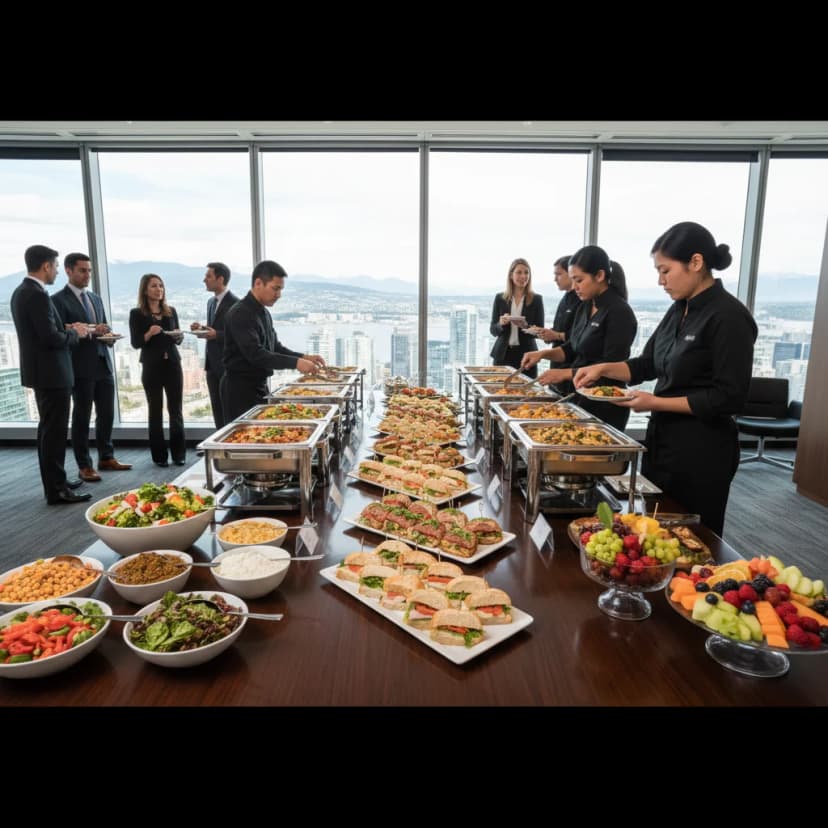
What Vancouver Catering Companies Handle Large Office Orders?
Discover Vancouver catering companies handling large office orders in 2026. Compare Pacific Coast Ca
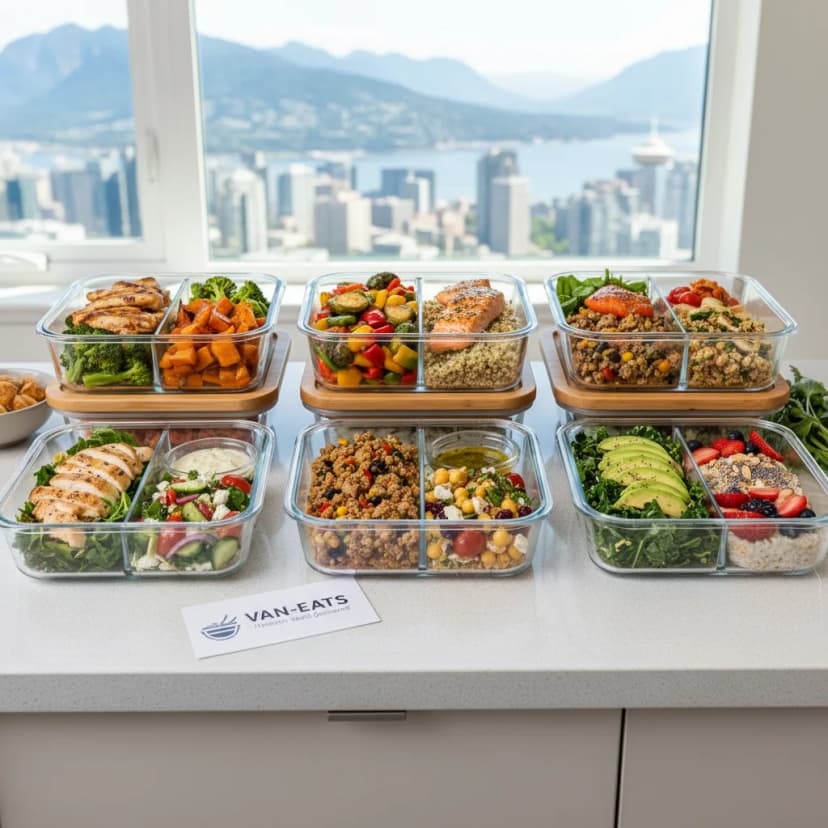
The Complete Guide to Meal Prep Services in Vancouver 2026
After years of feeding Vancouver's offices, film sets, and private events, I've watched the meal pre
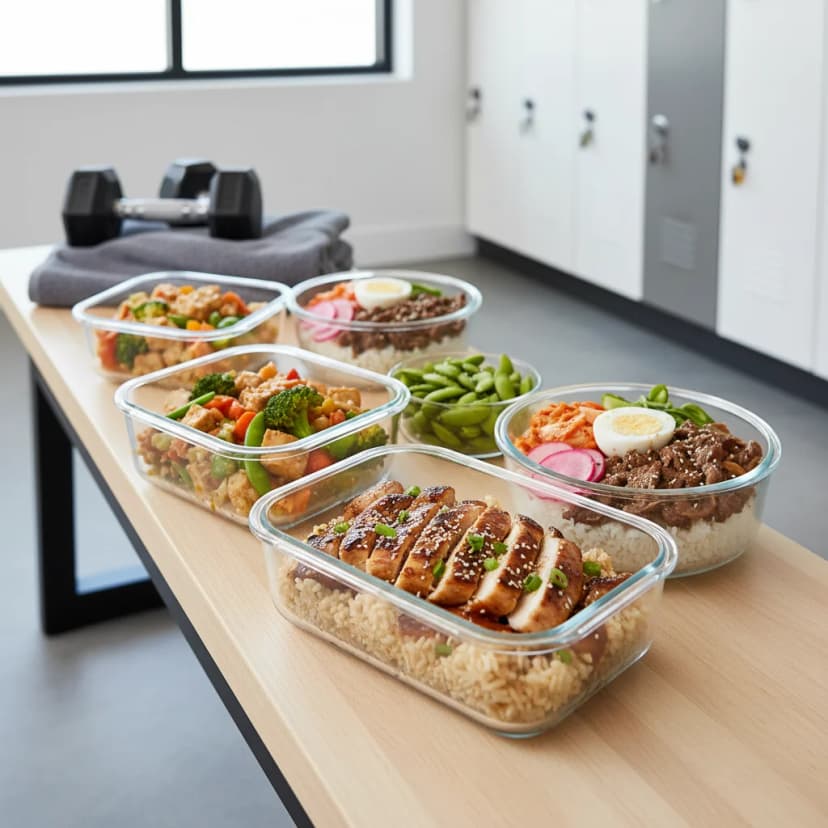
High-Protein Asian Meal Prep for Vancouver Gym-Goers
Discover high-protein Asian meal prep for Vancouver fitness enthusiasts. Expert guide to muscle-buil
Got a food question?
Explore our guides and discover the best of Vancouver's food scene.
Browse Guides