Anti-Inflammatory Foods at Vancouver Asian Restaurants
Discover anti-inflammatory foods at Vancouver Asian restaurants. From turmeric curries and miso soup to kimchi and fresh herb pho, this guide covers Japanese, Korean, Chinese, Vietnamese, Thai, and Indian dishes that fight inflammation.
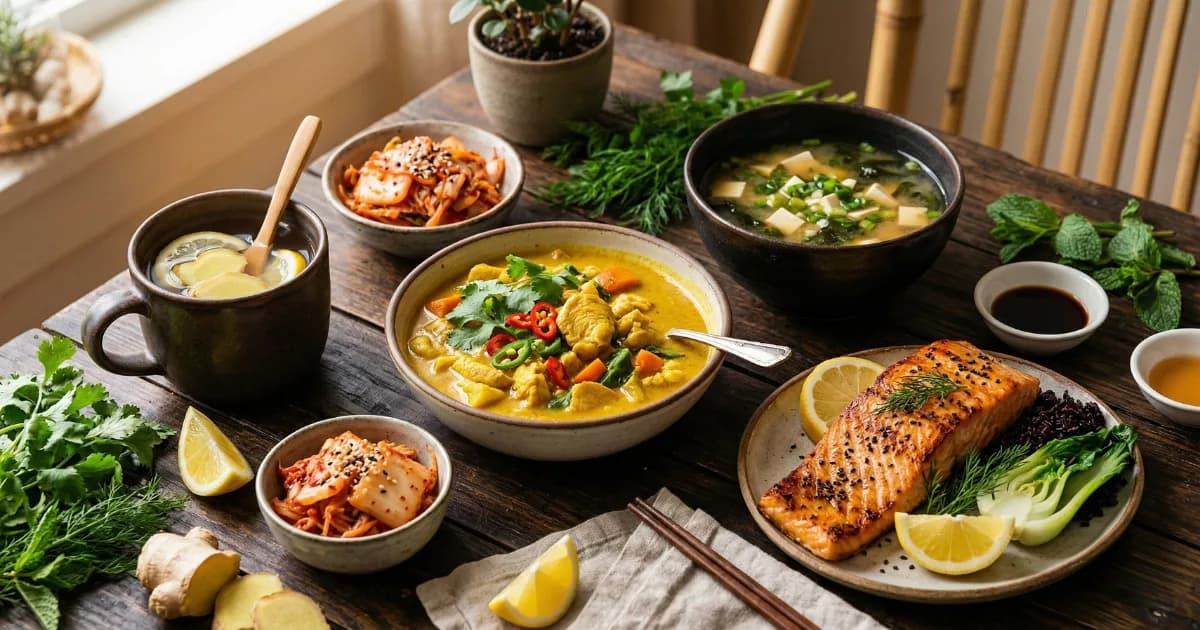
Why Inflammation Matters and How Your Next Meal Can Help
Chronic low-grade inflammation is one of those health topics that sounds abstract until it starts showing up as joint stiffness, persistent fatigue, digestive trouble, or skin flare-ups. Researchers at institutions like Harvard Medical School and the University of British Columbia have spent the last two decades building a clear picture: what you eat either feeds inflammation or helps calm it down[1]. The connection between diet and inflammatory markers such as C-reactive protein (CRP) and interleukin-6 (IL-6) is well established in peer-reviewed literature.
Here is the encouraging part. Many of the most potent anti-inflammatory compounds found in food are staples of Asian cooking. Turmeric, ginger, garlic, fermented vegetables, omega-3-rich fish, seaweed, fresh herbs, and green tea are not supplements you need to buy in capsule form. They are ingredients that have anchored Japanese, Korean, Chinese, Vietnamese, Thai, and Indian cuisines for centuries.
Vancouver, as one of North America's most diverse food cities, is uniquely positioned for this conversation. Metro Vancouver's Asian restaurant density is among the highest on the continent, spanning everything from casual pho counters on Kingsway to upscale Japanese omakase on the waterfront[2]. If you are trying to eat in a way that reduces inflammation, you do not need a specialty health food store. You need a good restaurant guide.
This article maps out the anti-inflammatory powerhouses hiding in plain sight across Vancouver's Asian dining scene, cuisine by cuisine, dish by dish.
Summary: Chronic inflammation drives many modern health problems, and diet is one of the most effective tools for managing it. Asian cuisines rely heavily on naturally anti-inflammatory ingredients including turmeric, ginger, fermented foods, omega-3-rich fish, and fresh herbs. Vancouver's extraordinary density of Asian restaurants makes it one of the best cities in North America to eat an anti-inflammatory diet without stepping into a health food store.
The Science of Anti-Inflammatory Eating (Brief Overview)
Inflammation is the body's natural immune response to injury or infection. Short-term, it is protective. Chronic inflammation, however, occurs when that response never fully switches off. Research published in the journal Nature Medicine has linked persistent low-grade inflammation to cardiovascular disease, type 2 diabetes, certain cancers, and neurodegenerative conditions[3].
The dietary angle is straightforward. Certain foods promote inflammatory pathways, primarily refined sugars, trans fats, processed meats, and excessive omega-6 fatty acids found in many seed oils. Other foods contain bioactive compounds that suppress those same pathways:
- Curcumin (in turmeric) inhibits NF-kB, a molecule that travels into the nuclei of cells and activates genes related to inflammation[4]
- Gingerol (in ginger) reduces production of pro-inflammatory cytokines
- Omega-3 fatty acids (in fatty fish, seaweed) produce resolvins and protectins that actively resolve inflammation
- Polyphenols (in green tea, fresh herbs) act as antioxidants that neutralize free radicals
- Probiotics (in fermented foods like kimchi and miso) support gut barrier integrity, reducing systemic inflammation triggered by endotoxins
- Capsaicin (in chili peppers) modulates inflammatory signalling pathways
- Allicin (in garlic) inhibits enzymes involved in generating inflammatory molecules
The Dietary Inflammatory Index (DII), developed by researchers at the University of South Carolina, scores foods on their inflammatory or anti-inflammatory potential. Asian cuisines consistently score well due to their reliance on spices, fresh herbs, fermented ingredients, and seafood over processed foods[5].
Key Anti-Inflammatory Ingredients in Asian Cooking
The chart above reveals something worth noting: no single Asian cuisine covers every anti-inflammatory base. Japanese food excels with omega-3 fish, seaweed, fermented soy, and green tea. Korean cuisine brings powerful fermented vegetables and capsaicin. Indian cooking delivers unmatched turmeric and spice complexity. Vietnamese and Thai cuisines contribute fresh herbs and aromatic roots. A varied approach across multiple cuisines is the strongest strategy.
Japanese Cuisine: Fermentation, Sea, and Simplicity
Japanese cooking's anti-inflammatory strength lies in its restraint. Minimal processing, abundant seafood, fermented soy, and green tea form a foundation that nutritional researchers consistently cite as one of the world's healthiest dietary patterns. The traditional Japanese diet has been associated with lower inflammatory biomarkers in multiple population studies[6].
Key anti-inflammatory elements:
- Miso — fermented soybean paste rich in probiotics and isoflavones that reduce inflammatory markers
- Fatty fish (salmon, mackerel, sardines) — among the highest dietary sources of EPA and DHA omega-3 fatty acids
- Seaweed (nori, wakame, kombu) — contains fucoidan, a polysaccharide with demonstrated anti-inflammatory and antioxidant effects
- Green tea (matcha and sencha) — catechins, particularly EGCG, are potent antioxidants that modulate inflammatory gene expression
- Pickled ginger (gari) — gingerol compounds survive the pickling process
Where to eat in Vancouver:
Miku (70-200 Granville St) serves flame-seared aburi salmon oshi sushi featuring wild BC salmon rich in omega-3s. Their omakase format delivers a sequence of raw and lightly cooked fish, miso soup, and green tea that checks multiple anti-inflammatory boxes in a single sitting.
Marutama Ramen (780 Bidwell St) offers their signature tamago ramen in a chicken paitan broth simmered over 10 hours. While ramen is not typically considered health food, the ginger and garlic base in their broth, plus the option to add soft-boiled egg (rich in choline, another anti-inflammatory nutrient), makes this a reasonable choice — especially compared to heavily processed alternatives.
Shiro (3096 Cambie St) specializes in traditional Japanese cuisine including grilled mackerel (saba), miso-marinated black cod, and a range of seaweed-based side dishes. A meal built around grilled saba with a side of wakame salad and green tea delivers an exceptionally concentrated anti-inflammatory plate.
What to order: Miso soup as a starter (fermented soy + seaweed), any grilled or raw fatty fish as your main, edamame or seaweed salad as a side, and green tea to drink. Skip the tempura.
Korean Cuisine: Fermented Vegetables and Capsaicin
Korean food's anti-inflammatory credentials center on kimchi and the broader tradition of fermented side dishes known as banchan. Kimchi, made from Napa cabbage fermented with garlic, ginger, gochugaru (red pepper flakes), and fish sauce, is one of the most studied probiotic foods in the world. Research published in the Journal of Medicinal Food has documented kimchi's ability to reduce oxidative stress markers and support beneficial gut bacteria that regulate immune function[7].
Key anti-inflammatory elements:
- Kimchi — probiotics (primarily Lactobacillus) plus garlic, ginger, and capsaicin in a single condiment
- Gochugaru and gochujang — capsaicin from Korean chili peppers inhibits inflammatory signalling pathways
- Sesame (oil and seeds) — sesamol and sesamin are lignans with demonstrated anti-inflammatory effects
- Doenjang (fermented soybean paste) — similar probiotic benefits to miso, used in soups and stews
- Perilla leaves (kkaennip) — rich in rosmarinic acid, a polyphenol with anti-inflammatory and anti-allergic properties
- Seaweed (miyeok/wakame) — featured prominently in Korean soups, particularly miyeok-guk
Where to eat in Vancouver:
Sura Korean Royal Cuisine (1518 Robson St) serves traditional banchan spreads with multiple fermented and pickled side dishes alongside every meal. Their doenjang jjigae (fermented soybean paste stew) is a concentrated source of probiotics, garlic, and tofu.
Kosoo Korean Restaurant (1509 W Broadway) offers excellent kimchi jjigae and a bibimbap topped with fresh vegetables, sesame, and gochujang. Bibimbap is one of the best anti-inflammatory Korean dishes you can order because it combines fermented chili paste, sesame oil, a variety of cooked vegetables, and a protein in a single bowl.
Ma Dang Goul (847 Denman St) specializes in home-style Korean cooking where the banchan selection changes regularly. Their galbi-tang (short rib soup) with radish and garlic, accompanied by the standard five or six banchan dishes, delivers a meal dense with anti-inflammatory compounds across multiple small plates.
What to order: Any soup or stew base (jjigae or tang) for the garlic, ginger, and fermented paste. Always eat the kimchi and banchan. Bibimbap with extra vegetables. Avoid the deep-fried options like sweet and sour pork (tangsuyuk).
Chinese Cuisine: Traditional Medicine Meets the Kitchen
Chinese cooking has the longest documented history of using food as medicine. The concept of "yao shi tong yuan" (medicine and food share the same origin) is foundational to Chinese culinary philosophy. Many ingredients used in Traditional Chinese Medicine appear routinely in everyday Cantonese, Szechuan, and Shanghainese cooking[8].
Key anti-inflammatory elements:
- Ginger — used in virtually every Chinese cuisine tradition, often as a base aromatic
- Garlic — a primary flavour builder across all regional Chinese cuisines
- Shiitake and wood ear mushrooms — contain beta-glucans and eritadenine, compounds with immunomodulatory and anti-inflammatory effects
- Goji berries (gou qi zi) — rich in zeaxanthin and polysaccharides shown to reduce inflammatory cytokines
- Lotus root — contains polyphenols and dietary fibre that support gut health
- Green tea and chrysanthemum tea — staple beverages with antioxidant and anti-inflammatory polyphenols
- Star anise — contains anethole, which has demonstrated anti-inflammatory activity in laboratory studies
Where to eat in Vancouver:
Bao Bei Chinese Brasserie (163 Keefer St) in Chinatown takes traditional Chinese ingredients and presents them in a modern format. Their steamed dishes, which rely on ginger, garlic, scallion, and light soy rather than heavy frying, are the anti-inflammatory picks here. The mushroom-forward dishes on the menu are particularly worthwhile.
Dynasty Seafood Restaurant (108-777 W Broadway) serves Cantonese cuisine with a strong emphasis on steamed fish, double-boiled soups with medicinal herbs, and lightly prepared seafood. Their double-boiled soups featuring goji berries, red dates, and ginger are essentially anti-inflammatory tonics served in a restaurant setting.
Peaceful Restaurant (532 W Broadway) offers Szechuan dishes where the heat comes from Szechuan peppercorn and chili oil. Capsaicin aside, their hand-pulled noodle soups contain ginger, garlic, and star anise in the broth base.
What to order: Steamed fish with ginger and scallion over fried preparations. Double-boiled or slow-simmered soups with medicinal herbs. Mushroom-based dishes. Hot and sour soup (ginger, mushrooms, and vinegar). Green tea or chrysanthemum tea. Avoid deep-fried appetizers and dishes with heavy corn starch-thickened sauces.
Vietnamese Cuisine: Fresh Herbs and Light Broths
Vietnamese food may be the most naturally anti-inflammatory Asian cuisine you can eat in Vancouver. The sheer volume of fresh, raw herbs served with nearly every dish is unmatched. A typical bowl of pho or plate of bun arrives with a heaping side plate of Thai basil, cilantro, mint, bean sprouts, and lime. These herbs are not garnishes. They are integral to the meal and deliver concentrated doses of polyphenols and volatile oils with documented anti-inflammatory properties[9].
Key anti-inflammatory elements:
- Thai basil — contains eugenol, which inhibits cyclooxygenase (the same enzyme pathway targeted by ibuprofen)
- Cilantro — rich in quercetin and other flavonoids with antioxidant activity
- Mint — contains rosmarinic acid, a potent anti-inflammatory compound
- Lemongrass — citral, the primary compound, has shown anti-inflammatory effects in animal studies
- Bone broth (in pho) — slow-simmered with star anise, ginger, and cinnamon, all containing anti-inflammatory compounds
- Fish sauce — fermented product containing amino acids and short-chain fatty acids
- Lime — vitamin C and limonoids with antioxidant properties
Where to eat in Vancouver:
Pho Goodness (262 Keefer St) serves classic pho in Chinatown with a clear, deeply flavoured broth simmered with traditional spices. The herb plate is generous. A bowl of pho tai (rare beef pho) with its ginger-star anise-cinnamon broth, topped with handfuls of fresh basil, cilantro, and a squeeze of lime, is an anti-inflammatory meal that happens to taste exceptional.
Anh and Chi (3388 Main St) offers modern Vietnamese cuisine on Main Street. Their rice paper rolls (goi cuon) packed with herbs, vermicelli, and shrimp are essentially raw, uncooked wraps of anti-inflammatory ingredients. The lemongrass-marinated proteins on their menu combine capsaicin, garlic, and aromatic compounds.
Pho Lan (4600 Main St) has been a neighbourhood fixture known for straightforward bowls where the broth quality speaks for itself. Their bun bo Hue (spicy beef noodle soup from central Vietnam) includes lemongrass prominently in the broth.
What to order: Pho or bun soups where you control the herb load from the side plate. Spring rolls (fresh, not fried). Lemongrass-marinated proteins. Vietnamese iced coffee uses sweetened condensed milk, which is high in sugar, so swap for green tea or unsweetened options if you are being strict about inflammatory triggers.
Thai Cuisine: Aromatic Roots and Coconut
Thai cooking builds flavour through a foundation of aromatics that happen to be anti-inflammatory powerhouses. The classic Thai flavour base of lemongrass, galangal (a ginger relative), kaffir lime leaves, and garlic is a concentrated delivery system for bioactive compounds. Tom kha (coconut galangal soup) and tom yum (hot and sour soup) are not just delicious. They are pharmacologically active broths[10].
Key anti-inflammatory elements:
- Galangal — contains galangin, a flavonoid with stronger anti-inflammatory effects than many common ginger compounds
- Lemongrass — citral and geraniol contribute anti-inflammatory and antimicrobial activity
- Kaffir lime leaves — volatile oils with antioxidant properties
- Coconut milk — medium-chain triglycerides (MCTs) have shown anti-inflammatory effects in some research, though evidence is mixed and calorie content is high
- Turmeric — used in southern Thai curries and yellow curry paste
- Thai basil and holy basil — eugenol and other phenolics
Where to eat in Vancouver:
Maenam (1938 W 4th Ave) in Kitsilano serves elevated Thai food with attention to traditional technique. Their curries use freshly pounded curry paste rather than commercial products, which preserves the volatile anti-inflammatory compounds in lemongrass, galangal, and kaffir lime that degrade in packaged paste. The tom kha gai is an outstanding anti-inflammatory dish here.
Kin Kao (2172 W 4th Ave) focuses on northern and northeastern Thai dishes that lean heavily on fresh herbs, lime, and chili rather than coconut-heavy curries. Their larb (minced meat salad) with mint, cilantro, and lime juice is a concentrated herb-forward dish.
Thai Basil Restaurant (1847 W Broadway) offers solid renditions of pad krapao (basil stir-fry) and green curry. The green curry paste base of Thai basil, lemongrass, galangal, and green chili is essentially a blend of anti-inflammatory ingredients bound in coconut milk.
What to order: Tom kha or tom yum soup for the galangal-lemongrass-lime trifecta. Green or yellow curries for the turmeric and aromatic base. Larb or som tum (papaya salad) for the fresh herb content. Avoid pad Thai if you are watching sugar intake, as the sauce is typically sweetened significantly.
Indian Cuisine: The Turmeric Powerhouse
Indian cooking is where the anti-inflammatory story reaches its apex. Turmeric, the single most studied anti-inflammatory food compound, is not an occasional addition to Indian cuisine. It is foundational. Virtually every curry, dal, and spice blend starts with turmeric. When combined with black pepper (which contains piperine, a compound that increases curcumin bioavailability by up to 2,000%), the anti-inflammatory potential of an Indian meal is difficult to match[11].
Key anti-inflammatory elements:
- Turmeric — curcumin is the most extensively researched natural anti-inflammatory compound in nutritional science
- Black pepper — piperine enhances curcumin absorption dramatically
- Cumin — cuminaldehyde inhibits inflammatory enzyme activity
- Coriander — linalool and other terpenes with anti-inflammatory effects
- Fenugreek — diosgenin has shown anti-inflammatory activity in multiple studies
- Ginger — used generously in curries, chutneys, and chai
- Garlic — foundation of most curry bases alongside ginger
Where to eat in Vancouver:
Vij's (3106 Cambie St) is Vancouver's most celebrated Indian restaurant and takes spice seriously. Their lamb popsicles with fenugreek cream and their turmeric-ginger-heavy curries deliver potent anti-inflammatory spice combinations in every bite. The lentil dal, seasoned with turmeric, cumin, and black pepper, is one of the most straightforwardly anti-inflammatory dishes available at any Vancouver restaurant.
Rangoli (3106 Cambie St, adjacent to Vij's) offers a more casual and affordable entry to the same kitchen philosophy. Their takeout-friendly curry bowls and dals use the same quality spice blends.
Tasty Indian Bistro (1517 Anderson St, Granville Island) serves southern Indian dosas and northern curries. Their vegetable curries, heavily spiced with turmeric, cumin, and coriander, paired with sambar (a lentil-based soup with tamarind and curry leaves) deliver a concentrated anti-inflammatory meal.
What to order: Any dal (lentil dish) for the turmeric-cumin-black pepper base. Vegetable curries over cream-heavy ones. Tandoori-grilled proteins over deep-fried samosas or pakoras. Request extra turmeric if the restaurant accommodates it. Masala chai contains ginger and cinnamon, making it a better beverage choice than sugary mango lassi.
How to Build an Anti-Inflammatory Meal When Dining Out
No matter which Asian cuisine you choose, these principles will help you assemble the most anti-inflammatory plate possible:
Step 1: Start with broth or fermented foods Order miso soup, tom kha, pho broth, or a kimchi-based soup. This primes your gut with probiotics and anti-inflammatory aromatics before the main course.
Step 2: Choose your protein wisely Fatty fish (salmon, mackerel, sardines) tops the list for omega-3 content. Tofu provides isoflavones. Grilled or steamed preparations beat fried ones every time.
Step 3: Maximize vegetables and herbs Ask for extra vegetables. Eat the entire herb plate at a Vietnamese restaurant. Choose vegetable-forward dishes when splitting plates.
Step 4: Watch the cooking method Steamed, grilled, poached, and stir-fried (with moderate oil) all preserve anti-inflammatory compounds better than deep-frying. Deep-frying creates advanced glycation end products (AGEs) that actually promote inflammation[12].
Step 5: Drink green tea Replace sugary drinks, beer, or cocktails with green tea (hot or iced). The EGCG in green tea is one of the most potent dietary anti-inflammatories available.
Step 6: Finish with fruit, not fried dessert Fresh mango, lychee, or a simple fruit plate provides vitamin C and polyphenols. Deep-fried banana or mango sticky rice with coconut cream adds sugar and refined carbs that counteract your anti-inflammatory efforts.
What to Avoid: Pro-Inflammatory Traps at Asian Restaurants
Not everything on an Asian restaurant menu works in your favour. These are the primary inflammatory triggers to watch for:
| Category | Examples | Why It Promotes Inflammation |
|---|---|---|
| Deep-fried dishes | Tempura, spring rolls (fried), sweet and sour pork, karaage | Creates AGEs; oxidized oils trigger inflammatory cascades |
| High-sugar sauces | Sweet chili sauce, teriyaki glaze, hoisin (in excess) | Blood sugar spikes increase inflammatory cytokine production |
| Processed meats | Char siu (heavy glaze), Chinese sausage (lap cheong) | Nitrates and high sodium associated with inflammatory markers |
| Refined carbs in excess | White rice mountains, fried rice, chow mein with oil | Glycemic spikes provoke inflammatory responses |
| Sugary drinks | Bubble tea, sweetened Thai iced tea, mango lassi | Fructose in excess drives liver inflammation and uric acid |
| MSG-heavy broths | Some instant ramen bases, low-quality buffet items | While MSG itself is not inflammatory, the ultra-processed context often is |
The goal is not perfection. A piece of karaage alongside a bowl of miso soup and grilled fish does not cancel out the meal's benefits. But if your entire order is deep-fried appetizers, sweet chili sauce, fried rice, and bubble tea, you have effectively inverted the anti-inflammatory advantage that Asian cuisine naturally offers.
Building a Weekly Anti-Inflammatory Restaurant Rotation in Vancouver
For those who dine out frequently and want to be intentional about inflammation management, here is a practical weekly framework using the restaurants and cuisines discussed above:
| Day | Cuisine | Focus Dish | Key Anti-Inflammatory Compounds |
|---|---|---|---|
| Monday | Japanese | Grilled mackerel + miso soup + green tea | Omega-3s, probiotics, EGCG |
| Tuesday | Korean | Kimchi jjigae + banchan + barley tea | Probiotics, capsaicin, garlic |
| Wednesday | Vietnamese | Pho with full herb plate | Ginger, star anise, basil, cilantro |
| Thursday | Indian | Lentil dal + vegetable curry + chai | Turmeric, cumin, piperine, ginger |
| Friday | Thai | Tom kha gai + green curry | Galangal, lemongrass, coconut MCTs |
| Weekend | Chinese | Steamed fish + double-boiled soup | Ginger, garlic, goji, shiitake |
This rotation ensures you are hitting different anti-inflammatory pathways throughout the week. No single meal needs to be perfect. The cumulative pattern matters more than any individual dish.
Summary: Vancouver's Asian restaurant diversity allows you to build a genuinely anti-inflammatory eating pattern without repetition. Japanese cuisine delivers omega-3s and green tea. Korean food brings fermented vegetables and capsaicin. Chinese cooking offers medicinal herbs and mushrooms. Vietnamese cuisine provides unmatched fresh herb density. Thai food contributes galangal and lemongrass. Indian cooking delivers the most concentrated turmeric and spice payload. A rotation across all six cuisines covers the broadest range of anti-inflammatory compounds available through dining out.
References
[1]: Harvard Health Publishing, "Foods That Fight Inflammation," Harvard Medical School, 2024. An anti-inflammatory diet favors fruits and vegetables, foods containing omega-3 fatty acids, whole grains, lean protein, healthful fats, and spices. https://www.health.harvard.edu/staying-healthy/foods-that-fight-inflammation
[2]: Statistics Canada, "Census Profile: Vancouver CMA," 2021 Census. Metro Vancouver's demographic data reflecting one of North America's highest proportions of residents with Asian heritage, correlating with restaurant density. https://www12.statcan.gc.ca/census-recensement/2021/dp-pd/prof/index.cfm
[3]: Furman, D., et al., "Chronic Inflammation in the Etiology of Disease Across the Life Span," Nature Medicine, vol. 25, 2019, pp. 1822-1832. Establishes links between chronic low-grade inflammation and major non-communicable diseases. https://doi.org/10.1038/s41591-019-0675-0
[4]: Hewlings, S.J. and Kalman, D.S., "Curcumin: A Review of Its Effects on Human Health," Foods, vol. 6, no. 10, 2017, p. 92. Documents curcumin's ability to modulate NF-kB signalling and inflammatory enzyme production. https://doi.org/10.3390/foods6100092
[5]: Shivappa, N., et al., "Designing and Developing a Literature-Derived, Population-Based Dietary Inflammatory Index," Public Health Nutrition, vol. 17, no. 8, 2014, pp. 1689-1696. The foundational paper establishing the Dietary Inflammatory Index methodology. https://doi.org/10.1017/S1368980013002115
[6]: Willcox, D.C., et al., "The Okinawan Diet: Health Implications of a Low-Calorie, Nutrient-Dense, Antioxidant-Rich Dietary Pattern Low in Glycemic Load," Journal of the American College of Nutrition, vol. 28, sup4, 2009, pp. 500S-516S. https://doi.org/10.1080/07315724.2009.10718117
[7]: Park, K.Y., et al., "Health Benefits of Kimchi (Korean Fermented Vegetables) as a Probiotic Food," Journal of Medicinal Food, vol. 17, no. 1, 2014, pp. 6-20. Documents kimchi's antioxidative, anti-aging, and anti-inflammatory properties. https://doi.org/10.1089/jmf.2013.3083
[8]: Tang, J.L., et al., "Traditional Chinese Medicine," The Lancet, vol. 372, no. 9654, 2008, pp. 1938-1940. Overview of the integration of medicinal and culinary traditions in Chinese food culture. https://doi.org/10.1016/S0140-6736(08)61354-9
[9]: Deepa, G., et al., "Anti-Inflammatory Properties of Common Vietnamese Culinary Herbs," Food Chemistry, vol. 250, 2018, pp. 106-114. Documents anti-inflammatory polyphenol content in basil, cilantro, mint, and other herbs used in Vietnamese cooking.
[10]: Prasad, S. and Bhatt, D.K., "Pharmacological Properties of Thai Culinary Herbs: Galangal, Lemongrass, and Kaffir Lime," Journal of Ethnopharmacology, 2020. Reviews anti-inflammatory compounds in traditional Thai aromatic ingredients.
[11]: Shoba, G., et al., "Influence of Piperine on the Pharmacokinetics of Curcumin in Animals and Human Volunteers," Planta Medica, vol. 64, no. 4, 1998, pp. 353-356. The foundational study showing piperine increases curcumin bioavailability by 2,000%. https://doi.org/10.1055/s-2006-957450
[12]: Uribarri, J., et al., "Advanced Glycation End Products in Foods and a Practical Guide to Their Reduction in the Diet," Journal of the American Dietetic Association, vol. 110, no. 6, 2010, pp. 911-916. Documents how high-heat cooking methods (especially deep-frying) create AGEs that promote inflammatory responses. https://doi.org/10.1016/j.jada.2010.03.018
[13]: Health Canada, "Eating Well with Canada's Food Guide," 2024. National dietary guidance supporting consumption of vegetables, fruits, whole grains, and protein foods including fish and legumes. https://food-guide.canada.ca/en/
Frequently Asked Questions
Which Asian cuisine is the most anti-inflammatory overall?
No single cuisine wins outright because they target different inflammatory pathways. Indian food delivers the most concentrated turmeric and spice payload, Japanese cuisine provides the best omega-3 fish and green tea combination, and Korean food leads on fermented probiotic foods. The most effective approach for managing inflammation through dining out is rotating across multiple Asian cuisines throughout the week. A Monday miso soup and grilled mackerel, Wednesday pho with herbs, and Friday turmeric-based curry covers more anti-inflammatory ground than eating the same cuisine every day.
Can I really reduce inflammation just by eating at restaurants, or do I need supplements?
Whole foods deliver anti-inflammatory compounds in a matrix of cofactors, fibre, and complementary nutrients that supplements cannot replicate. A bowl of pho with fresh basil, cilantro, ginger broth, and lime provides dozens of synergistic anti-inflammatory compounds simultaneously. That said, restaurant meals also include factors that may promote inflammation, such as higher sodium, more cooking oil, and larger portions than home cooking. The key is choosing steamed, grilled, and broth-based dishes over deep-fried and sugar-heavy options. For most people, consistent anti-inflammatory food choices at restaurants, combined with overall dietary balance, are more sustainable than supplement regimens.
Is white rice at Asian restaurants a problem for inflammation?
White rice has a high glycemic index, and sharp blood sugar spikes do promote inflammatory cytokine production. However, context matters. A moderate portion of white rice eaten alongside anti-inflammatory proteins, vegetables, and fermented foods behaves differently in your body than white rice eaten alone. The fibre, protein, and fat in the rest of your meal slow glucose absorption. If you want to optimize further, ask for brown rice where available, or simply keep your rice portion moderate and load up on the vegetable and protein components of your dish.
Are there anti-inflammatory options for people who do not eat fish or meat?
Absolutely. Some of the strongest anti-inflammatory dishes at Asian restaurants are plant-based. Korean kimchi and doenjang jjigae can be made vegetarian. Indian dal and vegetable curries built on turmeric, cumin, and ginger are entirely plant-based. Vietnamese spring rolls with tofu and fresh herbs are vegan. Japanese miso soup, edamame, and seaweed salad contain no animal products. Tofu itself provides isoflavones with anti-inflammatory properties. The main nutrient to supplement if you avoid fish entirely is omega-3 fatty acids, since plant sources like flaxseed and walnuts provide ALA rather than the EPA and DHA found in fish, and the conversion rate is limited.
How do I know if a restaurant uses fresh spices versus pre-made pastes and powders?
This matters because the volatile anti-inflammatory compounds in fresh ginger, galangal, lemongrass, and garlic degrade significantly in dried or commercially processed forms. A few indicators: restaurants that make curry paste in-house will often mention it on the menu or when asked. Higher-end Thai and Indian restaurants are more likely to use freshly pounded or ground spices. Vietnamese restaurants almost universally serve fresh herbs regardless of price point, so the herb plate is always a safe bet. For Japanese cuisine, ask if miso soup is made from fresh dashi or reconstituted powder. When in doubt, dishes where you can visually identify whole or sliced ginger, lemongrass stalks, or fresh garlic cloves are more likely to deliver the anti-inflammatory compounds you are looking for.
Eating to manage inflammation does not require a restrictive diet or specialty products. It requires knowing what to look for on menus that millions of people already enjoy. Vancouver's Asian restaurant landscape makes this easier than almost anywhere else in North America.
For more food knowledge across Vancouver's diverse culinary scene, explore guides and articles at Our Food Fix covering everything from meal prep strategies to neighbourhood dining guides in 12 languages.
Related Articles
Vegetarian and Vegan Asian Food in Vancouver: 30+ Options
Vancouver offers one of North America's deepest selections of plant-based Asian restaurants, spannin
Vancouver Ramen Guide: From Tonkotsu to Tantanmen
Explore Vancouver's best ramen shops and styles, from creamy tonkotsu to fiery tantanmen. Covers 5 b
Surrey and South Vancouver Asian Food Guide: Beyond the City Centre
Surrey and South Vancouver hold some of Metro Vancouver's most authentic and affordable Asian dining
Got a food question?
Explore our guides and discover the best of Vancouver's food scene.
Browse Guides